building (454)

Tiny Home in Maine

April 6, 2020

Dear Lloyd,

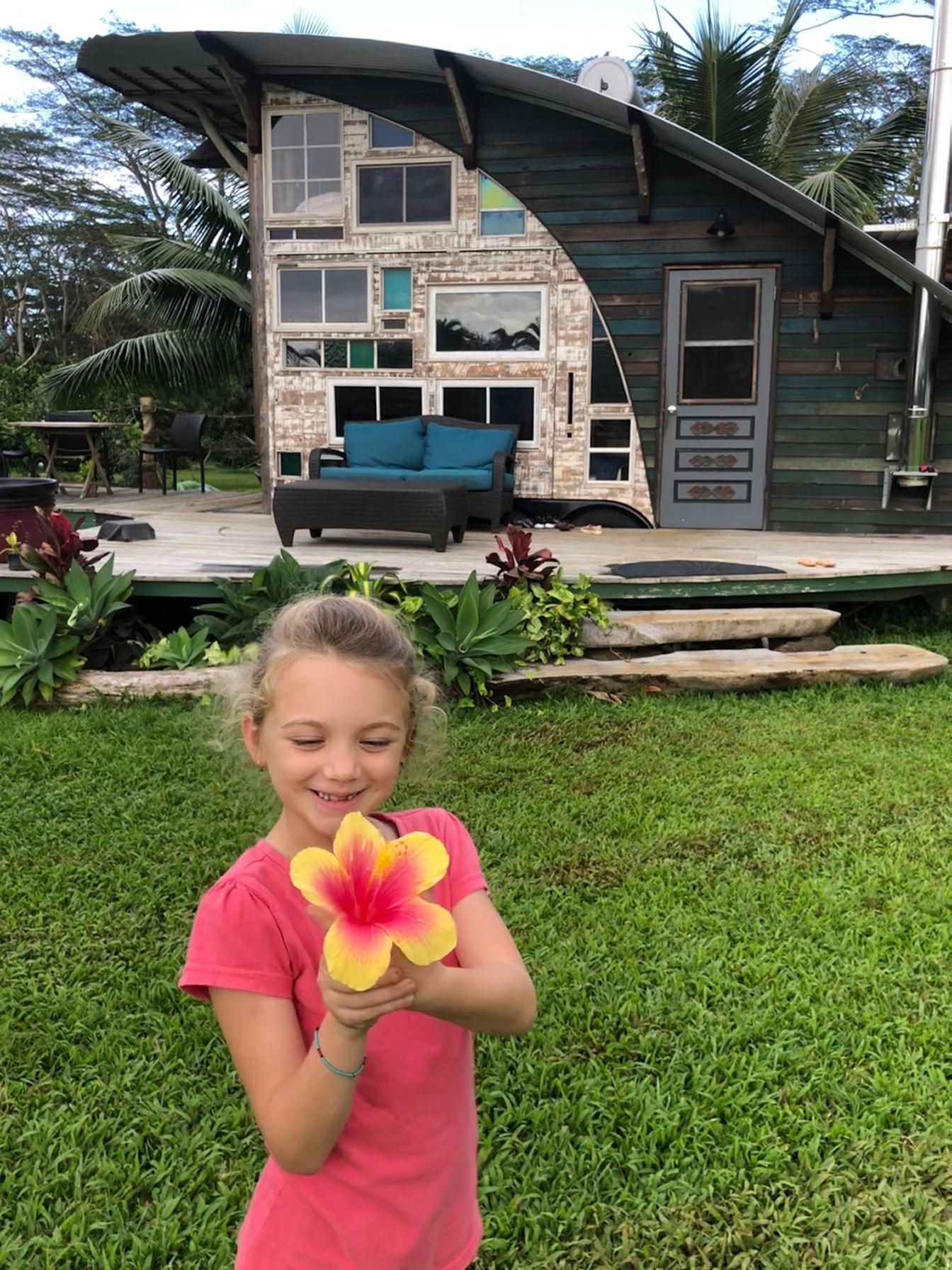
A photo of our daughter’s house

I have been reading your books for years (and have given them to my kids) and, more recently, your blog. I studied architecture in college (in the 70’s) and when your Shelter book came out I wore it out reading it. It has influenced the last forty years of my life as a builder/carpenter.

Ours is a relatively sustainable and self sufficient lifestyle, and one our kids have adopted as well. Our daughter has been living for the last 5 years in a 7′×10′ house she built, with no electricity or running water, and is building a traditional Washington County peapod (a double-ended wooden rowboat). Our son is currently living in a 42″ wide × 10′ long shelter he built to live in, while building a tiny house for a college acquaintance. before that he was living on a 36′ sailboat he fixed up and sailed solo across the Atlantic to the Azores.

We are preparing to sell the house in which our two kids were born and grew up, and on which we have worked for the last forty years. My wife created a website so we can sell the house ourselves and I thought, perhaps, you might like to see the photos of the house.

Here’s a link to the website richmondmainefarmhouse.com

Thanks for all the inspiration — just wanted you to know that you’ve had quite an impact on our lives.

Best wishes to you,
Joe Stanley

Post a comment

Wonderful Houses Around the World

Yesterday I read in the paper that sales of children’s books are booming, due to schools being closed. This brought to mind our one and only children’s book, Wonderful Houses Around the World, by photographer Yoshio Komatsu and artist Akira Nishiyama.

There are 10 photographs by Yoshio of homes in different parts of the world. All the homes are built of natural materials — earth, wood, thatch, sod, bamboo, and stone.

Each photo is followed by a watercolor drawing of the inside of that home, showing the children and their parents going about their everyday activities: food gathering and processing, cooking, sleeping, working and playing.

The book is timely in this day and age: it shows what people do in their homes. Timely also because it’s great educational material for kids being home-schooled: look at what what kids your age are doing in other parts of the planet.

Yoshio is my favorite photographer of homes in the world. Not only are the homes invariably soulful, but his composition and lighting are perfect — and he has a knack for making people feel comfortable, so that the homeowners look natural, often laughing.

The book is $12.95 and you can order it through your independent bookstore, or from:

Note: We have a money-back guarantee on all of our books (no matter where you buy them). If for any reason you are dissatisfied, call us and we’ll return the full purchase price plus shipping. No need to return the book.

Post a comment (1 comment)

Sailboat Sauna in British Columbia

About two years ago I was standing in the shower and had a vision of a sailboat turned unto a sauna. When I got out and dried off I started drawing plans. It felt like it was what I should be doing, so I just kept building it until it was done. The boat was originally called the Sea Mystic, we painted a “T” and an “M” in the name to make it Steam Mystic (my brother’s idea).

I live in Victoria BC and love designing and building things like saunas, tiny homes, surfboards, small shops. For me, it’s about more creative designs, more diversity in the world, more mystery. I like to follow my gut when it comes to design; there is an emotion that I’m trying to bring to life. Sometimes my hands can capture what I feel, and what I dream for the world; sometimes they can’t.

–Nick
Nicolas Joel Van Buren
Ontological Creative
Victoria BC, Canada

Post a comment (2 comments)

Handcrafted Homes in Pennsylvania Woods

A terrific article in today’s NYTimes (3/16/20) online by Michael Snyder, with great photos by Chris Mottalini.

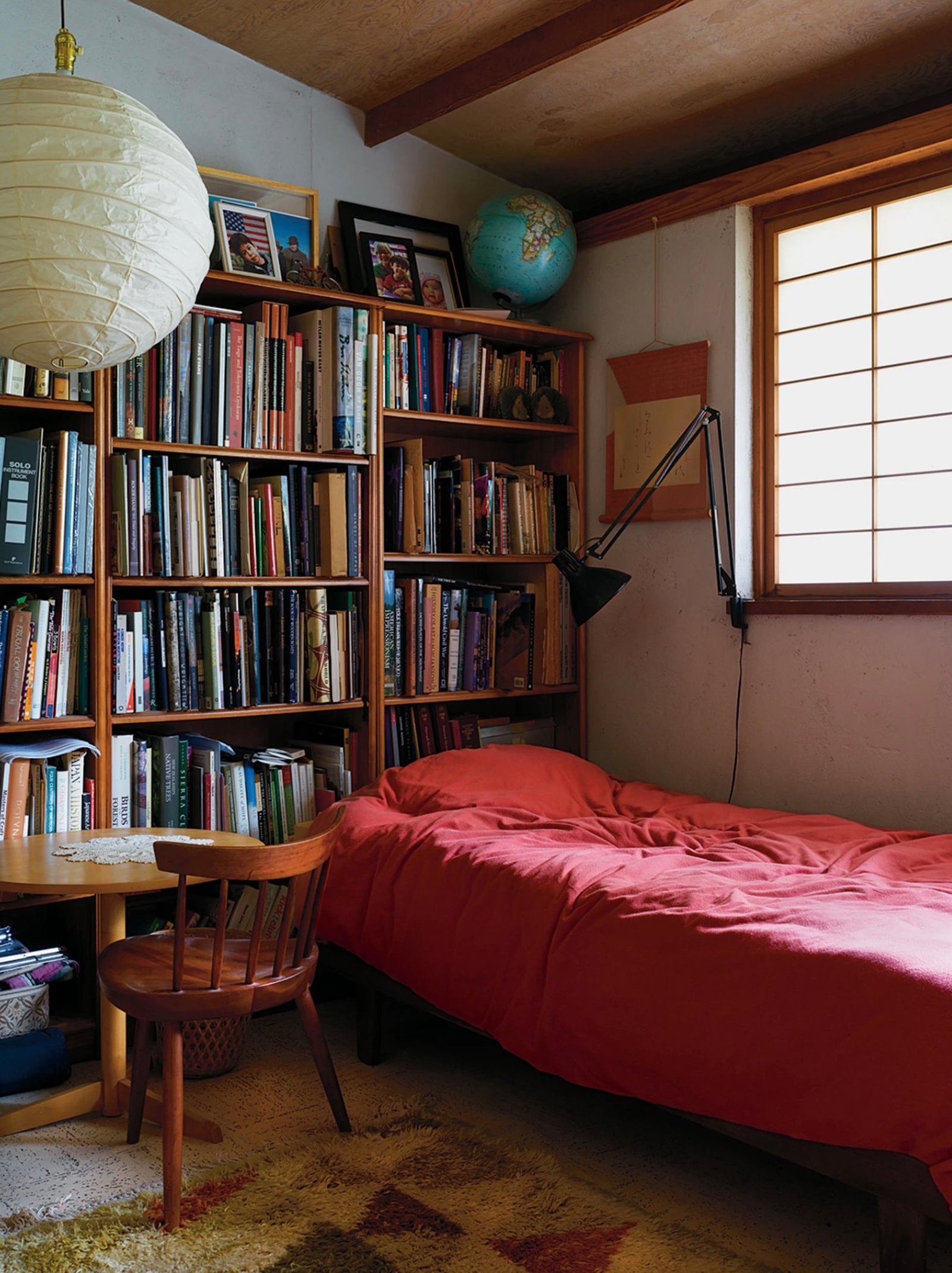
Everything about this story and the photos struck me as right. I felt at home here. I love the rumpled bed in the second photo. I also like the idea of an “alternative to modernism.” 

How Two Children Are Keeping Their Father’s Design Legacy Alive

A pair of Pennsylvania homes constructed by the Japanese-American furniture designer George Nakashima have become an enduring testament to mid-century folk craft.

“From 1946, when he founded his studio on a three-acre plot in New Hope, a historic artist’s colony halfway between New York City and Philadelphia, to his death in 1990 at the age of 85, Nakashima devoted his life to transforming slabs of walnut, cherry, burled maple and redwood into coffee tables shaped like pools of water, Shaker-style chairs with hand-whittled spindles and dining-room tables fashioned from slices of tree trunks, their cracks and seams bridged with joints like butterflies caught in amber. ‘He felt his work was a form of integral yoga: How you work and live is all connected,’ his daughter, Mira, 78, told me on a damp, gray morning last fall while showing me around the grounds of the studio, which she has run since her father’s death. Organic, improvisational and individual, the tens of thousands of objects he made in the course of his lifetime were also functional, meant for daily use; they were, Mira says, “the antithesis of Modernism, a protest against mass production.”

“But the homes where Mira and Kevin live, patinated and imperfect and crowded with debris, more fully capture the spirit of mingei. Less an antithesis to Modernism than an alternative to it, such projects embraced 20th-century idioms while refusing to accept industrial mass production as the fundamental fact of modernity. ‘Dad always said that building furniture was just like architecture but smaller,’ Mira says. In his houses for his children, the opposite holds true: Like Nakashima’s tables and chairs, they can be read as works of folk art, useful objects that, as Yanagi wrote, ‘honestly fulfill the practical purpose for which they were made.’”

www.nytimes.com/2020/03/16/t-magazine/george-nakashima-legacy.html

Article sent us by Elizabeth Kirkland

Post a comment (1 comment)

I’m Off to the Winter Institute in Baltimore

Tomorrow morning (January 21st), I’m heading to Baltimore for the Winter Institute, the annual American Bookseller’s conference for independent booksellers. I’ll be signing copies of The Half-Acre Homestead for book buyers. This is the book lovers’ book conference, always with a wonderful spirit of independence and love of real hold-in-your-hands books from real live dedicated book people. I’ll be posting from Instagram during the week: www.instagram.com/lloyd.kahn

My first trip to Baltimore; have always wanted to go there. Hey, if anyone has suggestions of things to do there, please comment. (Are there cold water swimmers in Baltimore?)

Post a comment (4 comments)

SunRay’s Treehouse Masterpiece

Just when you think maybe SunRay has done all he’s gonna do — like major buildings — he pulls off this wild soaring, spiraling, 4-story log-framed structure in the woods. The spiral turrets up top are just insane. I mean, holy shit! SunRay rolls on, a true Spirit of Nature in his designs, carried out with incredible (and intuitive) building skills.

I wrote Uncle Mud (aka Chris McClellan) about SunRay’s latest (I’d seen a pic on @cabinporn) and he responded:

Lloyd,

I was there in 2018 during the rebuild after the fire so I don’t have anything newer than framing, which I have enclosed. Bonnie sends this video. I’m off to the mountains of Jamaica to teach mud building again next week. The village of Nine Mile is very sweet to us. The little kids call me “Meesta Mood”. People there make $20 a day but a sack of cement costs $10 so no one every finishes their house. When we were there in 2018 we taught them how to make windows out of bottles that get thrown by the side of the road, putting up a rough “Tree of Life” window in the dead of night before our flight home. When we came back in 2019 we were treated to this lovely view of the finished window.

(I’ll put up Mud’s photos in a later post.)

Post a comment (1 comment)

House Made of Hemp Panels in UK

Practice Architecture’s house is built from the plant growing in the fields around it.

Flat House, as the home on Margent Farm is called, is the conversion of a steel-framed agricultural shed, within which a new structure has been made of prefabricated timber-framed cassettes that were filled with a mulch of hemp, lime and water known as hempcrete. Once the mulch was dry they were erected into thick, highly insulating walls that also hold the building up. The exterior is covered in corrugated panels, which at first glance looks like the cement cladding typical of farm sheds. It is actually made of fibres from the outer coating of hemp stalks combined with resin taken from agricultural waste. It has a livelier texture and a more translucent quality than cement.

theguardian.com/artanddesign/2019/dec/07/flat-house-margent-farm-cambridgeshire-hemp-practice-architecture-carbon-energy

From Maui Surfer

Post a comment