As I go through the 1000 or so photos in this book, there are more than 100 like this that deserve large-formatted viewing. It strikes me that we could do an exhibit of selected photos from this book.
Note: We have an unconditional guarantee on all of our books. If you are not completely satisfied, for any reason, at any time, call us up and we will send you a refund. No need to return books. Also, we have a 30% discount on two or more books, with free shipping — which is usually a lower price than Amazon.
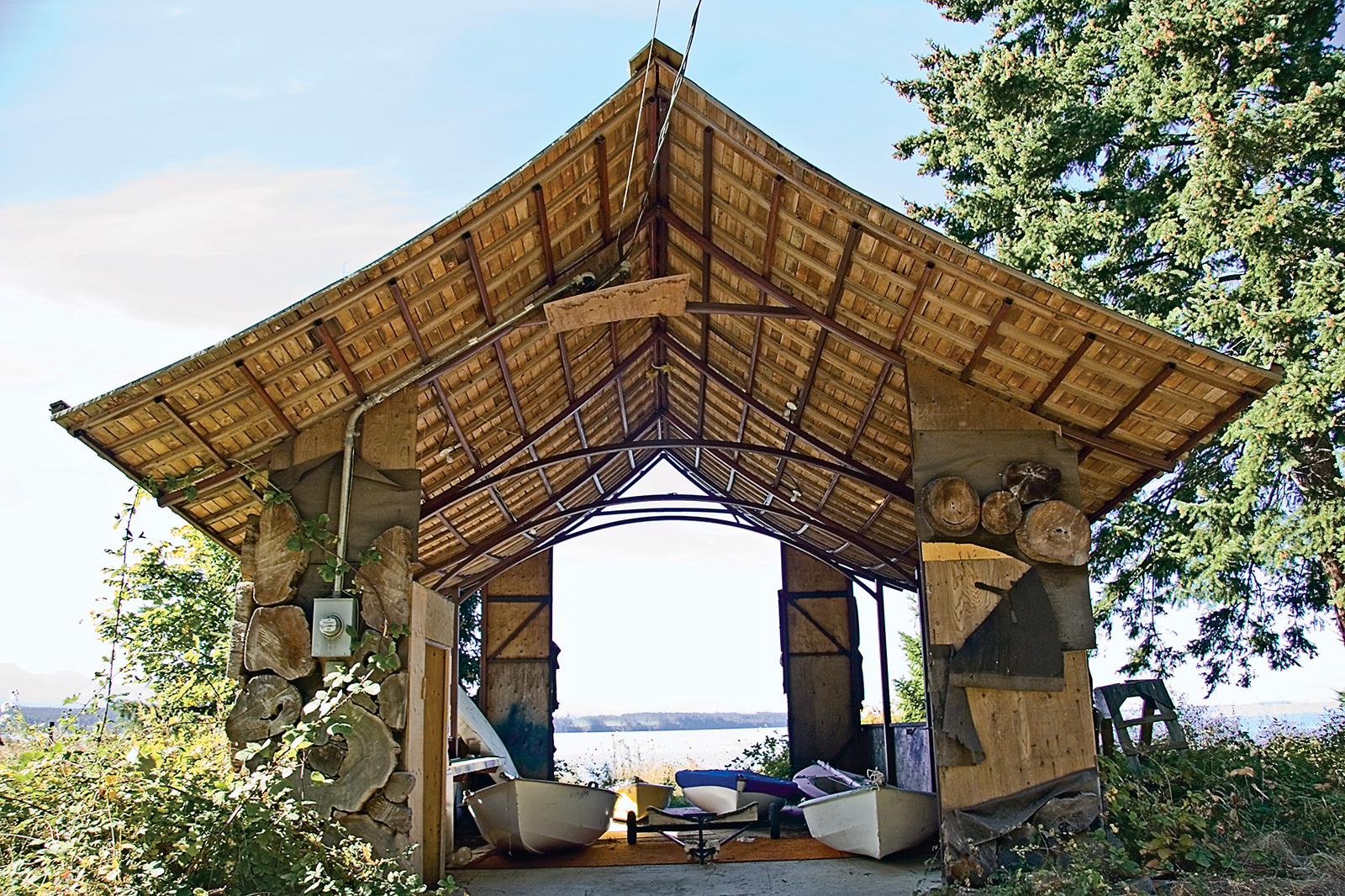
This gracefully curved little steel-frame boathouse was built by Dean Ellis on the beach of an island in the Strait of Georgia, BC. Posts are 4″–5″ steel, 8 feet on center. The curved steel purlins are 2½″ steel tubes, The curves formed on a break in a sheet metal shop. The 1″ by 6″ wood sheathing is welded to the steel purlins with nails.
The wood sheathing is connected to the steel purlins by driving nails through the roof sheathing alongside the steel purlins, then welding to the purlins with wire-fed welder.
This is my favorite house in the world. When I first saw it, I sat down. I was stunned. Every feature about it was beautiful, inside and out. It was built by master carpenter Lloyd House, and is shown in detail on pages 36-41 of Builders of the Pacific Coast. Unfortunately, it burned down.
I just started looking through the photos from this book (which in many ways is the best building book I’ve done) and decided to post some of them large-size here.
I’m also going back into blogging — bigger and more often.
Photos on a smart phone (Instagram) are pretty skimpy.
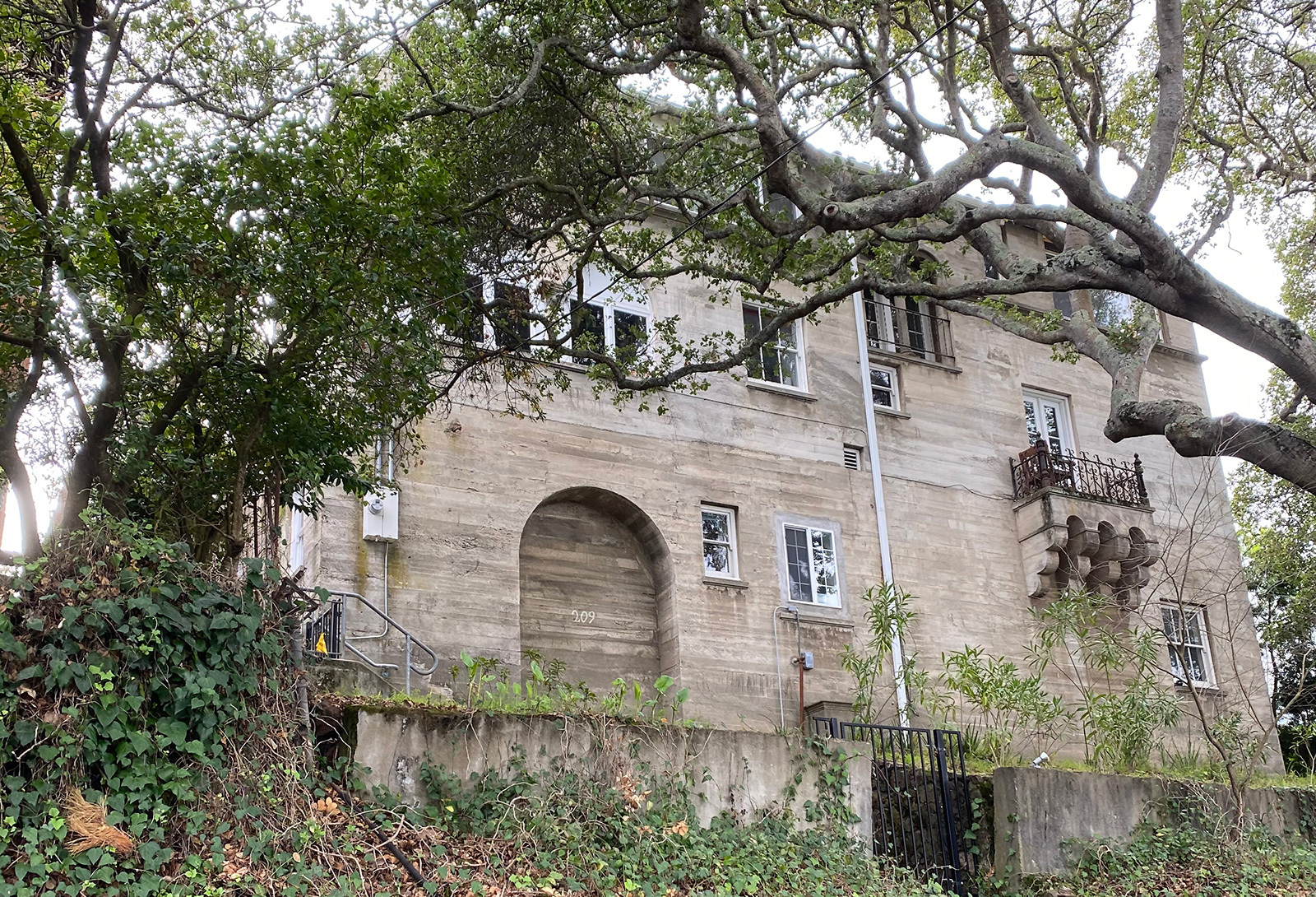
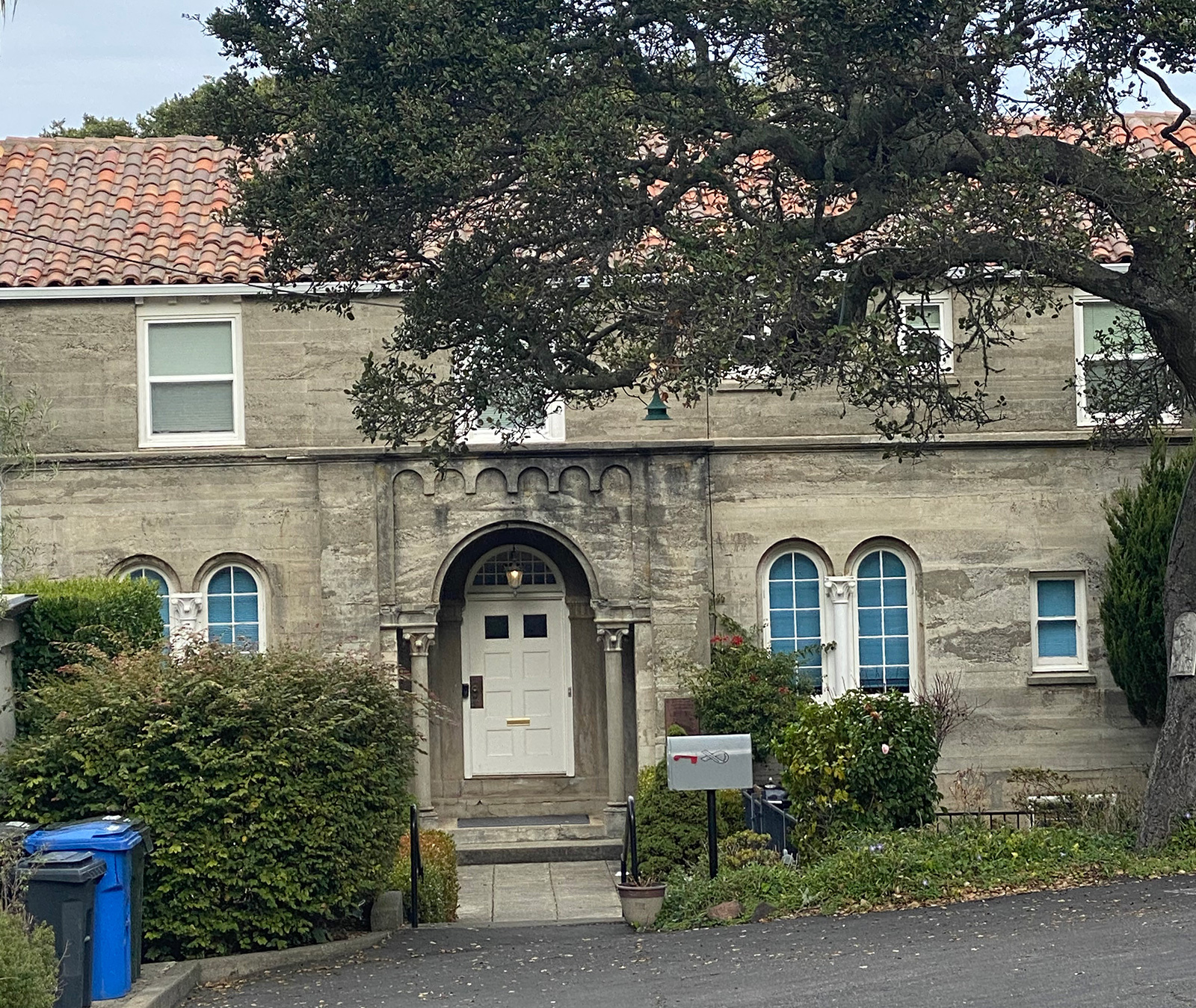
I’ve passed by this unique structure in Sausalito for years; it’s on the way to my mother-in-law’s house. I did a lot of poured concrete work in the early ’60s, so I always notice buildings constructed this way. Finally, the other day, I shot some pictures, and then looked it up.
It’s the rectory across the street from The Star of the Sea church.
Here is an article about it written in 1919:
Sausalito News, Volume 35, Number 14, 5 April 1919 CATHOLICS BUILDING NEW CONCRETE CHURCH
Last Sunday, Rev. Father Chas. R. Baschab, pastor of Star of the Sea parish, announced to his congregation that the erection of a new church and priest house will be started immediately on the beautiful property at the junction of Bulkley and Harrison avenues, bought a few months ago. The buildings, when finished, is to comprise the Lombard style of architecture, a spacious church with a hall in the basement and a home for the pastor and assistant. The buildings will be of reinforced concrete. George J. McCrea of Oakland, the architect who prepared the plans and specifications for the building will supervise their construction. He is the same architect who planned a fine Gothic church and rectory, erected in South San Francisco, a few years ago, and who planned the splendid Mission church and rectory at Livermore last year. The builder in charge of the work is F. Costa, a well known builder of concrete churches throughout this state. He has built churches at Auburn, Crescent City, Livermore and Woodland.
The Lombard style of architecture was adopted as it is especially adapted for hillside construction. According to the sketch drawn by Mr. McCrea, the new Catholic church will not only be the finest building in Sausalito but one of the most beautiful in the state.
I’ve attached a few pics of our half-acre homestead project here in Boise, Idaho. My wife and I bought a .42-acre lot with a fixer-upper house in the heart of town 5 years ago. We also added two beautiful girls, Willow (6) and Zoe (7 mos).
We focused on the house first, with a goal of having a net-zero house … and we are pretty close thanks to it after gutting and replacing all the plumbing, electrical and mechanical systems. This includes a bad-ass Mitsubishi heat pump, solar array that is net metered, heat pump water heater, all LED lighting, induction range, and lots of insulation.
My family deserves a lot of credit living thru the remodel process (is it ever really done?) and dealing with their carpenter dad that has big ideas sometimes.
The gas company came to replace our old meter and I just told them to pull it, we don’t need it anymore. That felt good.
The last 2 years we have focused a lot on the food production side, building up soil. We build a hugelkultur bed out of some trees we took down, and this has become a great spot for annuals, zucchini, squash and particularly melons … they love it. It also has a lot of mushrooms that fruit from the rotting wood below when the weather is right.
We get lots of water from our irrigation ditch as this area was all orchards before WW2, and Boise has an elaborate system of irrigation ditches all over town.
After reading The Half-Acre Homestead, I built up a compost area out of job site scraps and just poured piers for our chicken coop/garden storage area. The piers are big because I plan on adding a green roof like your coop.
I could go on and on, but I want you to know that books like yours have been a real lifeline for a builder like me, especially out here in Idaho. Folks like yourself, and Foster, Bruno, et al have been a great inspiration, and I will be forever grateful. Thank you for sharing with all of us.
Take care and come visit sometime,
T.J., Missy, Willow, and Zoe Sayles
To anyone receiving this for the first time, I send these newsletters out every few months. They’re different from social media — old school in a way — in that they go to a select audience (about 4000 people now), rather than blasting out into the internetosphere.
If you’re not signed up on the list to receive it, you can sign up for email delivery of the Gimme Shelter newsletter here.
In these days of tweets and Instagram, this is insanely long. But what gets lost in this social media era of haiku-length communications is writing. It’s why I keep doing (minimal) blog posts, and continue to publish books, and so I just let it rip with these newsletters. Blah blah blah…
Apocalypse Now
We were under an evacuation alert for about a week. Suitcases packed, about 200,000 negatives and scrapbooks stored in my brother’s garage, mattress set up for sleeping in back of pickup truck. Luckily, the fire got put out, but it sure made me think. What if we lose it all? Have to basically start over again?
We’ve been here almost 50 years, and have got this small homestead crafted for our lives — all without a bank mortgage. If a fire sweeps through here, there’s only so much stuff we could save.
I talked to some people who lost everything in the Santa Rosa fire a few years ago; and they said they looked out the window to see the fire sweeping into their yard and they only had time to grab the kids and the dog and vamoose.
Fishing boats at night after air cleared
We Californians not only have Covid to deal with, but the geographical threats of earthquake and fire. The dark side of sunny California.
There was no escaping the smoke. A nightmarish week. It looked like an apocalyptic movie. Finally, western winds cleared the air. One morning, I woke up and fog had cleared the air and I could breathe. The fresh air was like nectar.
Stuff
Many people are getting rid of stuff these days. In our books, Tiny Homes, Tiny Homes on the Move, and Small Homes, we document people opting for less stuff, smaller homes, and simpler lives.
Funny, lately and conversely, I’ve been grateful for all the stuff around here. I’ve got tools to fix just about anything (with the exception of welding). We’ve got a few thousand books, a multitude of kitchen/cooking tools, I’ve got a surfboard, paddle board and kayak. Lesley’s got two looms, a spinning wheel — it goes on forever.
Living in California now, one has to just accept the reality that all material possessions accumulated over a lifetime might be gone in a flash. Rather than quaking in my boots and stressing, I’ve played it out in my mind: if we lose it all, we’ll start over. It’ll be a challenge, but maybe in some ways exciting. I think of Siddhartha, the wealthy Indian Brahmin, who in Herman Hesse’s novel, leaves behind all his (many) worldly possessions and sets out on a life of spiritual discovery with just a robe and begging bowl.
The idea of a sequel to our book Tiny Homes on the Move has been kicking around here for a while. There are some really good books on nomadics out there now, such as Van Life, by Foster Huntington (who coined the term/hashtag #vanlife), Van Life Diaries by Morton, Dustow and Melrose, and Hit the Road by Robert Klanten and Maximilian Funk.
But after talking to Foster, who encouraged me to go ahead, and starting to gather material, I’m excited. We’ve discovered a lot of different and new rigs; this book will be different. The Sprinter vans are super, true, but there are a lot more lower-cost and/or homemade options to the +100K van.
Not that there will be a lot of old VW vans in the book, but I did think back to the 1960 VW van I had in the mid-60s with a very simple plywood setup for driving, sleeping, and cooking. Here’s a photo of a spiffier bus, but the same vintage, with the same setup. Mine had a 40 hp air-cooled motor, and we drove it 3000 miles to NYC in winter,1965 (wrapped in sleeping bags to keep warm), and also down into Puerto Vallarta before the bridge, where we had to forge the river with a guide walking in front of the car. Plus I carried tons of lumber on the roof and building materials inside it in building a house in Big Sur in the ’60s. A simple and noble beast.
Please contact us if you have or know of any interesting homes on wheels: lloyd@shelterpub.com
Things People Say
When people say to you, “With all due respect…”, you know they’re gonna follow that up by saying something mean….
Someone recently used the phrase, in referring to a county bureaucrat, “…promoted to a level of incompetence” … (That was in answer to me saying that bureaucrats beget more bureaucracy.)
Winston Churchill: “A pessimist sees the difficulty in every opportunity; an optimist sees the opportunity in every difficulty.” … Which reminds me of a response, possibly by WC, to a journalist who criticized him for a dangling preposition: “That is an impertinence up with which I will not put.”
Dale Carnegie: “Remember, today is the tomorrow you worried about yesterday.”
Neil Dickman on his music program, Bringing It On Home on KWMR, Aug 21, 2020: “I’m always certain, but often wrong.”
(In the weekly newsletter Recommendo, Kevin Kelly recently suggested Quote Investigator, which turns out to be a valuable checkpoint for, among other things, the authors of various quotations.)
In Praise of the Smartphone
I’ve preached about turning phones off, getting untethered, the need to get away from the small screen and read a book, or meditate, to be unavailable to the world once in a while. “A still mind is fertile ground for creative thoughts,” etc. BUT — once in a while, I’m freshly astounded by the power residing in my iPhone, what it’s capable of, how exceedingly useful it is.
No one ever told me I’d be carrying around a computer, camera, compass, music, dictionary, GPS, ride-hailer, the Google world, maps, podcasts, weather — an infinity of uses — in a device smaller than a deck of cards. So yeah, it’s good to disconnect at times, but — what a miraculous tool!
Posture
Ears above shoulders, shoulders above hips…
In Galloway’s Book on Running, Jeff Galloway describes legendary New Zealand coach Arthur Lydiard’s technique for better posture: imagine you have a pulley attached to a harness around your chest. The other end of the pulley is attached to 3-story building a block away. As you run (walk), lift your chest up and forward.
Note: The 3rd edition of Galloway’s Book on Running will be published early next year; it will include Jeff’s revolutionary run walk run® method of training. It is, I kid you not, the best book ever written on running. It’s sold over 600,000 copies, and been translated into eight foreign languages. It’s not a book by a writer about running; it’s a book about running by a world-class* runner (who can write).
*In 1973, Jeff set the American record for the 10-mile (47:49), and at age 35, ran the Houston-Tenneco Marathon in 2:16.
Stretching
The long-awaited 40th anniversary edition of Stretching, by Bob and Jean Anderson, has just arrived in bookstores. It really looks good! There’s a new section on stretches and tips (posture-posture-posture) for smartphone users. I’m going to send out a press release to people on this mailing list in a few days.
Octogenarianism
Out of maybe 3,500 people on this mailing list, I’ll bet there are fewer than a dozen over age 80. But for all of you youngsters, who will be here some day, and since I am constantly forced to reflect on this new world of ancient age, I’ll continue posting observations.
Physicality: From 80-on, it’s a different ball game. Nature is starting to subtract physical functions. Things I used to lift easily are now a strain (a 94-pound sack of cement — forget it!) Distances seem longer. I’m less flexible, like less range of motion in my neck when turning around to back up a car. (Yeah, I should stretch more!)
Memorabilia: I’m really forgetting stuff these days. Us old people, our memory banks are overloaded. Only so much room in there. So if I forget your name or birthday, it’s all part of the aging process. (Someone told me this week that if you know you’re forgetting things, it’s not dementia.) Now where was I?
Happening more frequently: I’ll go into the house from the studio to get something, forget what I was looking for, and have to walk back to the studio to remember.
“What, I told you that before?” Happening more and more frequently. Seems I’m repeating stories multiple times. No sympathy from friends: “Yeah, you already told me that.” Brutal.
Working Out
I’m riding my Turbo Levo pedal-assist bike regularly now, discovering roads and trails in the hills. The bike is so much fun, I look forward to heading out. A few days ago, went for a hike with Doug (shown here) and Tomás; we are so lucky to have both this magic mountain and the ocean to explore in these parts. I try to do something physical every day. Plato recommended training in both music and gymnastic for development of the soul. Too many people leave out the gymnastic part as they get older. My long-time friend Bob Anderson says, “You never hear anyone say, ‘I’m sorry I worked out.’”
Keeping On Keeping On
“If you don’t know the exact moment when the lights will go out, you might as well read until they do.”
–Latest Readings, by Clive James, 2015
Curved Roof
My latest building, 10′ by 10’. Curved roof plus windows at eye level are design bits I learned from master builder Lloyd House (Builders of the Pacific Coast), which give you a feeling of spaciousness. Same principle with gypsy wagons (vardos). A lot of help from Billy Cummings in building this.
Review copies of any books sent free, if you designate where you would be submitting review.
Forgotten Books from Shelter
In each newsletter I’m going to show one of our less well-known books.
Wonderful Houses Around the World, by Yoshio Komatsu, is a children’s book showing ten homes in different countries. Yoshio is in my mind the best photographer in the world of homes. With each photo of these homes, there is a watercolor drawing of life inside the home, with an emphasis on what the children are doing.
You know, it’s really fun to do these. It’s like having a chance to chat with friends, rather than addressing the world via blog, Instagram, (or books, for that matter). I wish I had more time to do these. I piece these together over a week or so and send the rough version to Rick Gordon, who transforms them into this nicely designed newsletter.
You’re the man. Love the newsletter, don’t have any social media, so keep it up. My wife got me The Half-Acre Homestead for Christmas and used it for inspiration for my summer greenhouse project. Hope for many years of season extension up here in the inland northwest. Keep up the good work.
Tiny (10 by 10) building — my latest. Curved roof like gypsy wagon (vardo or Basque shepherd’s wagon) plus windows at eye level give tiny rooms a feeling of spaciousness. This is the first autumn for this building.
Billy Cummings did a lot of the work here. Construction details (including making the curved rafters) and interior photos in The Half-Acre Homestead.
Peter from Portland, OR here. Met you at a book signing a couple years ago at Powell’s on Hawthorne St.
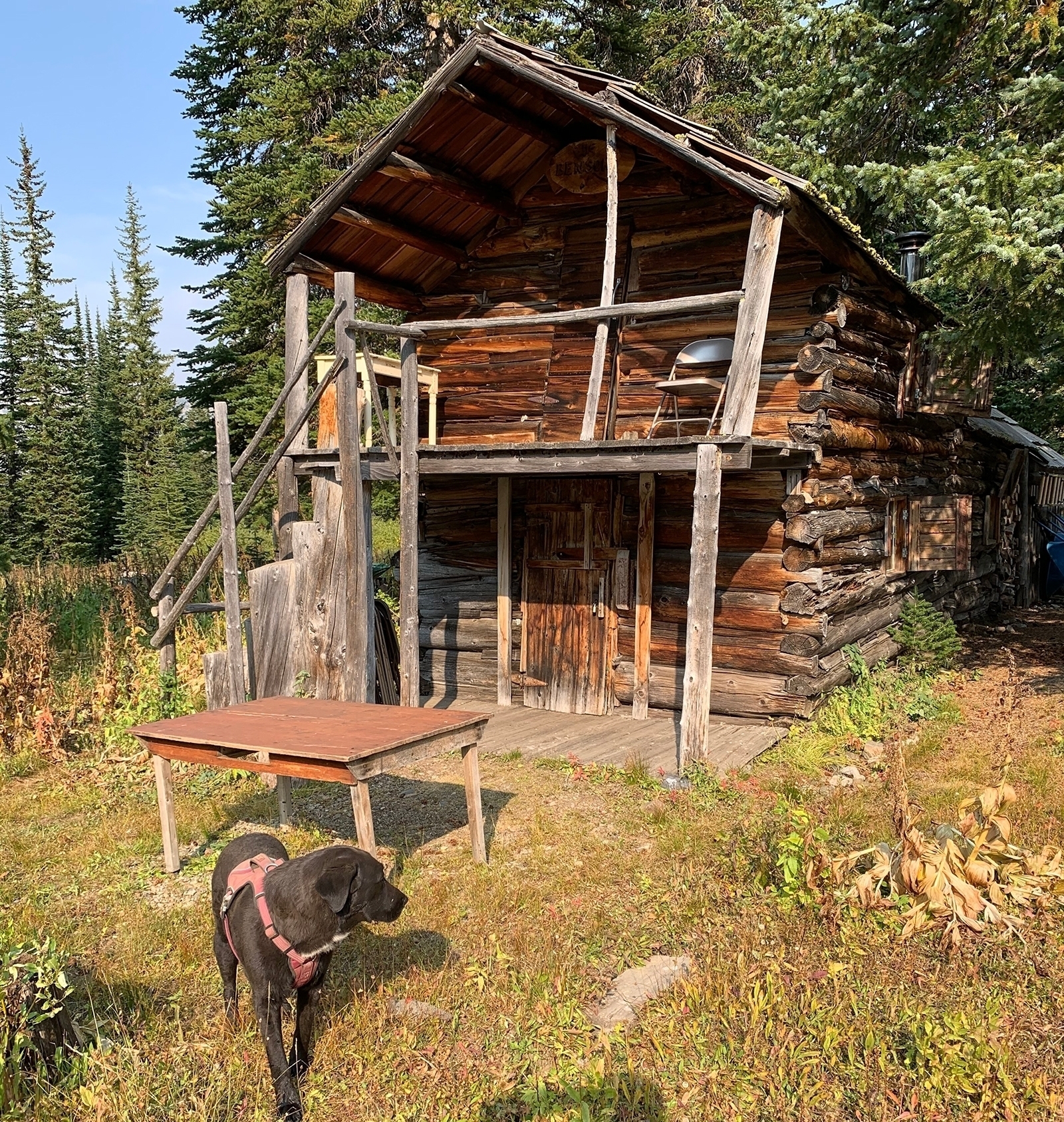
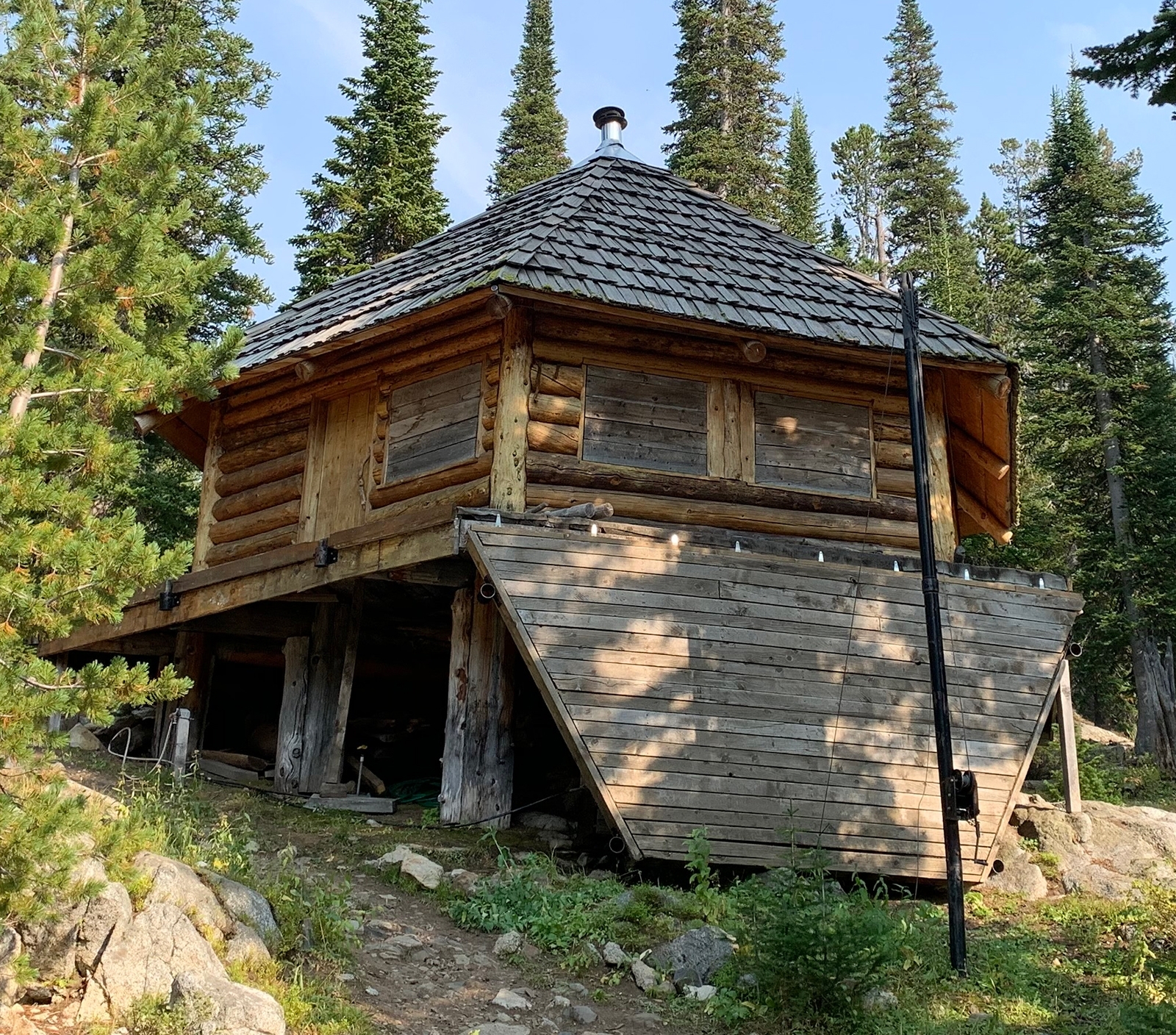
Came upon these beauties on the first day of a 5-day thru-hike in the Eagle Cap Wilderness in the Wallowa Mtns of NE Oregon. These mountains are high alpine, differing greatly in appearance and density than the Cascades. They seem to be managed by a man who goes by “Dennis”, who we encountered on our initial ascent into the wilderness. He told us he was the caretaker of the cabins on the southern shore of Android Lake, to peruse them if we fancy. He mentioned that it was the remnants of an old summer “resort” from the early 1900s. He has done good work restoring these old gems.
The yurt-shaped cabin looks newer, however. You’ll also notice some homemade structural supports on a couple of them. All gear/equipment/tools are carried by horseback up nearly 6500 ft. (3000 ft. gain) to this location. All in all, pretty cool. They function on something of a rental basis. They all have beds, wood stoves and seem to be in good shape interiorly as well.