building (454)

GIMME SHELTER – October 2021

To anyone receiving this for the first time, I send these newsletters out every few months. They’re different from social media — old school in a way — in that they go to a select audience (over 5,000 people now), rather than blasting out into the internetosphere.

If you’re not signed up on the list to receive it, you can sign up for email delivery of the Gimme Shelter newsletter here.


This is my first newsletter in 6 months, no less. Boy, how time has flown. So I’m afraid it’s gonna be a long one.

Rolling Homes

Rick and I have been working on this book for maybe 4 months. Our modus operandi: I write (or edit) text, print out photos, use a color copy machine (a workhorse Brother MFC-371DCW) to resize photos, then paste down text and photos with removable Scotch Tape. These then go to Rick, who uses Photoshop and InDesign to prepare files for printers. As we go along, he makes PDFs so I can print out pages to see how they look. An analog/digital process. We’ve got about 150 (out of 256) pages done.

I never know what a book will be like until we are well underway in production. We start with a theme — here, homes on wheels — and put it together 2 pages at a time, and the book reveals itself as we proceed.

And this one — good golly Miss Molly! — is turning out to be amazing. I’m sure you’re aware of the explosion of nomadic vehicles in recent years. Our book is composed of primarily do-it-yourselfers — the theme running through all our building books — and the designs, ingenuity, and craftsmanship are stunning.

One thing I just realized: there are a lot of surfers in this book — female and male. Below is Yasha Hetzel, who went 120,000 miles in Australia in a Citroën Berlingo van, here surfing at South Point:

BTW, we don’t seem to have any of the so-called “vanlife” rigs here — the young attractive couples with photos of sunsets and the minutiae of their daily lives. It wasn’t a conscious decision; it’s just is turning out that our rigs and people are more real, more hands-on than the “influencers.”

Shelter Books Exhibited at the Biennale Architettura in Venice

This is the big news around here right now. According to Wikipedia, the Biennale Architettura is “…an International exhibition held every other year in Venice, Italy, in which architecture from nations around the world is presented.”

The two architects responsible for the exhibit, Leopold Banchini and Lukas Feireiss, visited here last year, interviewed me, shot photos, and in conjunction with the exhibit, produced a book titled Shelter Cookbook. They have arranged for my flights to and from Venice, and a place to stay there, and after three flight cancellations and rescheduling and Covid preparations, I’m set to leave here on October 6th. I am excited!

The Shelter part of the exhibit consists of three of our books: Domebook One, Domebook 2, and Shelter, which are on display, as well as stick models of buildings shown in these books.

Stick models of buildings in Shelter and Domebook 2. A lot of work went into making these!

The exhibit is in the Arsenale di Venezia, a huge complex of shipyards and buildings built in the 1100s and used for building Venice’s ships.

I’ll be in Venice October 9–11; and on the 13th, I’ll be doing a slide presentation called “60 Years of Natural Building” at the Accademia di Architettura di Mendrisio, a school of architecture in Italian-speaking Switzerland. Then to Florence, then (maybe train ride) to Sicily where I’ll spend a week exploring (and swimming). Back home and back to book production end of October.

I’m really excited to be going back to Italy (and seeing Venice and Sicily for the first time). I love the people, the sea, the countryside, the food, the gardens — the Italian way of life — my cup of tea — er, espresso.

I’m going as lightweight as possible this trip, with a Cotopaxi Allpa 35 travel pack with compression bags (fits easily into overhead bin) and my regular daily Dakine backpack for MacBook Air, glasses, pens, etc. Trying something new this trip: the only camera — my iPhone 11 Pro Max. Not taking my Olympus OM-D EM-1 camera and lenses saves a lot of weight, and the iPhone is pretty darn capable.
Read More …


Post a comment (3 comments)

Yurt of Sprayed Concrete

Lloyd,

Just looking at your blog and reminiscing. I’ll include my first house that was inspired by your first book. I built it in the woods outside Chapel Hill NC. I stretched burlap over the frames and sprayed it with watered-down cement. The area was many acres of owner-built alternative architecture. (The book “12 by 12” is about a little house that was on the next street over.) The funny thing about my little house is, years later I was traveling through the area and went by to see what it looked like. Astonishingly (to me), it had been turned into an upscale suburban sea of split-level homes but the one on my old lot had kept the little yurt and was using it for a pool house.

Since those days, I have built 6–8 houses; the most recent was in a community called City of the Sun in southern New Mexico primarily out of papercrete.

Thank you for all you have done to inspire countless dreamers.

–Bob Cook


Back in the ’60s, my architect hero was Bernard Maybeck who, along with architect Julia Morgan, designed a series of wonderful Bay Area buildings. One of Maybeck’s experiments was “Bubblestone,” making a wall by hanging burlap bags that had been “…dipped into a frothy mix of concrete and then hung, shingle-style, onto exterior walls.”

Reference for above quote: patch.com/california/berkeley/bp–architect-bernard-maybeck-and-his-experiments-witac2f59eef0

Post a comment

California Today: What to Know About California’s New Housing Laws

It’s Monday. Gov. Gavin Newsom has signed two bills aimed at easing the state’s housing crisis. Plus, firefighters are scrambling to protect some of the world’s oldest trees from flames.

No matter where you live, you’re probably familiar with the exorbitant cost of housing in California.

The state’s median home price has crept above $800,000, more than double what it is nationwide. Among the 50 biggest cities in the country, we’re home to the top four most difficult places to afford a mortgage. And half of all Americans experiencing homelessness live in California.

Our housing crisis has a seemingly simple solution, according to the laws of supply and demand: Build more housing.

But for decades, resistance from suburban homeowners has stalled development as the problem has only gotten worse.

On Thursday, the state took a step toward creating higher-density neighborhoods as Gov. Gavin Newsom signed two high-profile housing bills.

Though the bills, Senate Bills 9 and 10, endured intense opposition in recent months, neither is all that revolutionary, said Conor Dougherty, a reporter for The New York Times who writes about economics in California.

But the package of housing reforms passed in California over the past four years, including these two latest measures, “is probably the biggest change in housing in 50 years or more,” Conor told me.
Read More …

Post a comment (7 comments)

Tiny Person Reading Tiny Book

Hi, Lloyd and company!

Greetings from New Hampshire, coast to coast!

I thoroughly enjoy reading your blog and find it to be one of the consistent stops I make on the web. Several years ago I wrote and asked for a selection of your tiny books for my first and second graders, a gift which many of them loved. Now I have a 1½-year-old daughter and she has loved the tiny Tiny Homes to pieces!

Just a quick thank you for all of the wonderful publications, blogs, skating, surfing, traveling, coffee, pictures, music, and insights throughout the years!

–Sam

Post a comment

How I Got Into Building

I just ran across this blog post from 7 years ago and decided to repost it.

I started building almost 50 years ago, and have lived in a self-built home ever since. If I’d been able to buy a wonderful old good-feeling house, I might have never started building. But it was always cheaper to build than to buy, and by building myself, I could design what I wanted and use materials I wanted to live with.

I set off to learn the art of building in 1960. I liked the whole process immensely. Hammering nails, framing—delineating space. The smell in lumber yards. Nailing down the sub-floor, the roof decking. It’s a thrill when you first step on the floor you’ve just created.

Ideally I’d have worked with a master carpenter long enough to learn the basics, but there was never time. I learned from friends and books and by blundering my way into a process that required a certain amount of competence. My perspective was that of a novice, a homeowner — rather than a pro. As I learned, I felt that I could tell others how to build, or at least get them started on the path to creating their own homes.

Through the years I’ve personally gone from post and beam to geodesic domes to stud frame construction. It’s been a constant learning process, and this has led me into investigating many methods of construction — I’m interested in them all. For five years, the late ’60s to early ’70s, I built geodesic domes. I got into being a publisher by producing Domebook One in 1970 and Domebook 2 in 1971.

I then gave up on domes (as homes) and published our namesake Shelter in 1973. We’ve published books on a variety of subjects over the years, and returned to our roots with Home Work: Handbuilt Shelter in 2004, The Barefoot Architect in 2008, Builders of the Pacific Coast in 2008, Tiny Homes: Simple Shelter in 2012 and now Tiny Homes On the Move: Wheels & Water.

I often ask architects if they know the definition of architecture: the art and science of building.

Building is my favorite subject. Even in this day and age, building a house with your own hands can save you a ton of money (I’ve never had a mortgage) and — if you follow it through — you can get what you want in a home.

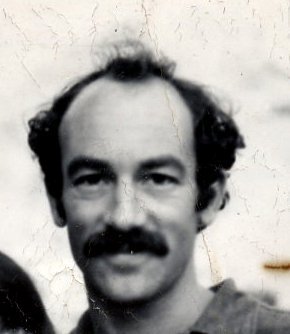
Pic is when I was building a big timber house at Rancho Rico in Big Sur in 1966.

Post a comment (20 comments)

Homeless Oaklanders Built a “Miracle” Village

Article in The Guardian, words and great photos by Gabrielle Canon, Tuesday May 11, 2021

Homeless Oaklanders were tired of the housing crisis. So they built a “miracle” village.

Tucked under a highway overpass in West Oakland, just beyond a graveyard of charred cars and dumped debris, lies an unexpected refuge.

There’s a collection of beautiful, small structures built from foraged materials. There’s a hot shower, a fully stocked kitchen and health clinic. There’s a free “store” offering donated items including clothes and books, and a composting toilet. There are stone and gravel paths lined with flowers and vegetable gardens. There’s even an outdoor pizza oven.

The so-called ‘Cob on Wood’ center has arisen in recent months to provide amenities for those living in a nearby homeless encampment, one of the largest in the city. But most importantly, it’s fostering a sense of community and dignity, according to the unhoused and housed residents who came together to build it. They hope their innovative approach will lead to big changes in how the city addresses its growing homeless population.…

Now, roughly five months since they broke ground, a community has coalesced around the space that not only hosts events and workshops but also offers food, hygiene, and skill-sharing to the estimated 300 people who live in nearby encampments.

‘It is working,’ Schusterman says, smiling broadly. ‘This is the vision we had and it is working like a miracle.’

(I’m not showing photos due to copyright considerations.)

From Maui Surfer

Post a comment (2 comments)