China’s Guizhou province peering over at Mount Fanjing. Rising more than 100 meters above the surrounding landscape, visitors will need to climb almost 9,000 steps to reach the summit. Look closely at the image and you can see how the stairs wind up and around stone outcroppings and through a gorge.
The buildings you see perched at the top are two Buddhist temples — the Temple of the Buddha and the Temple of Maitreya — linked by a small footbridge.
Located in Tongren, Guizhou province, southeastern China, the highest peak of the Wuling Mountains, at 8,430 feet.
The mighty and ever-beautiful Golden Gate Bridge. I’ve been to the top (of the south tower), as well as underneath it in a kayak journey from my home beach into San Francisco.
Plus my dad went out on a plank walkway to the south tower when it was being built in 1933.
I got a connection with this bridge!
P.S.: The true designer of the bridge was Charles Alton Ellis, not Joseph Strauss. See John Van der Zee’s book, The Gate, on the true story of this elegant design.
I just discovered this online. It was such an honor to be recognized at this exhibition. These were my hosts, architect/teacher Leopold Banchini (left) and artist/curator/teacher Lukas Feireiss (right). They both spent an afternoon here in our studio in 2019, planning the exhibit, which displayed our books Shelter, Domebook One, and Domebook 2, as well as stick models made from the buildings shown in our books.
I also just read that 300,000 people attended the exhibit, a biennial international architectural exhibition which was open from May to November in Venice. That means that maybe at least 100,000 people saw the Shelter exhibit, since it was just inside the entrance. Wow!
I built an unusual building for my Jungian Analyst and East Asian Medicine-MA partner, Laura, who had a vision. She saw a 5-sided first floor with a 6-sided second floor with a light tube or skylight through the middle. About 1600 sq. ft in all. It took me about three years to finish, and it is her offices: studio on second and meditation room on the third. Its secondary purpose is to bring geometric energies into the earth for healing of the planet. It is based on the number 11, the number of the Tao. Heaven above, earth below.
In 1959, an armed revolt led by Fidel Castro ousted Cuba’s military dictatorship of Fulgencio Batista. As part of a broader plan to improve the quality of life for millions of Cubans, Castro’s new government sought to develop a program to mass-produce new housing, schools and factories.
In the years that followed, however, this dream clashed with difficult realities. Sanctions and supply chain disruptions had created a shortage of conventional building materials.
Architects realized they needed to do more with less and invent new construction methods using local materials.
Three types of vaults — clockwise, from top left: conventional stone, tiled dome and tiled vault. Luis Moya Blanco, CC BY-ND
Tile vaulting is a technique that flourished in the eastern Mediterranean after the 10th century.
It involves constructing arched ceilings made of multiple layers of lightweight terra cotta tiles. To build the first layer, the builders use fast-setting mortar to glue the tiles together with barely any temporary support. Afterward, the builder adds more layers with normal cement or lime mortar. This technique doesn’t require expensive machinery or use of a lot of timber for formwork. But speed and craftsmanship are paramount.…
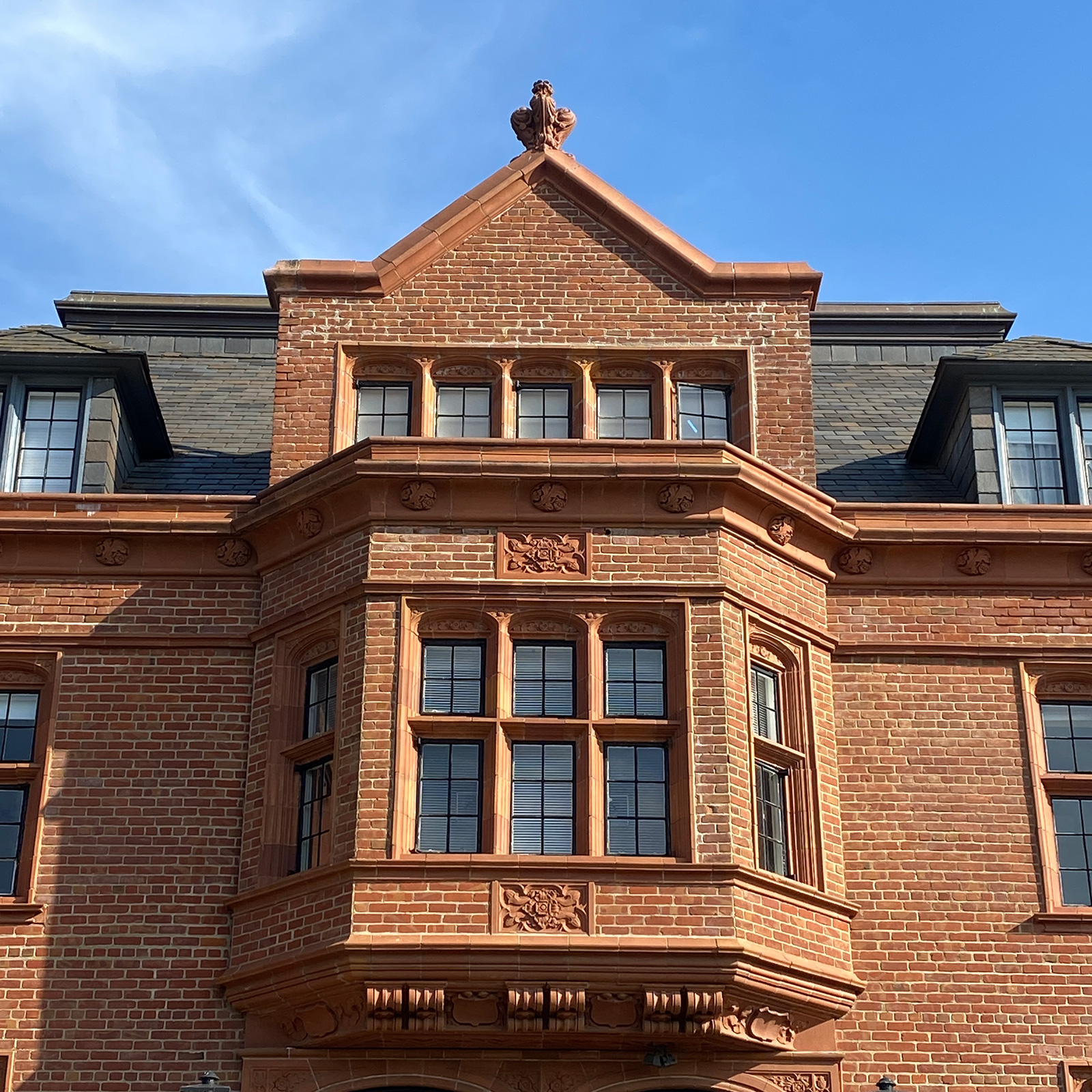
Originally built to provide convalescent care for elderly women, it’s now a retirement home. Every time I go by, I admire it. Julia Morgan, along with Bernard Maybeck, are two of my favorite architects, each leaving a legacy of wonderful buildings in Northern California. It’s at 3400 Laguna Street in the Marina district. (I couldn’t get far enough back to get a balanced photo.)
The buildings in La Guajira, especially housing, present structural and thermal comfort problems due to the current construction materials and the underutilization of available resources in the area. Insu-ram is a system of assemblable clay blocks inspired by the cells in the elytra, or hardened wing covers, of certain beetles that allow internal air flow to circulate. Insu-ram cools and insulates a space from external heat without the use of machines and incorporates local biodegradable materials, such as rammed earth, clay, and manure to eliminate the concept of waste. The external pattern of the block generates a micro-shading effect and reduces the solar contact surface. It can be produced locally, at a low cost, is easy to replicate, and helps to solve the housing deficit in the area, while offering a way to build thermally comfortable houses in a fast, cheap, and efficient way.
I don’t think the previous post showing a section of this magnificent building does it justice, so I used the Photoshop “merge” command to paste together 4 shots. Not entirely satisfactory either, as there are some weirdnesses in the stitching together, like the truck that passed by during the 4th shot.
The problem is with photographing buildings when you can’t get far enough back to get proper perspective. I used to solve this somewhat with a parallax distortion lens on my old Nikons, but iPhones have no such options.
Anyway, you get the idea (if imperfect) here.
The building, along with Gioto’s bell tower, is just staggering, as you can see, and this angle doesn’t even include Brunelleschi’s dome (at rear).