“…Maxime Qavtaradze is literally close to the heavens. The 59-year-old monk lives atop a stone pillar in Georgia, scaling a 131-foot ladder in order to leave and enter his lofty home, reports CNN. Photographer Amos Chapple ascended the cliff to photograph his life there.
The Katskhi Pillar has long been venerated by locals in the area, though it’s been uninhabited since around the 1400s. When climbers ascended for the first time in centuries in 1944, they found the ruins of a church and the 600-year-old bones of the last stylite who lived there.
The stylite tradition is believed to have begun in 423 when St. Simeon the Elder climbed a pillar in Syria in order to avoid worldly temptations, but the practice has since fallen out of favor. However, Qavtaradze is a modern devotee.
Though isolated, he is not a total hermit, coming down once or twice a week to counsel the troubled young men who come to the monastery at the bottom for his help. After all, he was once one of them. Though he now lives at the top of the world, Qavtaradze found his vocation when he was the lowest he’s ever been, doing prison time after he ‘drank, sold drugs, everything’ as a young man.…”
Click here.
From Evan Kahn
 A ton of stuff on Tiny House Pins here.
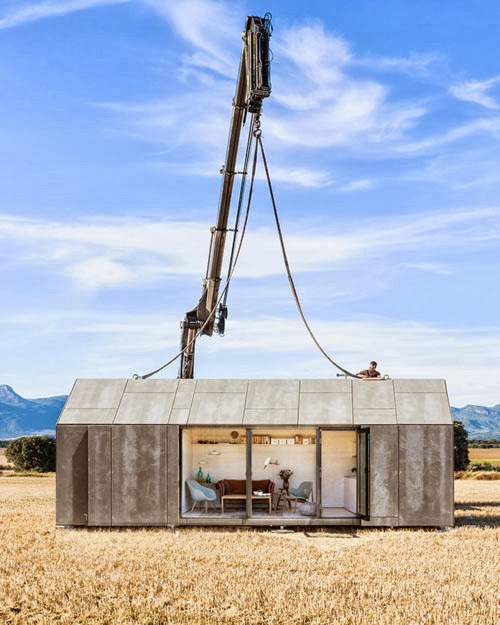
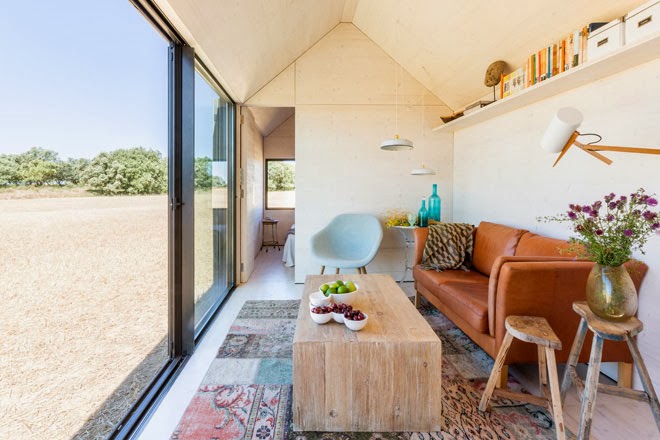
 “A lesson in blowing Dwell magazine’s mind, courtesy of the Madrid-based firm Ábaton Arquitectura: design a house that’s about 290 square feet (micro home!) that’s made from recyclable materials (green!) and can be transported by truck and assembled in a day (mobile!). Oh, and let’s not forget about material makeup (the exterior is clad in cement-board panels) and prefab potential: ÁPH80 can be manufactured in as few as four weeks. Dwell has officially spontaneously combusted.
With gabled ceilings reaching more than 11 feet, walls of glass, and a combined living room and kitchen, the feel of this place is light and airy; ‘the different spaces are recognisable [sic] and the feeling indoors is one of fullness,’ the architects say.
Another look, below:”

Click here.
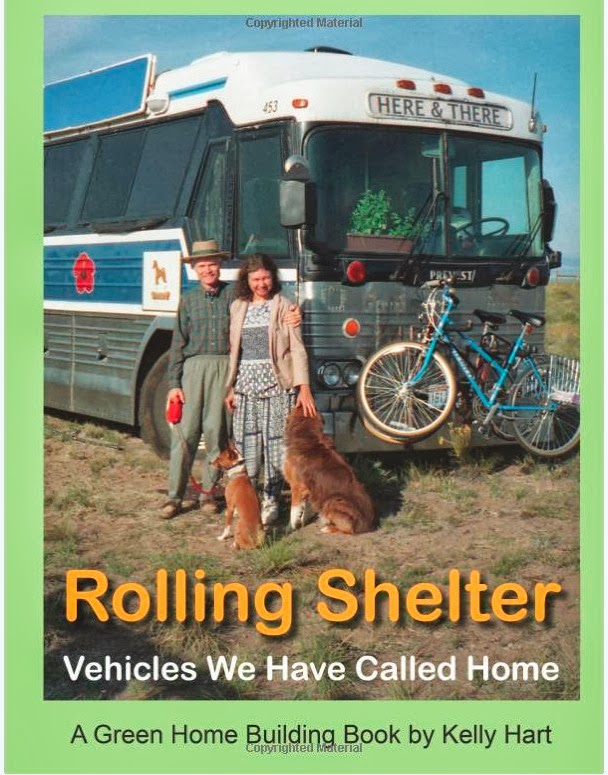
 I read this book straight through last night. It’s a charming and informative account of Kelly and Rosana Hart’s many nomadic vehicles over the last 4 decades: trailers, a van, a pickup-truck-with-camper, and several buses.
Kelly’s first bus was covered in our book Shelter (p. 89) in 1973, and his earthbag/papercrete house was in our book Home Work (p. 88) in 2004. He’s been creating new mobile (and stationary) homes ever since. Plus running the info-packed website https://greenhomebuilding.com/.
The tone of writing is conversational and friendly, there are building tips for those inspired to do likewise, there are details and photos from a bunch of trips (including to Mexico), and there are a few hundred color photos. A homemade book in the best sense, made in the USA, $12 at Amazon here.
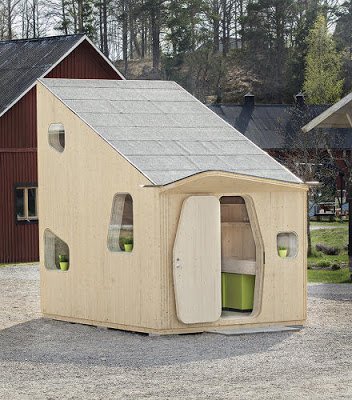 “A few years ago, Swedish student housing company AF Bostäder had a young woman from the city of Lund inside live in a tiny house-box–not even 10 square meters large–to test the idea of a cheap, cheerful, and environmentally friendly “smart student unit” that included a toilet, kitchen, and bed. “I think she still lives there,” says Linda Camara of Tengbom Architects, the company behind the 2013 iteration of the living pod–a petite vision in pale wood offset with lime green plant pots, cushions and stools.
The premise for the cube, which has been in the works since 2007, is reasonable enough: students live and die on cheap housing, but everyone needs a toilet. It’s taken six years to whittle the tiny houses down to the current cross-laminated wooden test model form. The large kitchen was squirreled away in the original blueprint, but Tengbom redesigned it as the prime area after student feedback. The current space-efficient design, complete with a patio and vaulted sleeping area, lowers standard rent rates by 50%–music to the ears of any economically bereft twentysomething.…”
Click here.
 “Daily News reporter Simone Weichselbaum explores the smallest apartment in New York City at 14 Convent Ave.
In jail, captives get an eight-foot-wide space plus three meals a day as they pay their debt to society.
But in one Harlem building, the captives in a 100-square-foot apartment pay $1,275 a month — and there is no free grub.…”
Click here.
From Rick Gordon
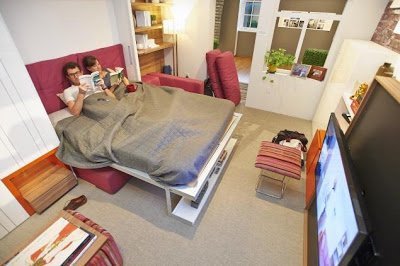 “The Daily News’ Matt Chaban lives with his wife in one of the Bloomberg administration’s 325-square-foot mini-apartments…
“‘My wife and I are intimate again — thanks to the Bloomberg administration’s latest housing initiative.
That’s not kissing and telling: The missus and I got a chance to spend a night inside one of the city’s new “Mike-ros,” a 325-square-foot studio apartment that the mayor thinks is the future for young urban couples.…'”
Click here.
 From Chris McClellan:
“…the treehouse SunRay built in Portland in a 300 year old fir tree in the middle of a suburb. When one of the neighbors complained and brought out the building inspector he apparently fell in love with it because he told them to take the stairs down and put up a ladder so it wouldn’t be a deck because he had no authority over treehouses that weren’t decks with stairs.”
Chris’ website: https://www.industrialrustic.com/nb/
 “That almost impossibly tiny house in Toronto…has found a buyer after just three weeks on the market, though it sold for well below asking price.
The property at 30 Hanson St. on the east side of Toronto’s inner city got a lot of publicity on real estate sites and blogs as an example of just how tight the city’s housing market has become.
So tight, in fact, that a house the size of a typical backyard tool shed went on the market for $229,000, enough money to buy a large suburban home in some Canadian cities.
But it sold this week for $165,000, the National Post reports, a good 28 per cent below asking price.…”
Click here.
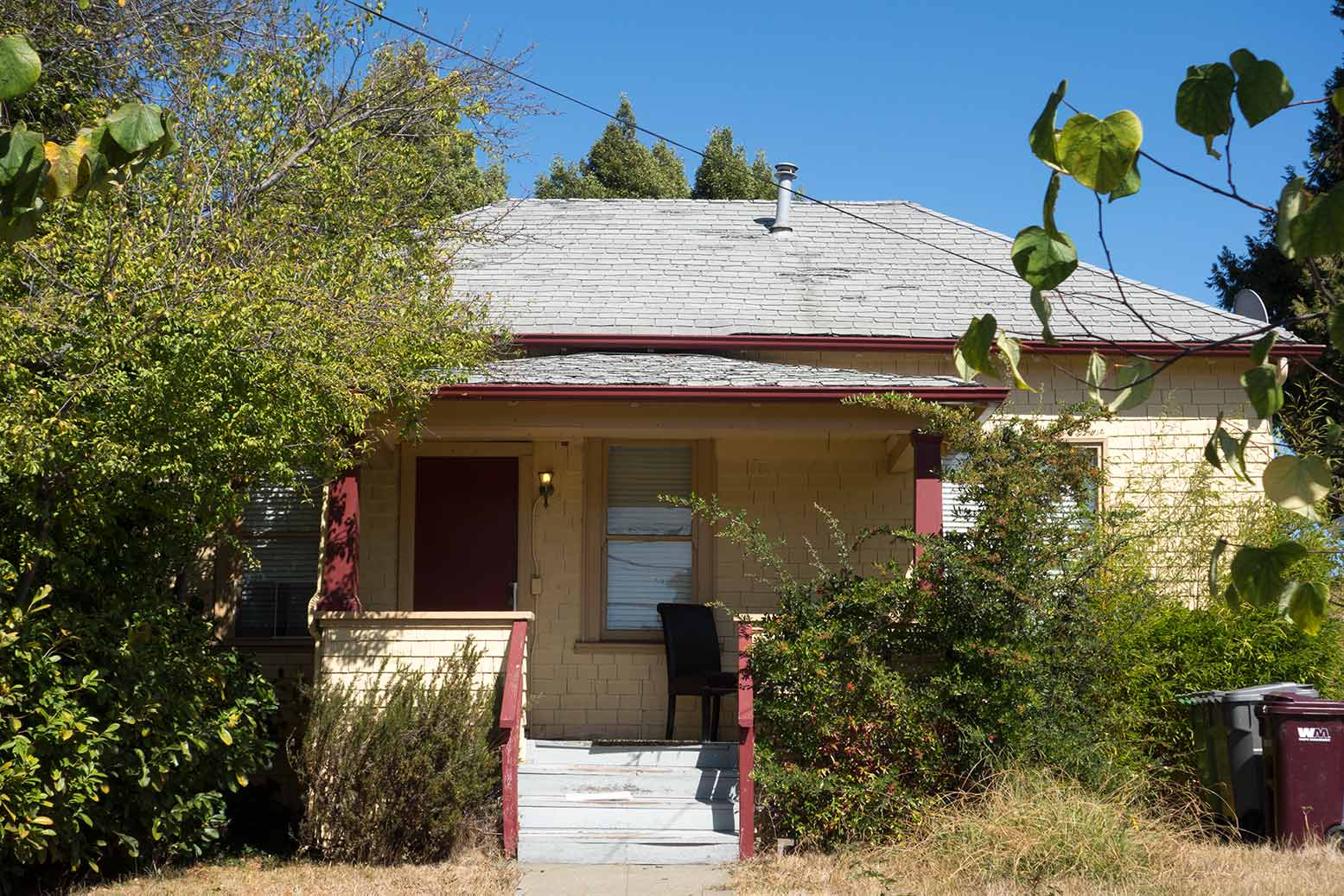
 Tiny homes are the rage now. Tons of media on the subject. From which we, of course, benefit with our book Tiny Homes (50,000+ copies sold in last year.)
But you know what? Much more realistic for someone who can’t fit into 3-400 sq.ft. of living space, or who doesn’t have a piece of land, and who has a full-time job, are the small fixer-uppers in not-so-stylish towns. In the San Francisco Bay Area, for example, forget SF, Berkeley, Alameda, Mill Valley, Sausalito, Palo Alto or even San Mateo, but check out Richmond, Hayward, El Cerrito, San Leandro—towns that are either rundown, but improving, or towns that are not hip and don’t have B&Bs listed in Lonely Planet books.
There are 1000s and 1000s of little houses in towns that are not of the hip- or destination-persuasion , with backyards and neighborhoods that may be on an uptick. The crack houses have gone. The meth dealers have moved elsewhere. Home prices are WAY lower than the sought-after areas.
Just sayin…


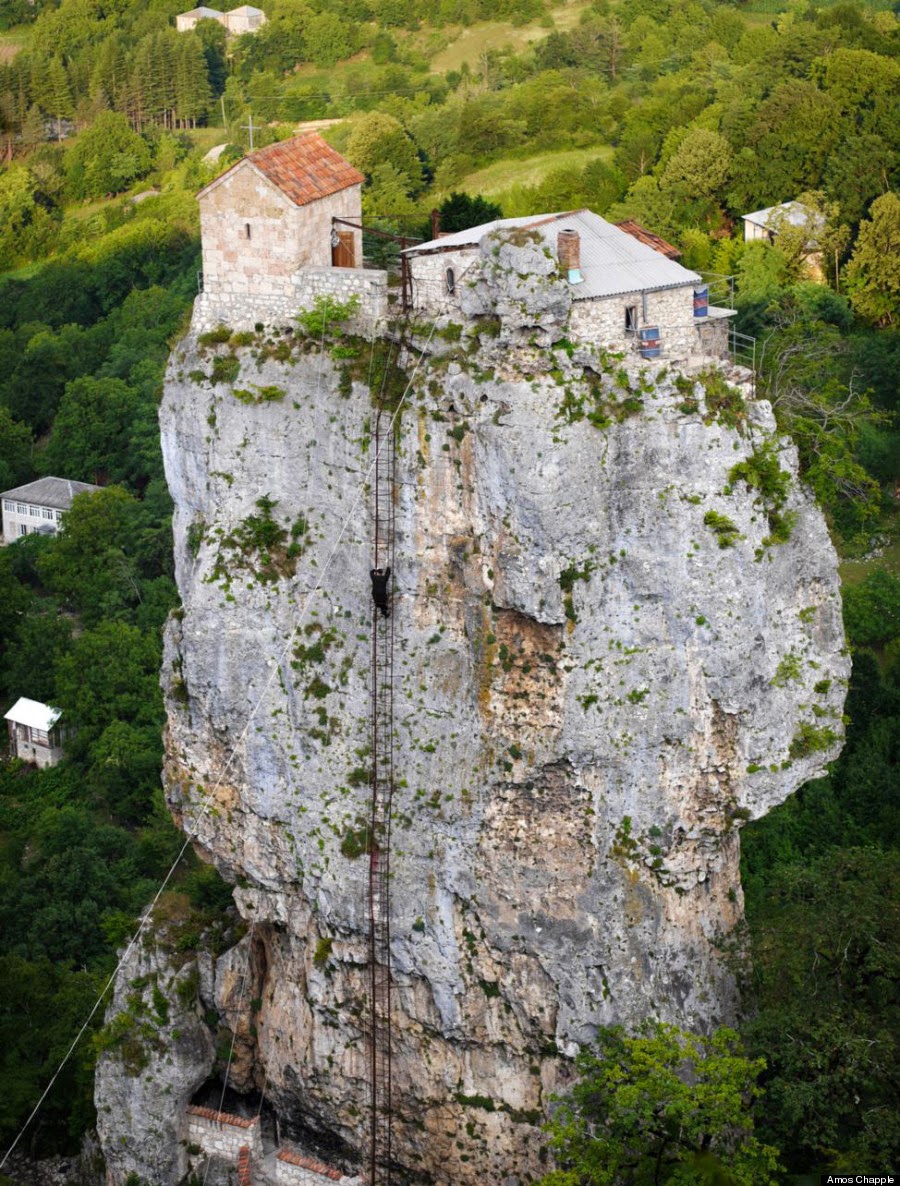 “…Maxime Qavtaradze is literally close to the heavens. The 59-year-old monk lives atop a stone pillar in Georgia, scaling a 131-foot ladder in order to leave and enter his lofty home, reports CNN. Photographer Amos Chapple ascended the cliff to photograph his life there.