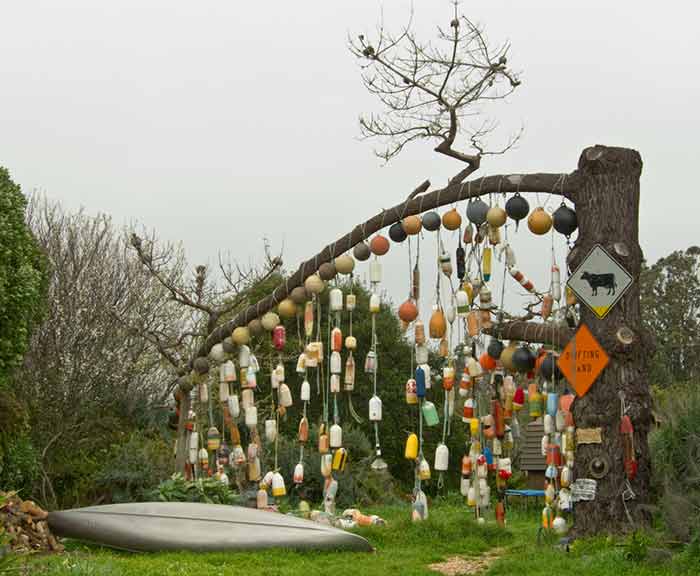
 Is my neighbor Walter a beachcomber or what?
Walter the beachcomber
Post a comment (2 comments)

Is my neighbor Walter a beachcomber or what?
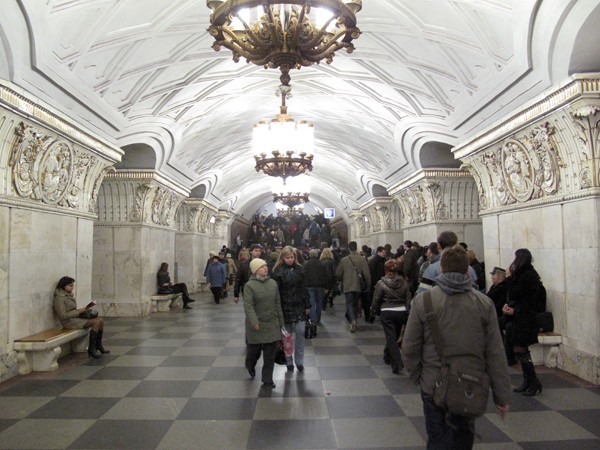 Compare to NYC!
 I’m doing a talk at the Maker Faire, put on by O’Reilly’s Make Magazine, next weekend in San Mateo, Calif, Saturday afternoon, May 22. 1:30 PM at the San Mateo County Event Center (the old Bay Meadows racetrack.) Most of the stuff in Make is pretty nerdy: circuit boards, robots, remote control, hi-tech noodling…but at this year’s Maker Faire, there’s the “Homegrown Village,” sponsored by Farm Aid. I’ll be talking about a mini-homestead. Building a home, growing food, backyard chickens on a small piece of land — country or city. Tiny houses, houses on wheels, houseboats. Scaling back. Just how much of your food and shelter can you produce in the 21st century? I’m looking forward to it, it’s always sounded like a great event.
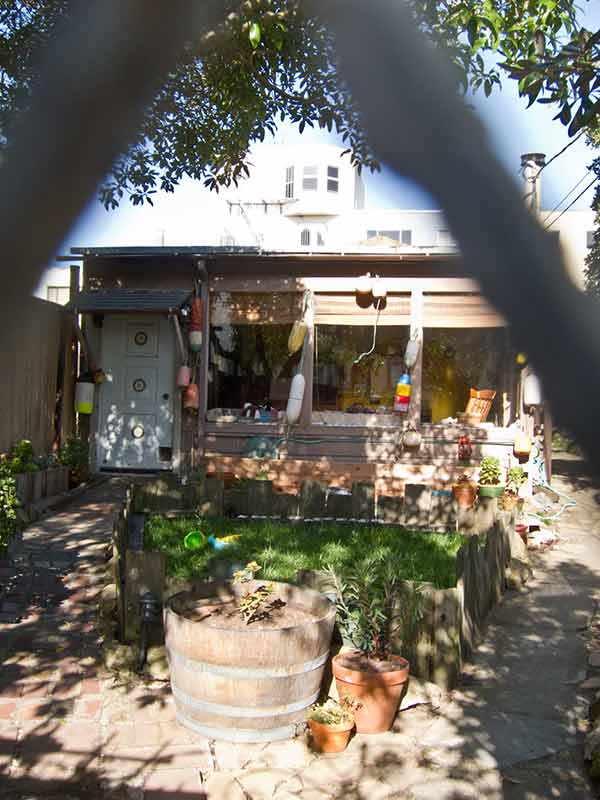 Looking through the fence at a house out near Ocean Beach in San Francisco. It was set back from the street so it had this sunny front yard. Like a bit of the country in the city.
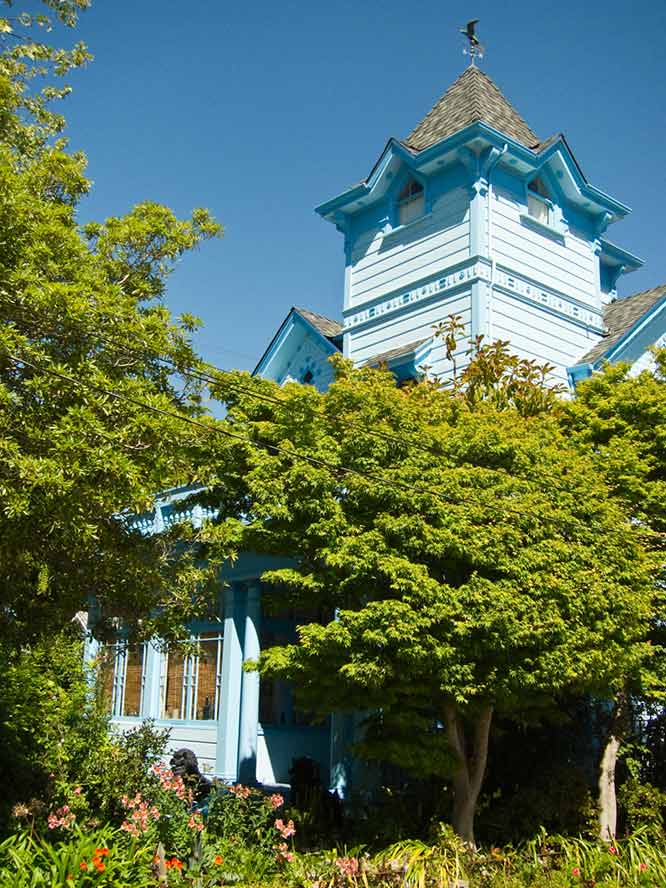 Berkeley and Oakland (California) are filled with wonderful houses, many of them nicely maintained. This was about 7AM yesterday morning.
 I’ve never liked electric hot water heaters, since a lot of energy is lost in transmission from the generating source. Propane or natural gas provides heat right at the source and seems a better choice. And of course, solar is king, if you’ve got it together. I have a solar-heated outdoor shower, but haven’t got around to solar-heating all household water. I’ve made an exception to electric water heating with this little 2-1/2 gallon hot water heater that goes under the sink of our office kitchen. It has a switch that I turn on for maybe an hour, then turn off. The water temperature can be set with the thermostat. The tank is well insulated, so it stays hot for hours. It seems a very efficient use of electricity.
In the house, we’ve had a 5 gallon electric water heater under the kitchen sink for about 15 years. It’s minimal in electric power usage, and doesn’t waste water getting from cold to hot (in pipes coming from a more distant water heater).
And yes, I’ve got to get more of our water heated by the sun. It’s on my list of things to do, honest.
https://www.insinkerator.com/product/product.php?id=41&template=hwd
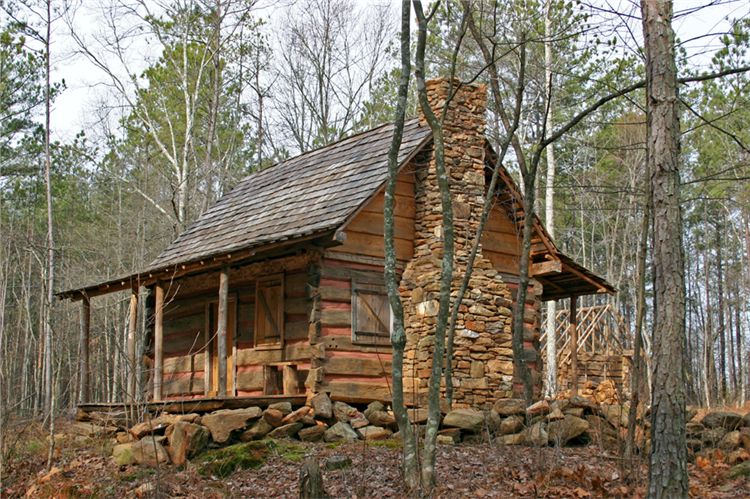 This is the cabin that was used in the forthcoming movie Get Low, with Robert Duvall. (See my posting of May 2, 2010, below.)
It’s in the Pickett’s Mill Battlefield (Civil War) Historic Site, near Marietta, Georgia. It was built nearby in the 1850s and moved to the site. It’s now used for demonstrations of candle making, cooking, sewing, etc.
When I was 12, I helped my Dad build a house on the outskirts of Colusa, Calif. It was a concrete block house on 440 acres he had bought and turned into a rice farm. Also, he was a serious duck hunter and it served the dual purpose of farm and duck club.
We’d leave San Francisco early Friday afternoons and work long hours Saturday and Sunday. My job was shoveling sand, gravel, and cement into a concrete mixer (which I still have, still working, 63 years later). We’d usally pick up a laborer early in the morning on the streets in Colusa, then drive the 8 miles out to the ranch. I found I could work harder than the guys we picked up; they’d usually been drinking heavily the night before. I liked the work. I got some rare praise from my Dad for working hard. I still like shoveling, although I always tried to hide this skill on construction jobs so I wouldn’t end up on shovel detail.
As much as I liked shoveling, it was nothing compared to hammering. One of those memorable moments in my life: the concrete slab was finished, the block walls built (by travelling masons), grout poured in the blocks, and the walls and roof framed by Pinky Smith, a cigar-chomping carpenter who was also the leader of my Cub Scout troop. I was allowed up on the roof with a hammer and canvas apron to nail down the roof sheathing. I still remember that morning, sun shining, smell of the wood, the satisfaction of hammering nails (acuracy wasn’t that important here), the thrill of creating a surface, and then walking on it. I was hooked.
My next carpentry experience was in college (’53-’54) when I got a job working summers for a shipwright on the docks in San Francisco (which used to be an actual working port instead of a tourist destination). When ships came in and the holds were loaded, we’d go in and shore up the cargo with wooden bracing so it wouldn’t shift around out at sea. I got $2.50 an hour and double-time for overtime, a fortune in those days. Some times we’d work 24 straight hours and I’d get close to $100 for the day. In down time, when no ships we’re in, we’d build pallets at the shipwright’s yard at the foot of Hyde Street, right down from the Buena Vista bar. The Ghirardelli chocolate factory was a few blocks away and when they were cooking, the smell of chocolate filled the air. Most of the other carpenters were from Oklahoma and all of them were older than me, and I loved learning the basic carpentry skills and the camaraderie.
When it came to building my own house in the early ’60s in Mill Valley, I had the basics of crude carpentry down. I never got any good at finish work, but I’ve alwyas loved working up to the time a building is framed and sheathed. To this day I love to shift gears and do something with wood. Making tables, fixing chairs, shaking a roof, the smell of wood, the satisfaction of creating something out of raw materials. You know, with all the changes going on in the world now, the art of building a home isn’t that much different. Computers can’t pour a foundation or frame a wall, or lay a floor. It’s still human hands holding the tools and making the connections to provide the roof overhead.
My good friend Jack Fulton is a photographer who paints with a camera. We’ve taken a lot of road trips together, including a 2-week sojourn to New Mexico in 1972 shooting a lot of the photos that appeared in Shelter. Wherever we go, we’re both out shooting photos. Jack is constantly scanning the world. It’s inspiring for me.
Friday we went into San Francisco early and wandered around in the late-afternoon sun-drenched beach neighborhood around the 4000 block of Judah. This small village includes Mollusk Surf Shop at 4500 Irving, Outerlands restaurant (fresh-baked bread, hip-beach-driftwood atmosphere, open for lunch and dinner), a block over on Irving, and Trouble Coffee a few doors down, my dream coffee shop, small, cozy, healthy vibes.
Photo by Jack Fulton of Julia and me in Trouble Coffee
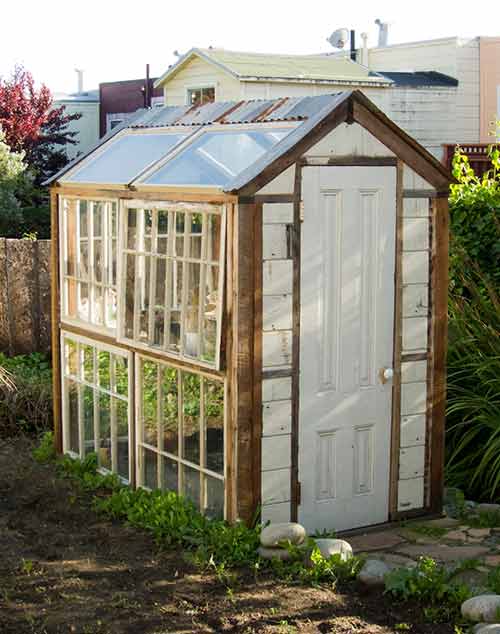
 Next door, the newly-opened General Store, where, in the back yard, was this perfect little greenhouse (below). I fall in love with a building now and then, and this was one of those. Proportion, placement, used materials, it all comes together. Built by Jesse Schlesinger.
My roommate and best friend for a couple of years at Stanford was Dick Zanuck, now the über-successful film producer (Driving Miss Daisy, Butch Cassidy, and more recently the Tim Burton/Johnny Depp collaborative mega-filns. We’ve kept in touch over the years and he knows I like the film work of his son Dean (who produced Road to Perdition in 2002), so last week he sent me two tickets to an advance screening of Dean’s latest movie, Get Low with Robert Duvall, Bill Murray, and Sissy Spacek. (I mean, how could you go wrong?) My friend Jack Fulton and I went. It was at the grand old Castro Theater in San Francisco. Before the screening, Duvall answered questions for maybe 45 minutes. His favorite role of all time was in the TV series Lonesome Dove; he said he walked into the makeup room on the Lonesome Dove set and said, “Boys, we’re making the Godfather of westerns,” He considers the first two Godfathers masterpieces. Asked how do you get into all these different roles, he said, you have to know yourself.
 Photo: Director Aaron Schneider, producer Dean Zanuck and actor/producer Robert Duvall
He must know himself pretty well, because he gives a brilliant performance in this wonderful movie. It opens July 30 and you can see a trailer at: https://is.gd/bRlaz
It’s a great script, wonderful acting, set in 1930s Tennessee. Duvall’s log cabin is a beauty, with a stone fireplace; inside wide horizontal planks, orange glow from kerosene lanterns and flickering fireplace flames. Just lovely throughout. Bill and Sissy are perfect. Duvall’ is a 100% Academy Award performance, powerful, nuanced, and I hope the fact that this is a low-budget film without big-bucks backing doesn’t stop him from being nominated.
Here’s to guys who make movies from the heart.