 From Steven at Tiny House Listings, Dec 4, 2011:
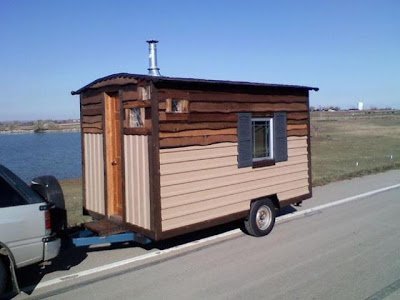
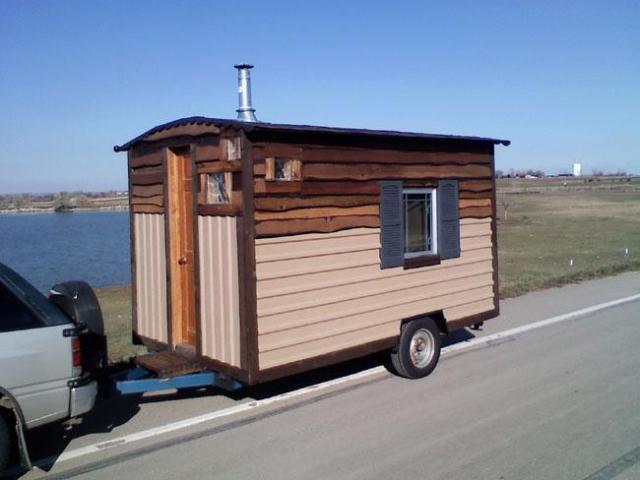
“Glenn’s off the grid tiny house made quite a buzz around the internet the past couple days. It was featured in a number of major publications including the New York Times, Tiny House Blog, The Denver Post and more. Yesterday Glenn posted his tiny house on Tiny House Listings for sale.…
Earlier today he sent me an email informing me that the tiny house has already sold! His tiny house listing received over 1,000 views in less than a day and he received a high volume of emails and phone calls from his listing. Glenn also shared with me that he is potentially about to take six more orders for similar tiny homes to be built.
It’s nice to see that the demand for tiny homes is alive and well. If you have a tiny home for sale you can list it here.”
https://tinyhouselistings.com/tiny-house-sold-in-one-day/
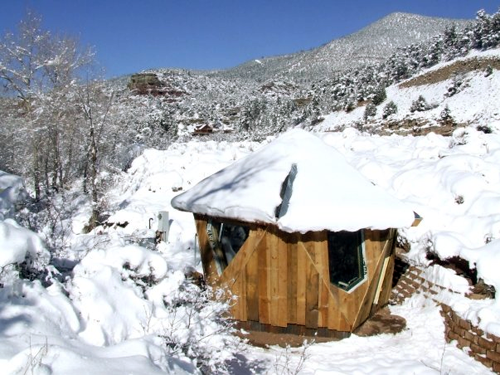
 From Kent Griswold’s tinyhouseblog. “This weeks Tiny House in a Landscape is of a yurt set in a valley somewhere in Colorado. I am a big fan of yurts as I love there simplicity and ease of setting up. They seem perfect for a wilderness hideaway such as this one. Yurts are also used to live in full time, sometimes built with solid wood walls, and range from small to quite large in diameter.
The one drawback with the yurt for me is the lattice walls and how they affect your view out of the windows. You probably get used to it after a while and I know there are alternatives.
This photo is courtesy of the Colorado Yurt Company.”
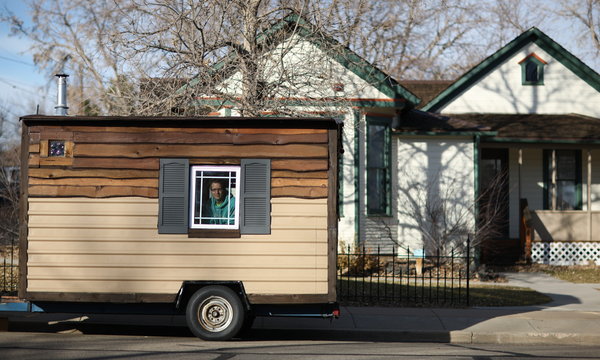
 “LOUISVILLE, Colo. — For many Americans who bought more home than they could really afford in the giddy days before the crash, the big-house dream has become a nightmare in the ashes of foreclosure and regret.
So after all that, how does 84 square feet sound?
Glenn Grassi, in building his prototype one-room microhome — 7 by 12 feet stem-to-stern, including a wood-burning stove, an antique parlor chair that also serves as a seat for the compost toilet beneath it, and a shower under the bed — is hoping it sounds, well, like shelter in the old-fashioned practical sense.…”
NYTimes story by Kirk Johnson Published: December 2, 2011
Photo: Matthew Staver for The New York Times
https://www.nytimes.com/2011/12/03/us/at-84-square-feet-home-takes-tiny-house-movement-tinier.html?_r=1&scp=1&sq=tiny%20homes&st=cse
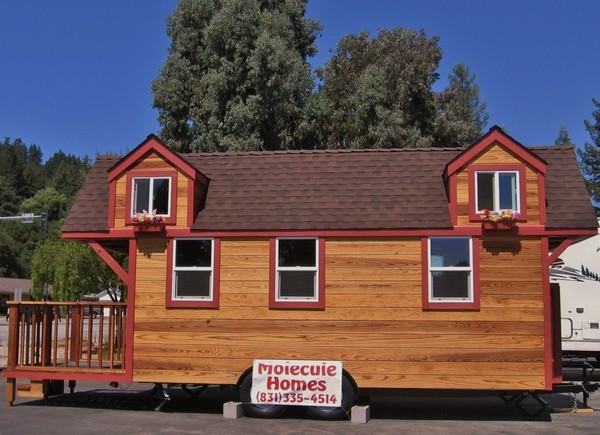
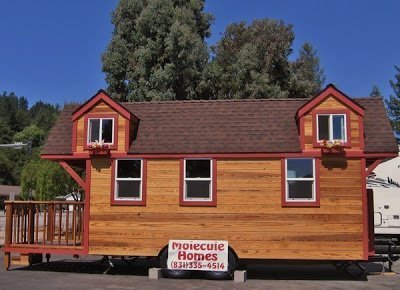 “What’s green, affordable and rolls on wheels? The ‘Molecule House,’ built by Jason Dietz and his father Michael in Felton (Calif.).
I was sitting at the Scotts Valley Car Wash this summer when I looked over at the mobile home lot and saw the cutest cottage beckoning me over. At around $48,000, it offers a kitchen, living room, bathroom, and two loft bedrooms which can accommodate queen beds.
‘These little houses are all built ‘green,’ Dietz said. ‘We use as many non-toxic components as we can, so on the outside all the wood is sealed with vegetable oil, not harsh chemicals, and the inside is painted with all zero VOC milk paints.’ Dietz sources all his construction materials from Santa Cruz County, including the redwood lap siding from Big Creek Lumber’
“It’s a 2×4 construction built like a regular house, with copper wiring and double paned windows. The real wood will stand the test of time and there is no formaldehyde or off-gassing like you would get in a manufactured home.’…”
by Kent Griswold, tinyhouseblog, November 29th, 2011
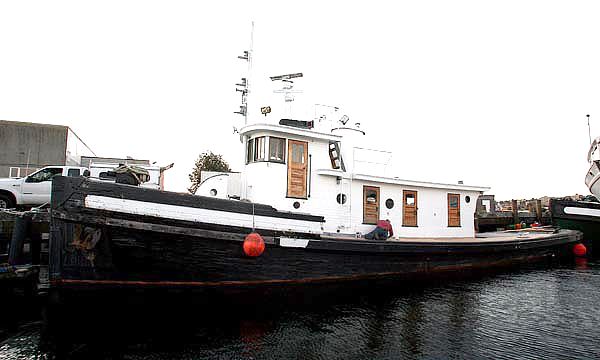
 “We weren’t looking to buy a boat, we definitely weren’t looking to buy a tugboat, we were just looking. We have a home in Port Townsend, Washington but the commute into the city for work was too much to do everyday, so at the time we were renting a house in Ballard (a neighborhood of Seattle). It was a nice house in a great neighborhood, but we really weren’t keen on being renters. When we saw the tug on craigslist we were just curious, but once we looked at the boat we realized we could stop being renters and have a place of our own in Seattle. A place on the water with a million dollar view.…”
https://tinyhouseblog.com/floating-homes/tugboat-tiny-house/
 “Over Thanksgiving break, I enjoyed reading about this small, energy-efficient home in North Carolina built using the Harbinger plan offered by the Tumbleweed Tiny House Company. Built to International Building Code requirements, the plan includes a loft, home office, kitchen, bathroom, living room, and deck — tightly placed in less than 500 square feet! Details are hard to come by, but Tumbleweed sells this plan for $695 and estimates that it costs about $33,000 in materials to build.…”
https://www.jetsongreen.com/2011/11/harbinger-tiny-house-north-carolina.html
 “Smith and Mueller set out to find what makes a home feel like home in their upcoming documentary, ‘TINY.’ They state houses have doubled in size since 1970, yet people don’t necessarily feel more at home in them. Thus, in their search, they’ve honed in on the folks of the tiny house movement.
Their findings were clear: “It is very rarely the size of a house that makes it feel like a home, so much as the relationships we fill them with.”
‘So far we have found that for most people, home is more about the people they live with or near rather than the physical structure itself,’ they said, noting that while many still enjoy the aesthetics of their small homes, people tended to place more emphasis on the world outside—their communities, or the land they live on.
There was a general agreement among people they met along the way that ‘…living small has shaped their lives for the better.'”
Published on November 27, 2011, by Joshua Philipp
https://techzwn.com/2011/11/tiny-homes-are-where-the-heart-is/
Derek “Deek” Diedricksen: Micro-Architect & Tiny House “Mad Scientist” from TINY on Vimeo.
“Derek “Deek” Diedriksen is a tough guy to pin down.
His love of tiny architecture is first on a long list of creative pursuits—including radio DJ, comic book artist, musician (currently heading a Rage Against the Machine tribute band), blogger, author and full-time dad.
His blog, Relaxshacks.com, and his book, “Simple Shacks, Humble Homes” is devoted to micro-architecture and living in small spaces, but the structures he builds aren’t necessarily meant for living in full time. Closer to forts or pods, his “Hundred-dollar-homeless huts” and greenhouse-office-shelters are inspired by the salvaged materials that Deek finds in local dumps, thrift stores and second-hand building lots. A sort of D.I.Y. mad scientist, he’s been featured in the New York Times, NPR, Readymade and Make Magazine.…”
https://www.elephantjournal.com/2011/11/tiny-house-mad-scientist/

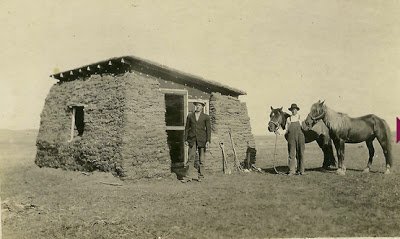 “Personalized postcards became a fad in the early 20th century; you could get any photo printed on photo paper stock and send it in the mail. The following are postcards of homesteaders in front of their new residences in South Dakota, North Dakota, and Montana, taken between 1907 to 1920. The subjects are dressed in their finest garments; they sent the cards to family members in other parts of the country to show off their new lives.
Credit: Collection of Michael Williams/courtesy Michael Williams.”
https://www.slate.com/slideshows/arts/homestead-postcards.html#all


 From Steven at Tiny House Listings, Dec 4, 2011: