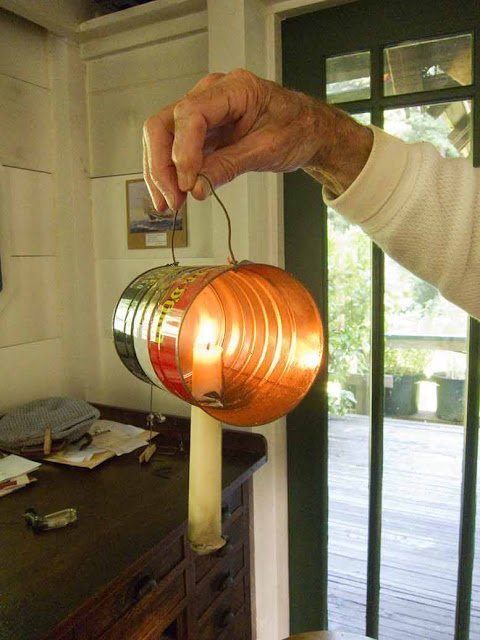
 Every time I visit my pal Louie, he’s got some witty and/or delightful contraption he’s put together. Just a crude hole punched in the coffee can, candle stuck in, thin wire handle. “Watch,” Louie said, and he swung it first around in a circle, then back and forth. The candle flickered, but wouldn’t go out.
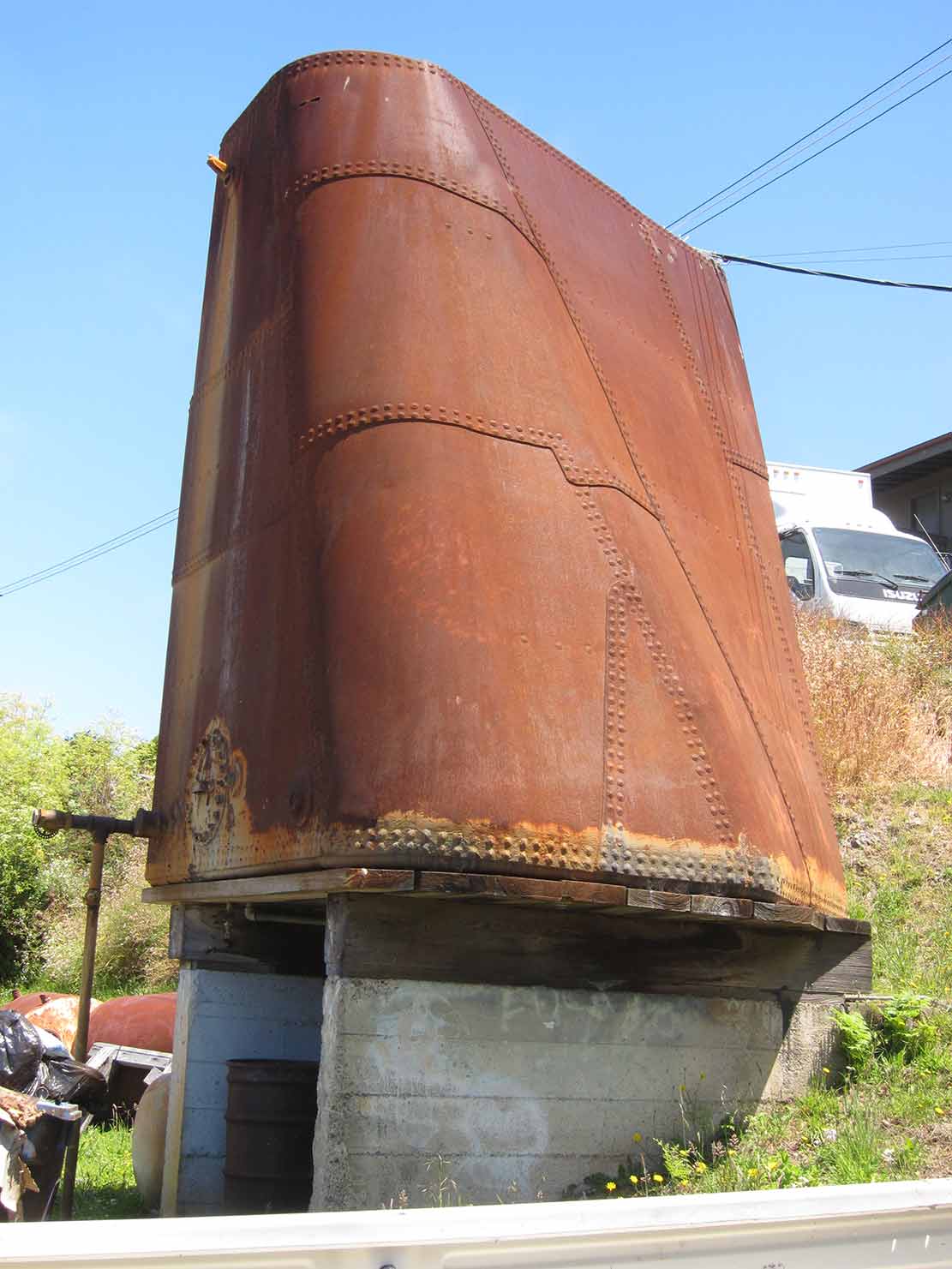
 This was salvaged from a wrecked ship and is now used as a water tank in Pt. Arena, California
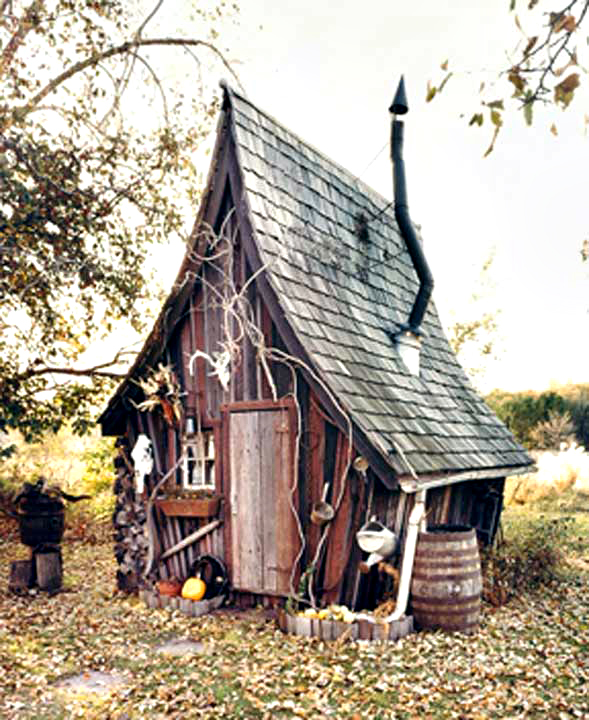
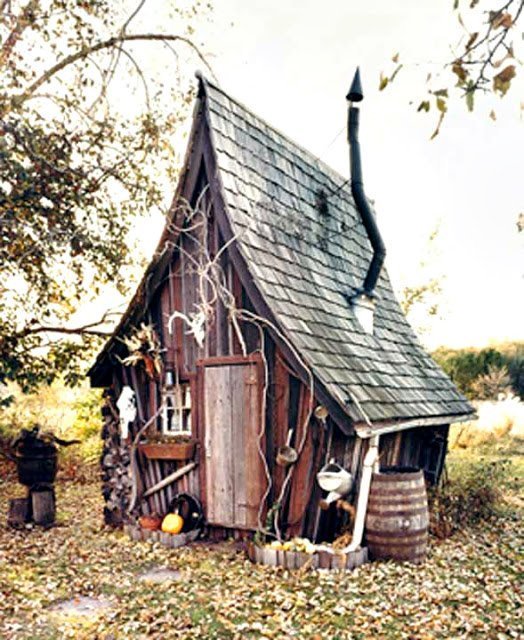 “16 Years of custom building, located in central Minnesota, The Rustic Way offers a custom service to create your eco-friendly personal dream in cabinetry, furniture, picture framing, buildings and an asortment of speciality items. All of The Rustic Way’s products have the warmth, character and lustre created by using wood that has experienced decades of aging; before it was carefully preserved from buildings that date back generations.”
“…Dan Pauly has a passion for old wood – its warm luster, tight grain and fascinating, unique history, first as trees harvested from old-growth forests in the 19th Century and then as lumber from old structures – barns, granaries, grain elevators, warehouses, stores. ‘This wood reflects our natural heritage,’ Dan observes, ‘and has a much richer and more attractive patina and grain than modern wood.'”
https://rusticway.com
Sent us by Irene Tukuafu
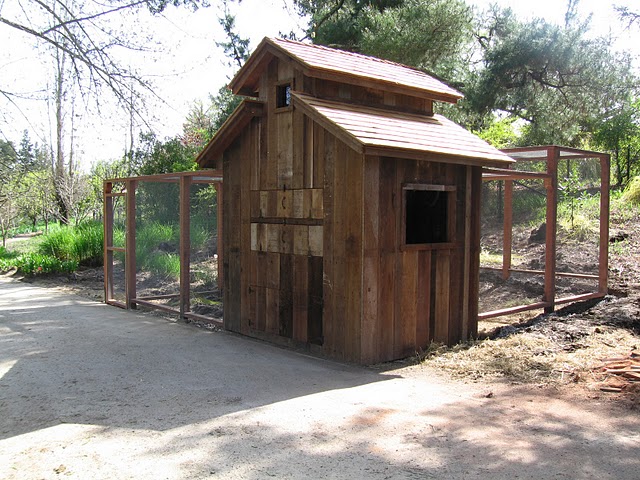
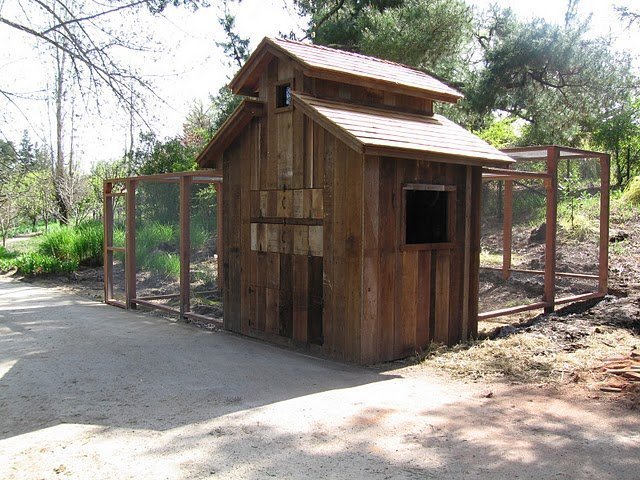 Built by Efrain Zamora: Size: 6′ X 8′, Recycled redwood barn boards. Cedar shingles for the roof.”
Check out his small structures at: https://picasaweb.google.com/ixtahua/GentleFootprintDesigns?authkey=Gv1sRgCIy6wcC-xaCyUA#
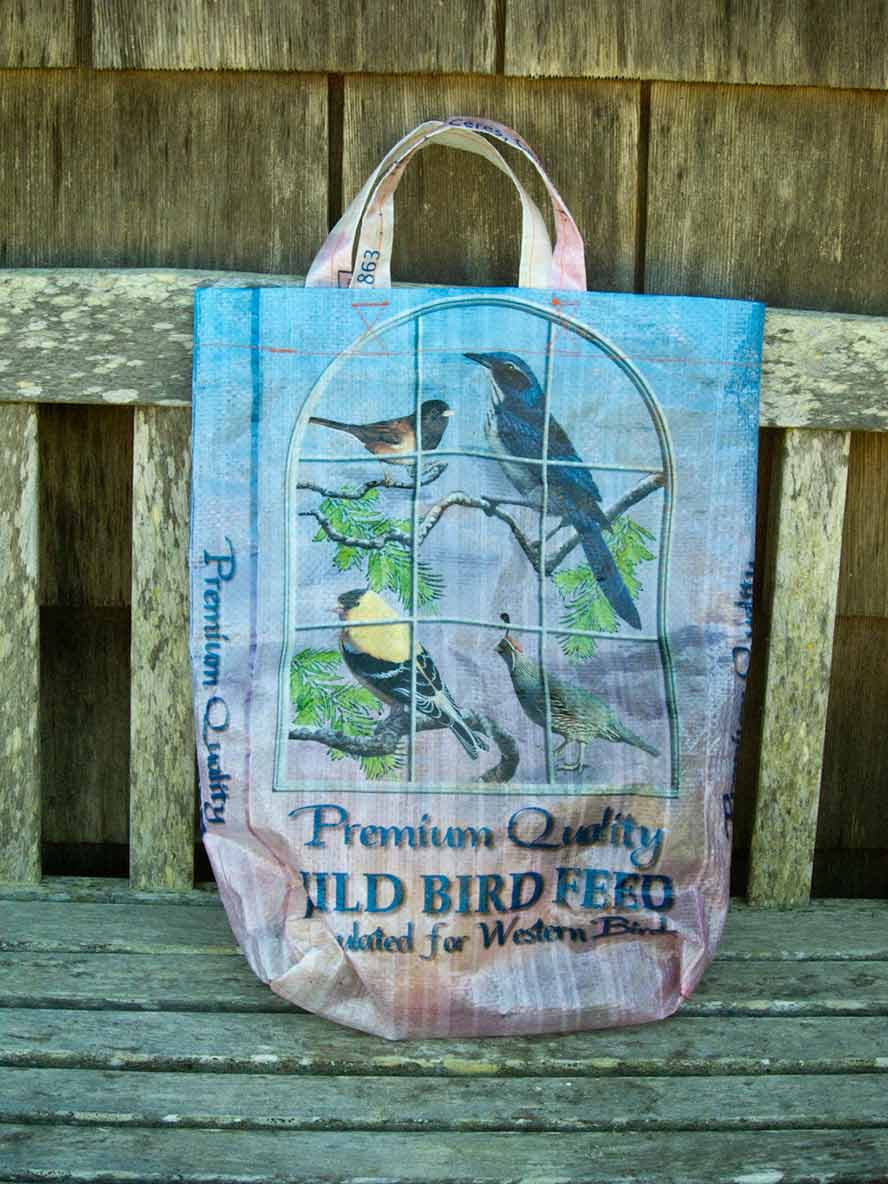
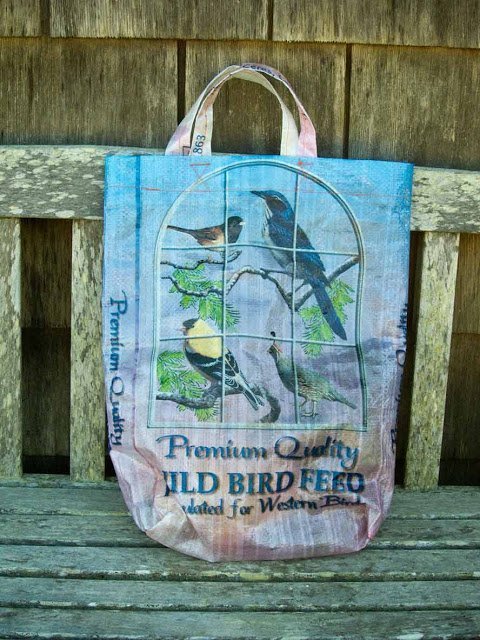 Lesley has made a bunch of these from bird seed and chicken feed bags. Handles are strips cut off bottoms of bags. The bags are so nice she can’t bear to throw them away.
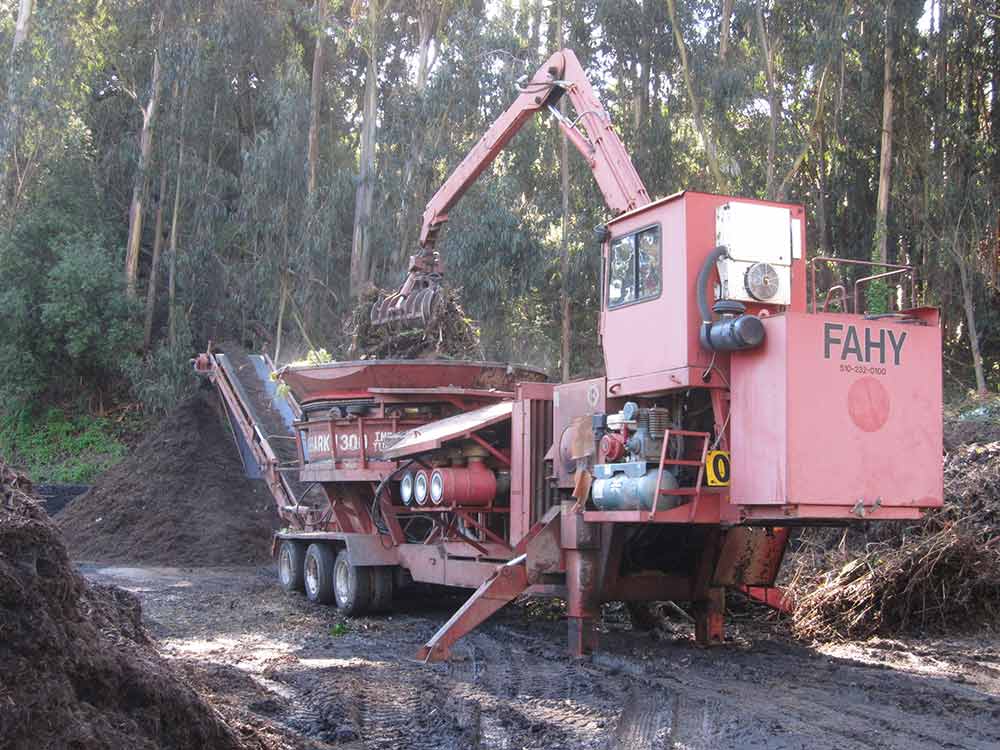
 We have a green waste and wood waste recycling facility here in town, called the Bolinas-Stinson Resource Recovery Project. It means that tree trimmings, garden waste, and all other manner of vegetative materials can be dropped off in town and turned into compost. It’s a great setup, and it keeps things local: no fuel to truck it somewhere, no dumping in landfills. I’d heard about the gigantic tub grinder that comes to town every three or four months, but never seen it in operation. Yesterday I happened upon it at work and shot some photos. Awesome to watch this powerful machine in operation.
It costs $1000 to move it here, and then $400 an hour while in operation and it grinds everything up beautifully. The big files are then turned about six times by a backhoe, and then the compost is sold locally. Among other things, it makes a great mulch.

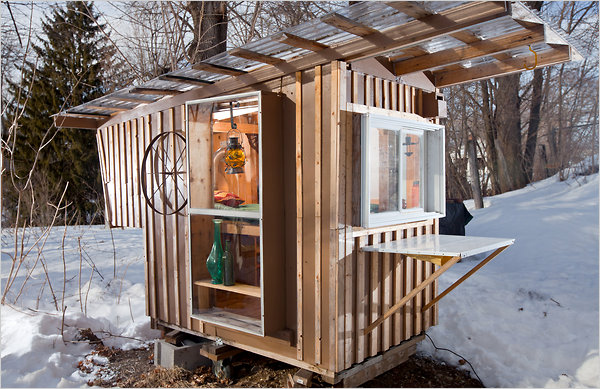
Deek Diedrickson, who published the charming and cheeky comic-book-style tiny house building manual, Humble Homes, Simple Shacks, Cozy Cottages, Ramshackle Retreats, Funky Forts (And Whatever The Heck Else We Could Squeeze In Here) was featured in yesterday’s New York Times. The article was by Joyce Wadler, great photos by Erik Jacobs.
Deek’s book will be featured in our forthcoming book on tiny houses. (One of his drawings shows him sitting in a tree, reading a copy of our book HomeWork.)
“At about 24 square feet, the Gypsy Junker, made primarily out of shipping pallets, castoff storm windows and a neighbor’s discarded kitchen cabinets, is the largest of Mr. Diedricksen’s backyard structures. The Hickshaw, a sleeper built on a rolling cedar lounge chair (or as Mr. Diedricksen calls it, “a rickshaw for hicks”), is considerably smaller, at 2 1/2 feet wide by 6 1/2 feet deep. The Boxy Lady, two cubes on a long pallet, is the smallest: 4 feet tall at its highest point.”
Deek’s website: https://www.relaxshacks.blogspot.com/
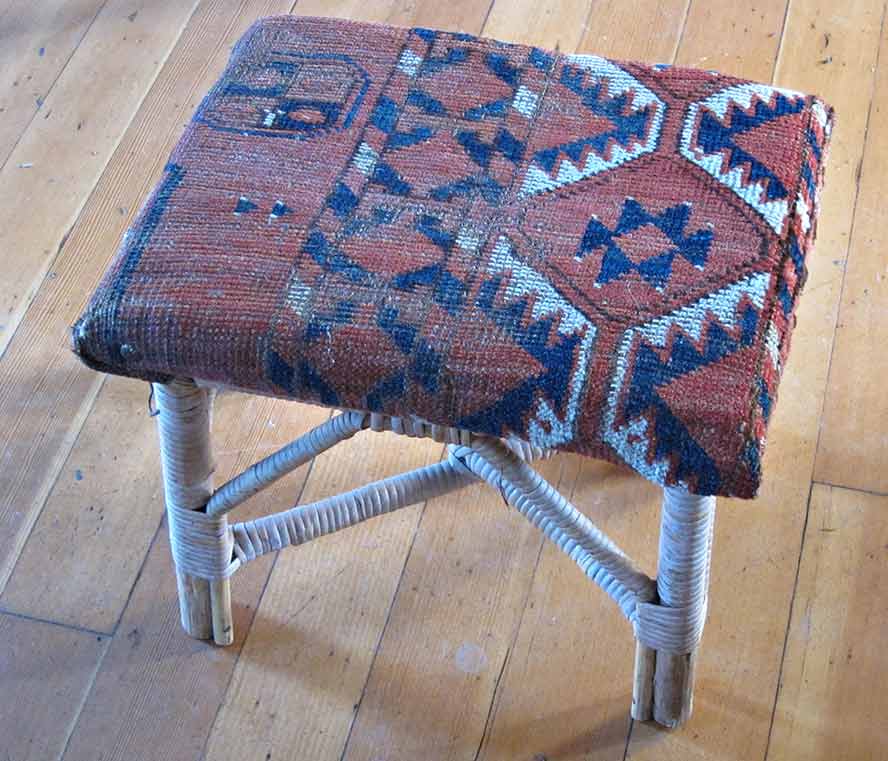
 This little bamboo footstool had a ratty cover on it, so I cut out this new cover from an old threadbare Persian rug that someone was tossing out. The rug is nailed to the stool stand with brass plated upholstery nails and I put a thin piece of rubber foam underneath it. Got the idea from my friend Louis Frazier, who covered a homemade stool this way.
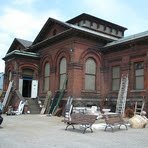 Dwell, the magazine of mostly architectish soullessness, has come up with “…a map of resources across the United States for salvaged materials. Whether you’re looking for 200-year-old barn beams from Georgia or resurrected steel panels from the Pacific Northwest, we bet there’s a stockpile of goods in your neck of the woods. Let us know the place in the comments, and we’ll add it to the map!”
https://www.dwell.com/maps/lost-and-found.html?123
 I heard the rumrumrum of a concrete truck around 10 this morning while standing at the MacPro. I have to admit to being a fan of concrete pours. Since my first building experience at age 12 helping my dad build a concrete block house, to working on two house-building projects in the ’60s, each with lots of concrete work — I’ve been fascinated by the process. Things have to be ready. The crew has to be competent and experienced. Once concrete is poured, it’s — THERE. No compromises. All this is exciting. You gotta be on!
So around the corner I went to my neighbor Steve’s. Steve, a local mason, is in the process of moving a 40′ by 16′ house from a couple of miles away onto his property. A few weeks ago, it came down the road (after some tree trimming) in a rainstorm and was deposited on Steve’s lot.
This is a win-winner. The house didn’t have to be demolished (which it would have been), plus Steve gets a 640 sq. ft. stud-framed shell that he can fix up.
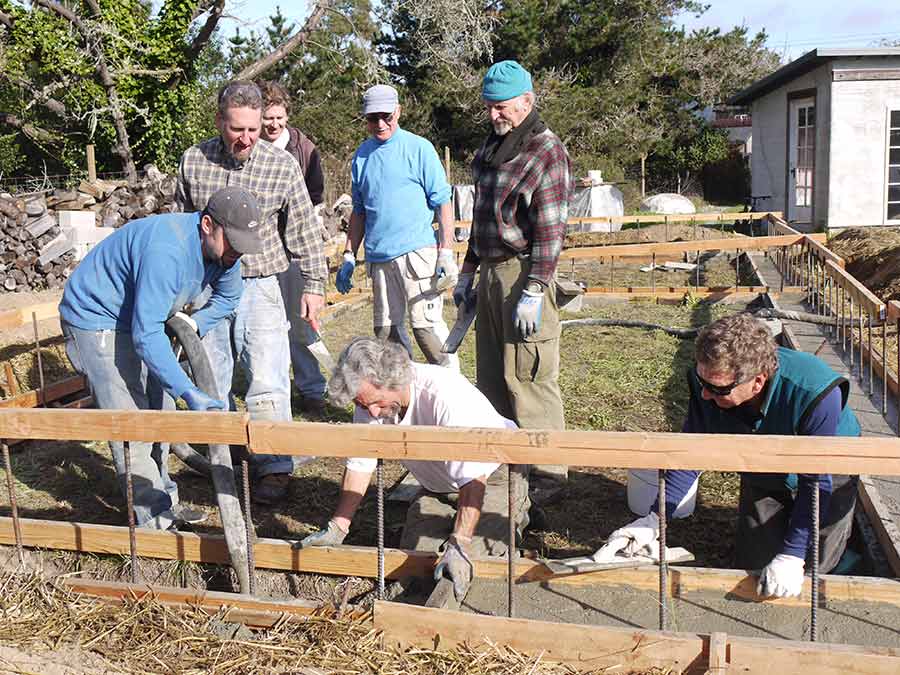
Today was pour day. Steve had an all-star crew of local builders helping out. A photo op!
Pumping concrete is so easy with a pump, compared to hauling chutes all around and pulling it along with shovels in the trenches, or worse yet, having to use wheelbarrows. The concrete was coming out of a 4″ rubber hose and the guys were having a good time, fueled by coffee and sugar donuts. Sun out after days of rain. A good day.


 Every time I visit my pal Louie, he’s got some witty and/or delightful contraption he’s put together. Just a crude hole punched in the coffee can, candle stuck in, thin wire handle. “Watch,” Louie said, and he swung it first around in a circle, then back and forth. The candle flickered, but wouldn’t go out.