I was just reading Lloyd’s blog and watched a video of him talking about his work (and skateboarding). I wanted to share a audio project (and book) I put together on Jackrabbit Homesteading out in the Mojave a few years back. Thought it may be of interest. Anyhow, the website is: https://www.jackrabbithomestead.com/
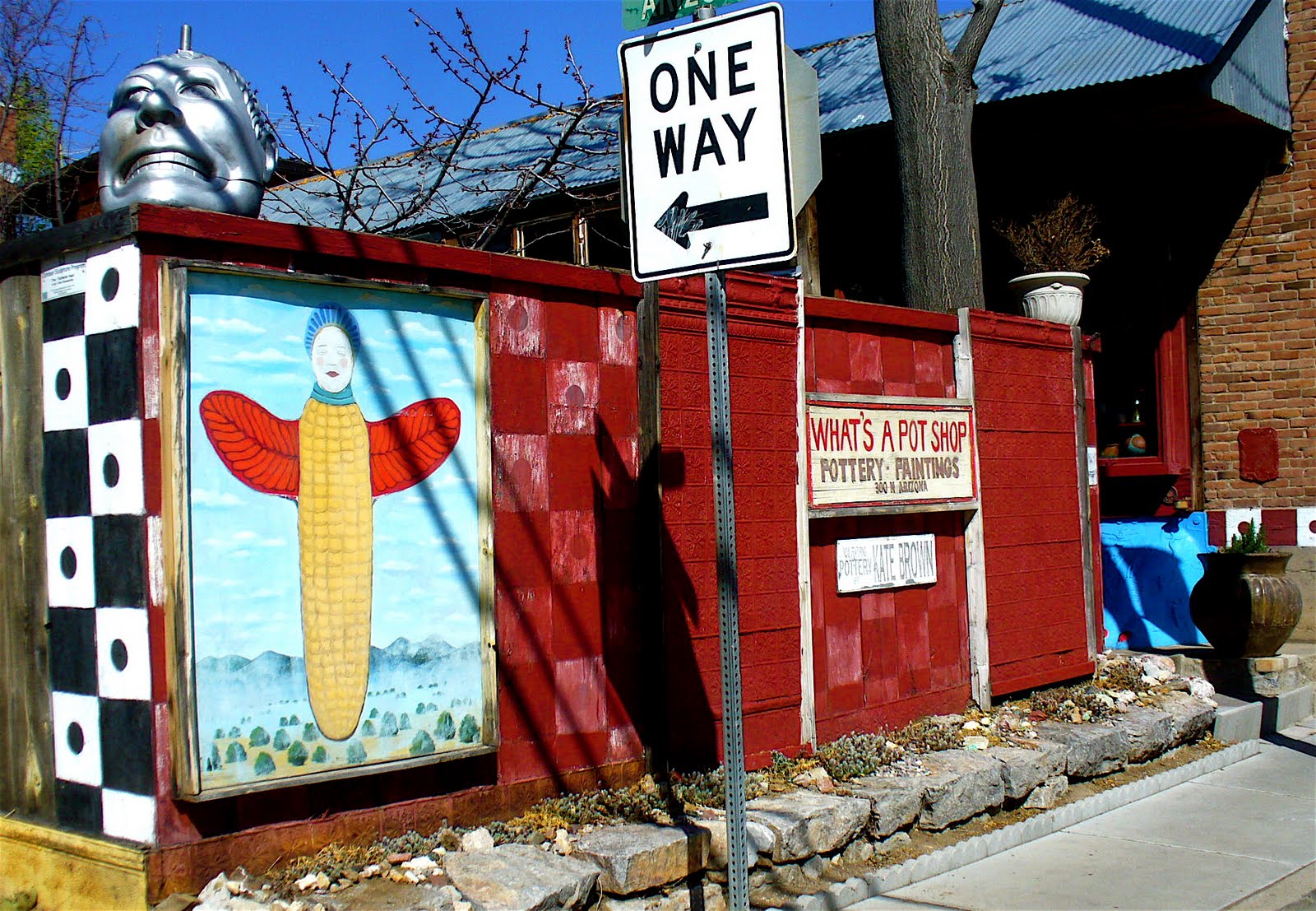
“This artistic and colorful fence is in the arts district in Silver City, New Mexico. Part of the fence appears to be from an old stamped metal ceiling.…”
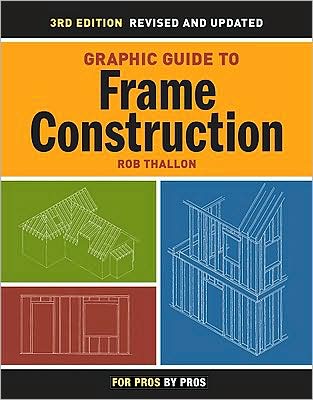
Rob Thallon was a contributor to our book Shelter II in 1978, and has gone on to produce this great guide to wood frame construction. It’s got 100s of clear drawings, from foundations to roofs. Another book on the subject which has received good reviews is Ultimate Guide to House Framing: Plan, Design, Build, by John D. Wagner.
I’m giving a short talk at the Oakland Museum this week on the current back-to-the-land movement and the influence of the Whole Earth Catalog and other west coast publications on same in the ’60s and ’70s.
“Hay Fever
The Oakland Standard presents an evening of workshops and talks about the contemporary back-to-the-land movement, and the efforts of young pioneers to homestead rural California. Learn (almost) everything you need to know to escape civilization. Neo-pioneers from the Sierra Nevada foothills and beyond will teach quick lessons in wildcrafting, DIY architecture, rope making, homebrew spirits, and other essential skills.
Live music by Oakland-based Ethiopian jazz fusion band Sun Hop Fat.”
The Whole Earth Catalog and Alternative Structures
Discuss the cultural tide epitomized in the popularity of the Whole Earth Catalog, first released in 1968, and contemporary interest in DIY architecture.
It’s all experimental. We’ll do updates as the months go by.
On a living roof, the critical place is the bottom: how to keep things waterproof, yet allow drainage. Most roofs I’ve seen look a bit sketchy in this area. Stuff that’ll work for a while, but will need replacing. Anyone got details of long-lasting designs?
Cow skull on left from Canyon San Bernardo, near the town of Miraflores in Baja California Sur, 1988; 16″ horns. The skull at right is from a horse I found near Diana’s Punch Bowl hot springs, which is south of Austin and Highway 50 in Nevada. On the shelf in front of the shop window is my growing collection of skulls. The latest two are a bobcat and a fox. I’ve learned how render the skulls (if fresh), then bleach them in hydrogen peroxide. Each one is so beautifully constructed, with unbelievable joinery of skull plates on top, and each one is so different from those of other species.
This is one of the film clips I referred to in the recent post. It shows Andrew Dunkerton working in his shop, feeding the chickens, and at the end, his son Dylan and buddies going way airborne on homemade ramps just walking distance into the woods.
“An inspiring look behind the scenes at what makes the Coastal Crew tick, their amazing surroundings and their upbringing in that environment that makes what they create as rad as it is.
The Crew is a group of three best friends and sponsored mountain bike riders living the dream – doing what they love every day! Their days are made up of riding, building, (trails and bridges and jumps) and filming. The crew consists of Dylan Dunkerton, Curtis Robinson and Kyle Norbraten. They strive to create captivating media and lush content. Usually it is Dylan behind the camera, but this time he’s in front of it, talking with his dad about their lives. Of course there is some great riding content at the end of the video.”
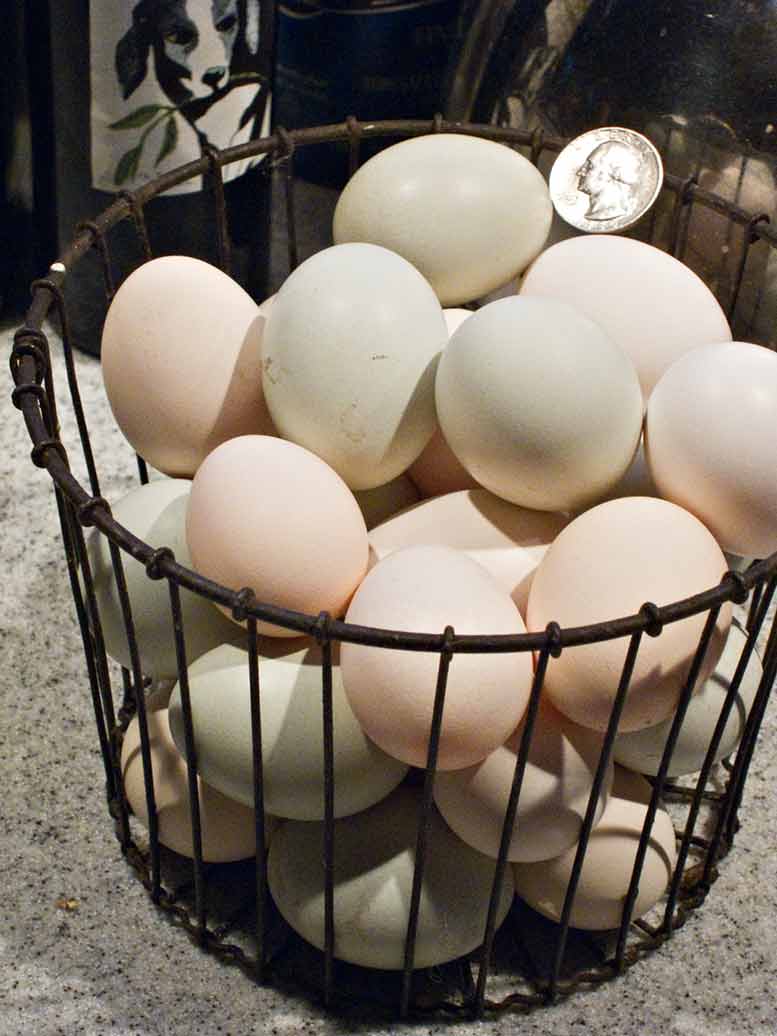
Eggs from our Silver Seabright and Auracana bantam hens. They’re about half the size of regular eggs. Bantams make a lot of sense if space is limited.
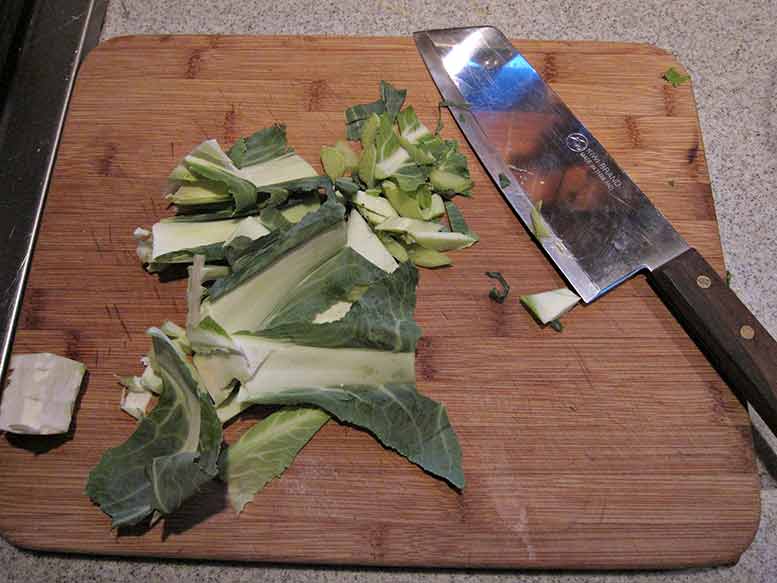
Preparing bite-sized pieces of cauliflower leaves for chickens last night. Chickens love it any time you do something special for them. I was unloading lumber for our new chicken coop yesterday and let them out. They were so excited. Boss man rooster was telling everyone to get out here and get those bugs.
Here’s what’s happening at Shelter Publications and environs at this moment, day of our lord April 3, 2011, with sunny Sunday morning blue skies and warm days after cold rainy months. The hills are verdant green, with Spring life pulsating, creeks rushing, ground soaked deeply. It’s the month of my birthday, and I feel energized.
Tiny Homes book It’s extraordinary. This book is evolving daily. Some of the best material is coming in right now. Just last week a small group of artists and homebuilders creating unique shelters on a piece of land in France; we just did 8 pages on them. “France is the California of Europe…” says our friend Paula.
The best and most unexpected thing about working on this book is that so many of these builders say they were inspired by our books, going back to Shelter (1973). Boy! Plus our books are being discovered by a new generation.
We’ve got a thread of continuity running between Shelter, HomeWork, and Builders of the Pacific Coast. (Shameless commerce dept.: we’ve been selling the set of 3 for a 40% discount: https://www.shelterpub.com/.
We’re in full gear production now, have maybe 155 pages (out of 228) done in rough form. We just changed the publication date to February 2012. Got to do it right. It’s gonna be a beauty, is all I can say. I have the feeling that I did with Shelter, back in the ’70s, that we were plugged into something vital and current. There’s buzz.
This time it’s about figuring out a way use your own hands to get shelter over your head without getting tied up with a bank (or landlord) — we’re talkin freedom here! Maybe not right away, but some (especially young) people can move in this direction…

 Hello,