Barns and Books
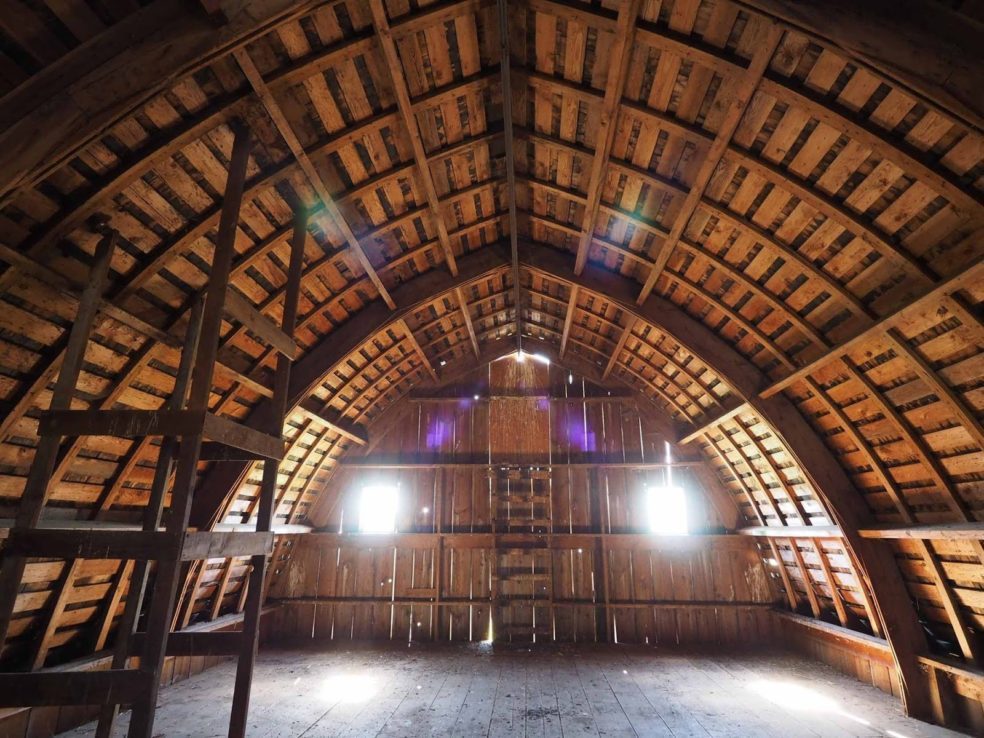
There are buildings that have—for lack of a better word—a sweetness to them. Like a small abandoned cottage in an English field I once found, slowly disintegrating back into the soil from which all its materials came. Inside, I could feel the lives that had been lived there. Or the buildings of master carpenter Lloyd House. It happens most frequently in barns, where practicality and experience create form with function. No architects needed, thank you.
The unique feature here is that the roof’s curve is achieved by building the rafters out of 1″ material. 1 x 12’s laminated together (I believe 4 of them) to achieve the simplest of laminated trusses. I shot photos here pretty extensively, and I’ll do a piece on it when I get time. The barn is 24′ wide, 32′ long, 26′ to the ridge. (Thanks to Mackenzie Strawn for measuring it; he also wrote: “I have a carpentry manual from the 1930’s with a short section on the Gothic arch barns, they suggest making the roof radius ¾ the width.”)
We are about to build a small shed and I’m going to try to figure out how to do a curved roof this way.
Another building I’ve always admired is Nepenthe, the cliffside restaurant in Big Sur. Rafters and beams are strong triangulated laminates of one-bys. No two-bys in the main roof structure. (It was designed by a Frank Lloyd Wright protégé, I’ve heard.)
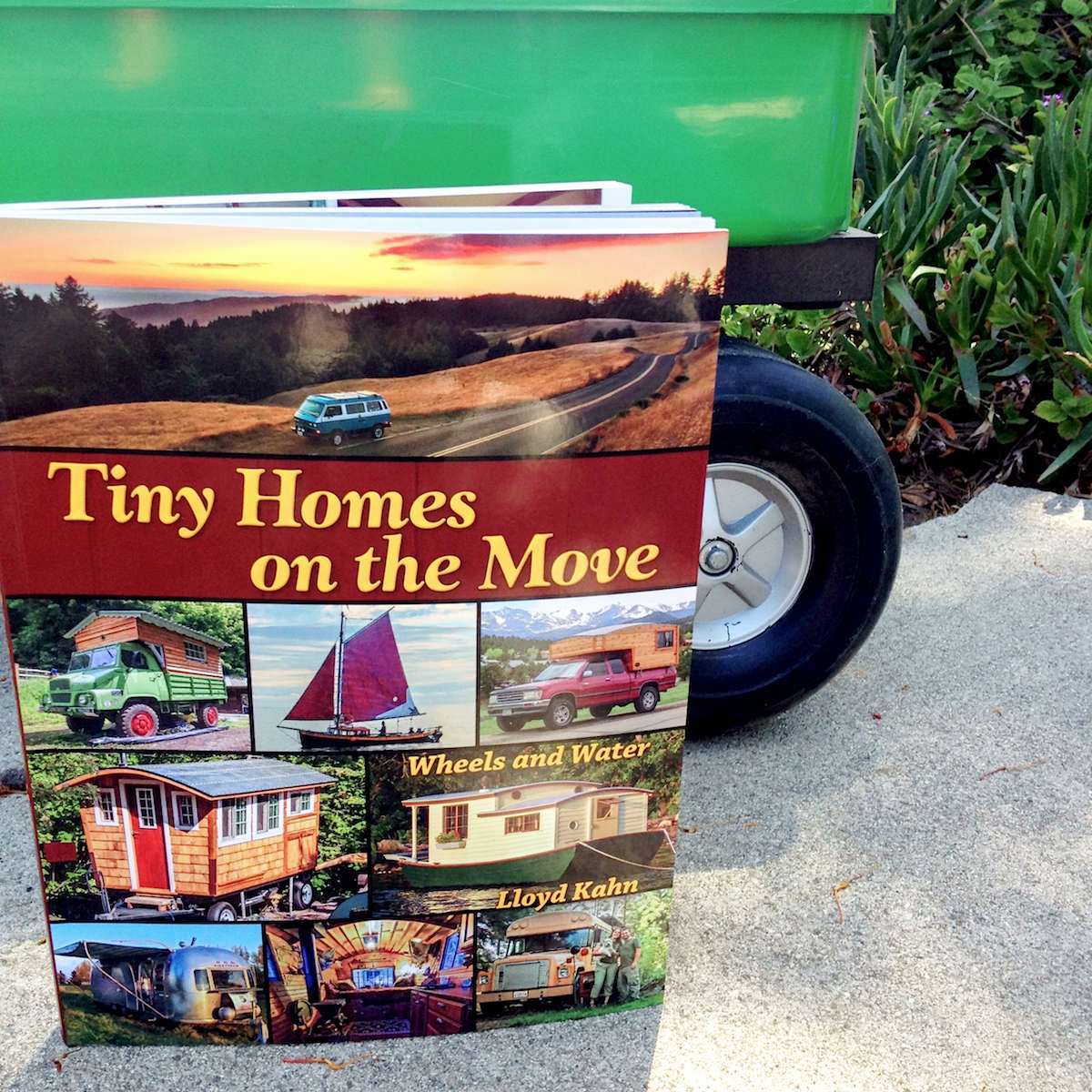
I had a great crowd last night in my presentation at Powell’s, which is just the most super bookstore on the planet. An entire city block, 4-5 floors of books. I could spend days there. You wander around, looking at all the face-out books, and the hand-written staff picks, and realize the paucity of buying books at Amazon. If you love books, friends, hie thee to bookstore. You’ll find tons of books you’ve never heard of. Support bookstores!
It’s a warm sunny morning here in Portland, just a lovely, friendly city. I’m at a Stumptown cafe, getting ready to hit the road south, searching for barns on my way to Eugene.