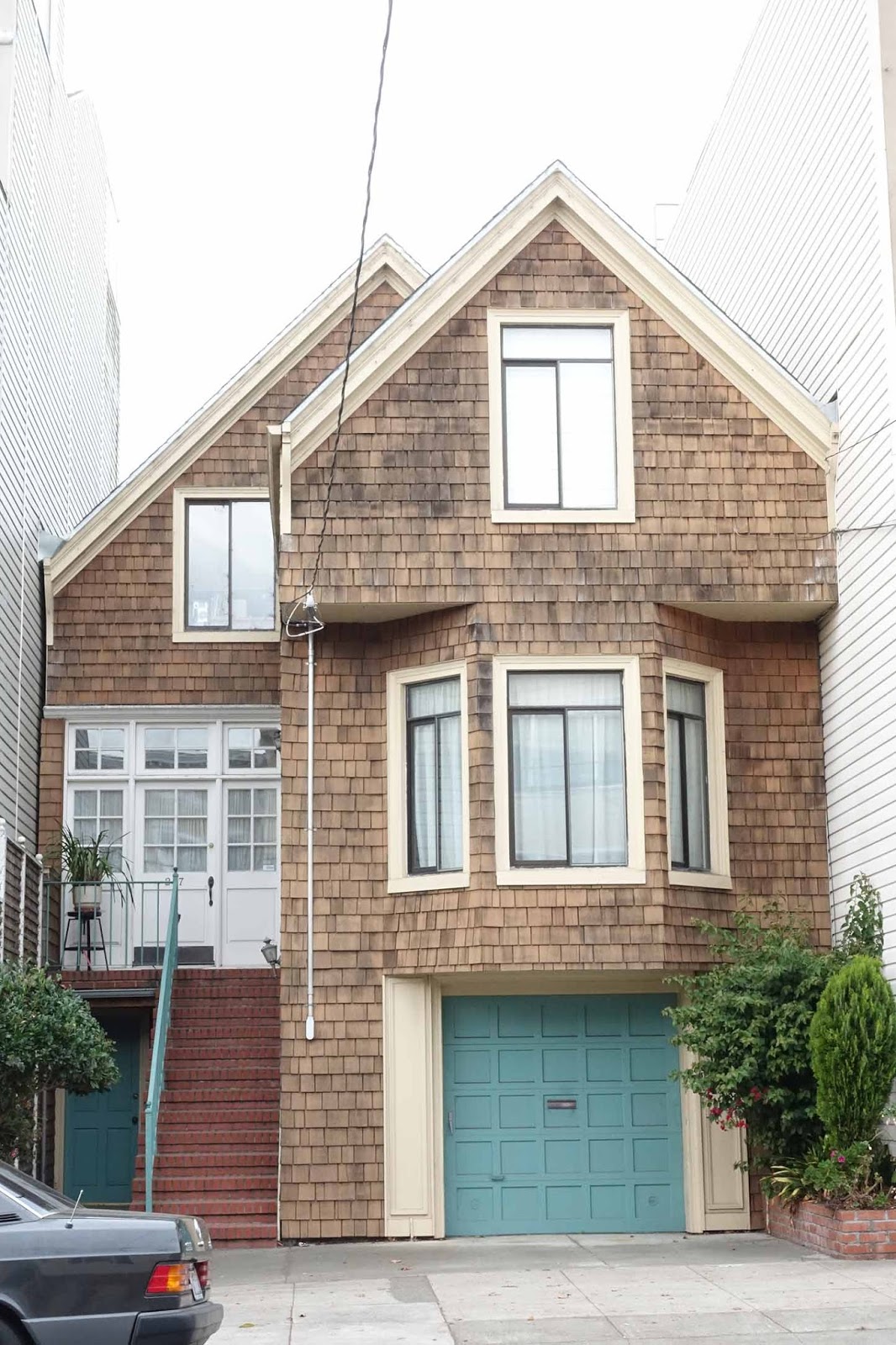
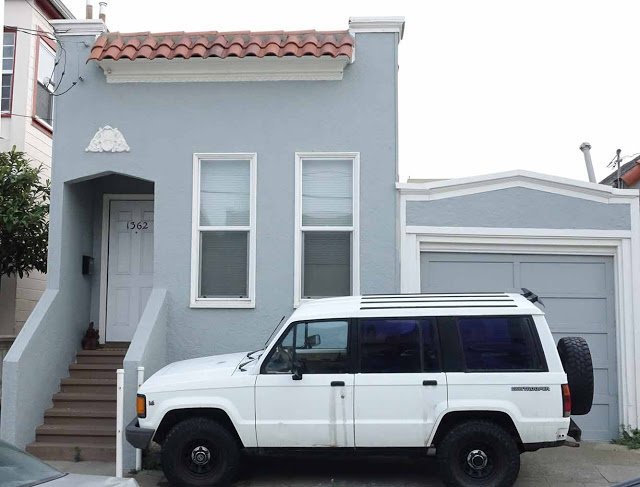
 I’ve often found that homes that appear quite simple on the outside are lovely inside. Also that in my experience, men tend to think of how a building looks on the exterior, whereas women tend to judge a home by the interior space and the life that can be conducted within. That’s an observation from decades of observing both men and women and their ideas of what makes for a desirable home.

In keeping with the Brotherhood of Beach Builders: no nails.
 Shot out by the beach last week.
 I really like this. The curved roofs, the corrugated siding (never needs paint), the nifty balconies, the alternating symmetries…
Kudos to the good architects, of whom there are unfortunately few these days.

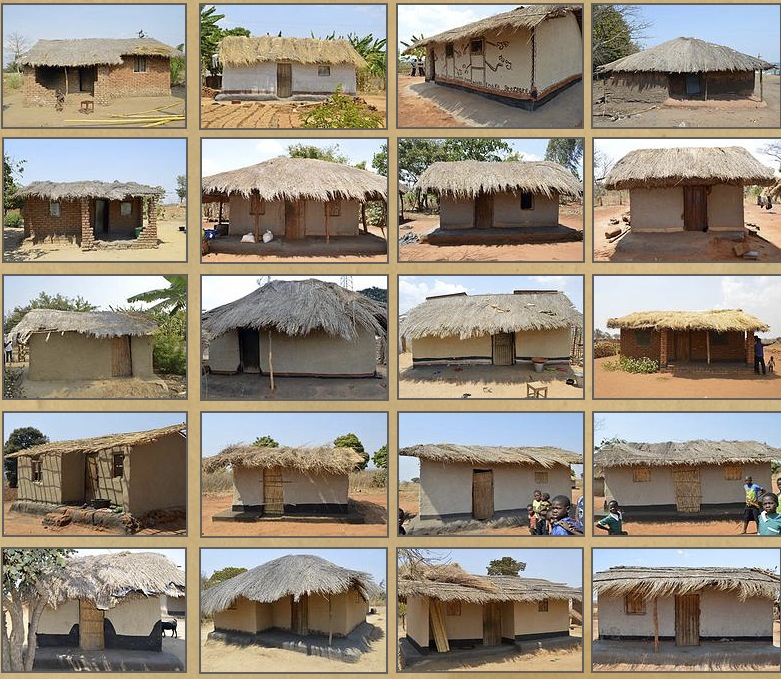
Thanks to E. Johansson for this wonderful website.
“I am a registered architect with a passion for African vernacular architecture. I wish to connect with others with similar interests to preserve African vernacular architecture before it vanishes. The overall goal is a database, which currently does not exist online for most African countries.”
Shipping containers (and this is merely my opinion), along with A-Frames, Earthships, underground housing, and narrow tiny homes with sleeping lofts reached by vertical ladder — make for lousy housing. Here’s the case against the former, demonstrable evidence that many (maybe most) architects have their heads up their asses:
“…It’s not hard to see the appeal. Shipping containers look exactly like building blocks, which is the primary medium (other than dirt) that most architects started working with. You can buy used ones for about $1,600 a pop, which seems like a steal for housing. Doing that also feels very environmentally conscious, because you’re taking something that already exists and reusing it for a different purpose. For these reasons, architects in particular are drawn to the idea of using shipping containers as housing for poor people — as is the case with this plan for a skyscraper made of them, which just won a design competition for low-income housing in Mumbai.
There’s just one problem: Shipping containers turn out to be a uniquely poor building block for human shelter. Mark Hogan, a San Francisco architect who has worked with shipping containers in the past, just wrote a succinct manifesto about why you should really, really not use shipping containers for housing.
For one thing: A building made of corrugated steel is going to be a miserable residence, especially in a place as hot as Mumbai. You could add insulation and a ventilation system — but that would make a box that already has awkwardly low ceilings even smaller. You could add windows — but that would require cutting through steel walls, which takes specialized equipment, and a contractor who knows how to use that equipment.…”
https://grist.org/cities/dear-architects-stop-trying-to-make-shipping-container-buildings-happen/
https://markasaurus.com/2015/09/01/whats-wrong-with-shipping-container-housing-everything/
Sent in by John Michael Linck
Snark snark: this place is vastly overpriced ($35 general entrance fee for one day), not very well designed, and compliments the weirdness and architectural absurdity of the De Young Museum across the way from it. Sorry, it just pisses me off. The old academy and museum were just fine and in harmony with the bandstand with its pollarded trees outside.


 On the Skagg’s Springs Road in Mendocino County, California, last Friday. This is one of those humble farm buildings that stop me in my tracks. Everything looks right. Too bad architects so seldom incorporate the beauty of simplicity, practicality, and economy in their creations.
 “HACIENDA JA JA
Alamo Heights, TX
Nestled beneath the canopy of the live oaks, the home is a natural partner with its neighbors in scale, with porches allowing its residents to easily engage with activity on the street.
Carefully sited to preserve and to protect the live oaks, to promote cross-ventilation and to maximize natural daylighting, the home is also designed to avoid solar thermal gain during the summer and capture passive solar heating during the winter. Rainwater is collected from the roofs and stored in a below-ground tank; during most of the year, captured rain water will supplant domestic water for all landscape irrigation needs.”
https://www.lakeflato.com/projects/homes.asp
Suggested by Michael Gaspers


 I’ve often found that homes that appear quite simple on the outside are lovely inside. Also that in my experience, men tend to think of how a building looks on the exterior, whereas women tend to judge a home by the interior space and the life that can be conducted within. That’s an observation from decades of observing both men and women and their ideas of what makes for a desirable home.