Advanced Search (single or combined)
Archives
Recent Posts
- I’m Switching My Blog to Substack May 18, 2024
- Tiny Home on Wheels and Chinese Van April 17, 2024
- Scotty and Marissa’s Travels in Latin America March 19, 2024
- Building a DIY Cabin with Friends, from Start to Finish March 12, 2024
- Keith Richards and Crew Doing Lou Reed’s “I’m Waiting for the Man” March 4, 2024
- Gary’s Van Home February 28, 2024
- Adventures with Chilón February 27, 2024
- Reflections on Trip to Baja February 26, 2024
- Monster Gringo Houses on East Cape February 23, 2024
- Perfectly Proportioned Building at La Fortuna February 22, 2024
- Palapa over Trailer February 21, 2024
- Crashed Cocaine Plane February 20, 2024
- Panga Beach Landing February 19, 2024
- Running Shoe Sandals February 18, 2024
- Angel Robles from Oaxaca and His Huichol Beadwork February 17, 2024
- Carvestyle Longboard Surfing Somewhere in Baja February 16, 2024
- Taco Power in Ciudad Constitución February 15, 2024
- César’s Birthday Party Under the Trees in El Triunfo February 14, 2024
- Japanese Cyclist Out in Middle of Nowhere on a 7-year-old American Steel Bike February 13, 2024
- What Baja Sur Was Like 67 Years Ago February 11, 2024
- Ready for the Road, Two Weeks Ago February 10, 2024
- GIMME SHELTER – February, 2024 February 8, 2024
- Houses in Sunset District, San Francisco January 27, 2024
- Yogan’s New Tower in France January 26, 2024
- LK Interview December 2023 January 18, 2024
Recent Comments
- Ocean on Houseboat For Sale in BC Canada
- Glenn Storek on Obituary for Robert C. Kahn
- Thomas Rondeau on My Home in Big Sur, Built in the ’60s
- Anna Gade on I’m Switching My Blog to Substack
- Mr. Sharkey on I’m Switching My Blog to Substack
- Chris on Scotty and Marissa’s Travels in Latin America
- Jeff on Keith Richards and Crew Doing Lou Reed’s “I’m Waiting for the Man”
- Pauline liste on RIP Lloyd House
- stephane chollet on RIP Lloyd House
- Robert Hayes-McCoy on Old Thatched Cottage in Ireland
- Bonnie Peterson on Val Agnoli’s Sculptural Home
- Geoff Welch on Building a DIY Cabin with Friends, from Start to Finish
- Irene Tukuafu on GIMME SHELTER – February, 2024
- Lloyd Lindley II on The Heddal Stave Church in Norway
- Paul Recupero on ORGANIZED SLIME: The Great Septic Rip-off of the 21st Century
Post a comment (1 comment)
Beach Art
‘Between Worlds’ chronicles a unique collaboration between two renowned artists: Andrés Amador, who creates expansive works of beach art and preeminent long-exposure photographer Henthorne, who attempts to capture Amador’s ephemeral installations before they are reclaimed by the elements.
It’s a story that explores the challenges and rewards experienced by artists who sacrifice their singular vision in pursuit of creating something breathtaking and original.
A film by Brad Kremer, Christopher Frey, and Phillippa Frey
From Leo Hetzl
Waioli Mission Hall, Hanalei
Waioli Mission Hall stands as a major monument of Hawaiian architectural history, the primary inspiration for the Hawaiian double-pitched hipped roof so widely popularized by C. W. Dickey in the 1920s. Built by the Reverend William P. Alexander, Dickey’s grandfather, the plaster walls of the frame structure repose beneath a sprawling roof and encircling lanai. The roof, originally thatched, was shingled in 1851. Similarly, the freestanding, ohia-framed belfry at the rear of the mission was of thatch construction, but most likely received a covering of shingles in the same year. The form of the twenty-five-foot-high belfry drew upon a long British and American colonial tradition. Common in its day, today it stands as the sole surviving example of its type in Hawaii.
This was the third church building on the site, with the earlier thatched edifices falling prey to fire and storms. It remained a center for worship until the completion of Waioli Huiia Church in 1912, when it became a community hall for the church, a function it still serves today. The building has been thrice restored: in 1921 by Hart Wood, in 1978 by Bob Fox, and again in 1993, following Hurricane Iniki, by Designare Architects.
Wooden Fishing Boat in Noyo Harbor, Fort Bragg, Mendocino County, California
Home in Fort Bragg, California
Lots of nice details here: gable at left, three-sided pop-out on lower right, nicely fitted roofs over windows in two gables. Non-sagging eave lines indicate sound foundation. Why don’t architects come up with such simple, practical, time-tested designs these days?
This place looks lived-in.
The ’50s in San Francisco
Just a few words about the ’50s in general, in that they were the prelude to the ’60s. If you want a comprehensive picture of the ’50s, a good book is The Fifties by David Halberstam.
The ’50s in the United States was an era of prosperity and optimism. World War II was over and America turned its war-time production facilities into consumer production.
The GI Bill paid for veterans to go to college, and provided low-interest loans for buying homes. (The benefits went mainly to white veterans.)
A Wave of Prosperity
It was a time of plenty. There were jobs, with benefits; unions were strong. People bought large homes in the suburbs, along with labor-saving appliances.
The “baby boom,” referring to the population growth that occurred between 1946-1964, with its peak in 1957, added 50 million babies by the end of the 1950s; it was the highest birthrate in American history.
It turned out to be an era of consumerism; it was an era of conformity.
The Man in a Grey Flannel Suit, by Sloan Wilson, was written in 1956, and followed by the movie with Gregory Peck and Jennifer Jones, about conformity and the struggle of an individual to escape devotion to material culture. The Organization Man, by William H. Whyte, published in 1956, depicted the empty life of people working for corporations, who sacrificed individuality for corporate safety.
I read these books with interest when I was in college (1953-’57), and, early on, worried about conformity, the blandness of business life, the dullness of the business world.
“The Best Minds of My Generation”
Jack Kerouac, Neal Cassady, Allen Ginsberg, William Burroughs, Gregory Corso, Gary Snyder, Joanne Kyger, Laurence Ferlinghetti, Dianne Di Prima and Michael McClure are some of the most prominent names associated with what Kerouac titled the Beat Generation. (It seems to me it wasn’t a “generation” at all, but a very small group of artists, mainly poets and writers.) The term “beatnik” was coined by San Francisco Chronicle columnist Herb Caen, apparently taking the “nik” from the Russian satellite Sputnik. It seemed sarcastic; “beatnik” was a watered-down stereotype.
As with the ’50s, I can’t write about the beats with any authority or expertise. But these were the artists of most interest to me in the ’60s, before the hippies came along. Especially Kerouac, Snyder, and Burroughs.
The Beats grew up during the depression and rejected consumerism and convention. Many of them expressed their alienation from “straight” society in vocabulary borrowed from jazz musicians.
I picked up a copy of Howl by Allen Ginsberg at City Lights bookstore on one of my lunchtime walks when I was an insurance broker in the early ’60s. “Moloch! Moloch! Robot apartments! invisible suburbs! skeleton treasuries! spectral nations! Invincible mad houses! Granite cocks! Monstrous bombs!”
The Beats were saying things that no one else was. They took drugs, believed in free sex, despised materialism, and pioneered new methods of expression.
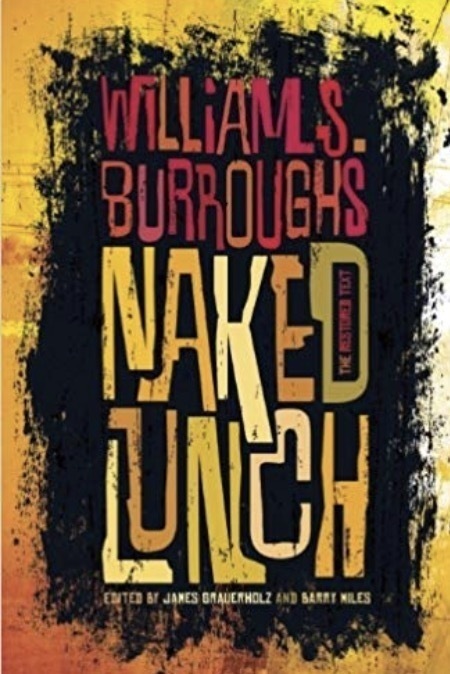
The most influential books for me then were Kerouac’s On the Road, and William Burroughs’ Naked Lunch.
But to me, there was something dark about many of these artists. Some kind of resentment, whatever you might call it. I was drawn to the poetry, the rejection of the dull and materialistic ways of the era, the notion of expanding one’s consciousness, the improvisation, yet…
Darkness of the Beats
It seems to me that the word “beat” was used both in the sense of having the beat of music, and at the same time as in “beaten,” or down and out. There seemed to be threads of nihilism and pessimism running through much of their art. Society sucked, and there wasn’t much you could do about it.
Poet Jonathan Greene just wrote me: “Back in the day there was a claim the term for the Beats came from beatific.”
The Beats seemed to put you down, or to put you on. It was subtle. At a Fillmore concert one night, Peter Orlovsky was walking around with Neal Cassady, and came up to me and said, “This is Neal Cassady, the model for Dean Moriarty in On the Road,” as if he were talking to a tourist.
It’s hard to pinpoint it, but I often felt as if the Beats were making fun of me. I wasn’t as hip; I wasn’t as cool; I wasn’t an artist.
I think a lot of what made them distinctive was drugs: marijuana, speed, heroin, yage, and peyote. Later, LSD, opened up the “doors of perception.” Drugs gave then an insight, a different take on reality, and set them apart from “straight” people.
With the musicians and artists that came along in the ’60s, it was entirely different, as if a window of sunshine opened up. No more bitterness, no more sarcasm…
Aid for Survivors of Natural Disasters
Hello Shelter People,
A long and windy road of internet surfing for camper van inspiration brought me here. I just bought four of your books from your website. I have three others on loan from the library, along with another one I bought used. Your books are so much fun to look at, then read, and then reread.
I got to thinking that you might like to read about my friend, Jon Ross, and his non-profit that helps survivors of disaster rebuild their homes and/or livelihood. He usually goes to really remote places where large NGOs never go. He finds people in dire straights no one else would help. At the same time the people he finds are those who will aid in their own recovery. I am so inspired by him. I thought I’d share his work with you all.
Thank you for all the inspiration!
Sincerely,
–Anna Donlin
Loading Redwood Logs in the Early 1900s off the Coast in Mendocino County
This is a drawing of the lumber and passenger steamer Seafoam, loading lumber at the point off the town of Mendocino, sometime in the early 1900s. It’s hard to believe what these guys did in heavy seas, off of rocky shores back in the day; check out the guy riding on the logs! From the Fort Bragg-Mendocino Coast Historical Society Museum In Fort Bragg, California
Cabin in the California Woods
One of the featured homes in our latest building book, Small Homes: The Right Size
Kids Dig Tiny Homes
I’ve had so much fun over the past few years, handing out our mini books to kids. They all get it.
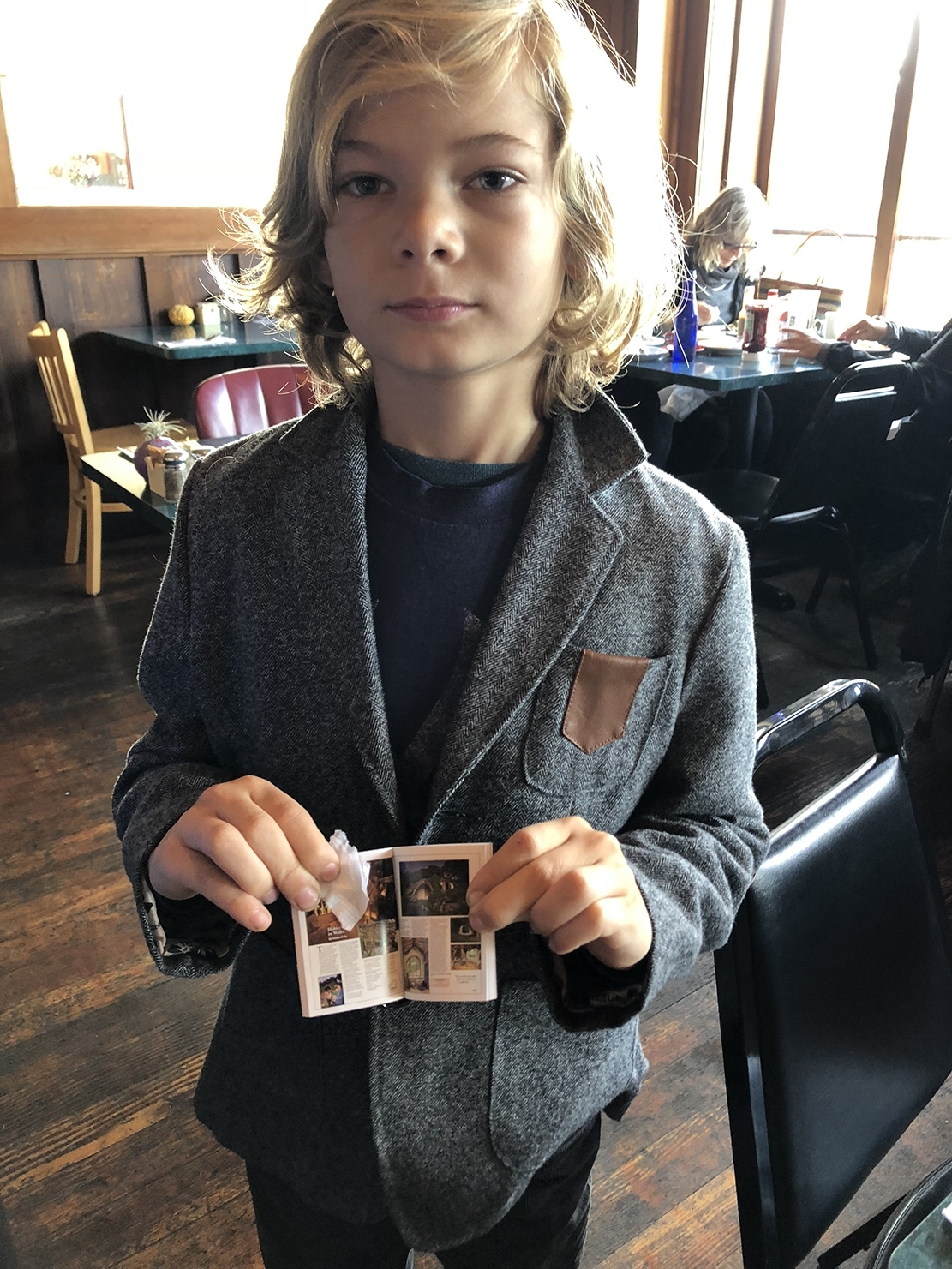
On Friday morning, my friend Louie and I went into (the very cool) Queenie’s diner in the tiny coastal town of Elk (California). This kid was sitting with his folks and he looked at me with a level gaze. There was some intelligence here.
I handed him one of our Tiny Homes mini books and went back to my breakfast.
About 10 minutes later, he came over and said to me, “Do you want to see what I like in this book?”
“Well, sure.”
Whereupon he opened the mini book, and showed me about 5 pages that he’d marked with scraps of paper.
His name is Booker.