Racing Paddleboards

A writeup I just did for CoolTools:

Paddlboarding is a great way to stay in shape for surfing, to explore the coast, to watch birds, and to cruise around in almost any body of water. Paddleboards, like surfboards, snowboards, skateboards and other devices used for moving through space, have evolved greatly in recent years. For years, Eaton paddleboards were the primary manufacturers of quality racing boards. Lately, Joe Bark has been turning out beautiful stock and custom boards. This summer I bought a slightly used Joe Bark 12′ “Surftek” paddleboard in L.A. for $1,000 (“Surftek” is the nickname for lightweight surfboards/paddleboards built with Styrofoam and epoxy resin, rather than the more standard polyurethane foam and polyester resin). The board is feather light (22 lbs.) and lets me skim through the water like a water skeeter. Boards run from 12-19′ or so. The 12-footers are the most popular partly because they are the easiest to transport and store. The longer boards are slightly faster in races (there are over 70 races a year in Southern California), but more cumbersome to deal with on land.

12′ Surftech Bark Board

$1380

Available from The Frog House

To see a full range of boards, including standup boards, see Joe Bark’s website

Post a comment (1 comment)

Back to Baja

I first came to the southernmost part of Baja California in 1989 and fell in love with it. The place, the people, the desert, the waves, beaches – the same Pacific Ocean coast I’ve lived on all my life, just farther south. For about 12 years I came to Baja whenever I could. Some times I’d drive, but most of the time I kept a vehicle in San José del Cabo and would fly in. First a “Baja bug,”a VW bug modified for desert travel; then after it got ruined by being under water twice, a 1983 Toyota 4×4 pickup (the ultimate desert vehicle).

On my first trip there, I met Isidro “Chilon” Amora, who had an inquiring mind and a passion for adventure. We made trip after trip together, to remote arroyos, hidden ranchos, cave paintings, small towns, fiestas. old missions, as well as taco stands, bars, and night clubs. We had plans to do a local newspaper, and in fact did a 1st issue in 1999, but I couldn’t find the time to do it on a regular basis. It was called El Correcaminos (The Roadrunner); portions of it are on our website.

I took about a 5-year hiatus from Baja in order to get some books done. When I finished my book on carpenters in Canada, I decided to take a break, and flew in for 5 days. Chilon had been telling me on the phone about the changes, the rapid growth in the Los Cabos area. Well, here’s a real case of You Can’t Go Home Again. If you’re a southern Baja lover and haven’t been there for several years, you’ll be stunned. San José del Cabo has changed dramatically.. A huge increase in population, you wouldn’t believe the traffic, waste disposal and water problems. Costco, WalMart, Home Depot, MacDonalds and the whole catastrophe of fast-food garbage mongers. Among other things, rich Americans have succeeded in blocking Mexicans and not-so-rich gringos from access to miles of beautiful beaches. I won’t go on. Here are some photos from a place I still love, in spite of its flaws (I continue to collect way more “content” than I can get into print or electronic form):

Yuca (Rogelio López), proprietor of The Yuca Inn, points to a beautiful new gate at his hotel, built by his brother, artist and welder Jesús.

Posada lives!

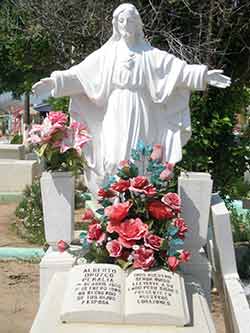
Here are photos from the nicely-maintained old cemetery in San José del Cabo:

Giraffe sculptures made of rusty metal. Aren’t these fabulous!

I stayed at the Delphin Blanco hotel, which is small, comfortable, and reasonably priced.

It’s a block from the beach in Playita, the harbor town a few miles east of San José. Thatched roof cabaña rooms are $55-75 per night and there’s a nice lawn, beach chairs, and the sound of waves at night. The owner is Osa Franzen, ably assisted by Romana Flores. Osa provides good guidance on the area for first-time visitors. You can read more about it at https://www.eldelfinblanco.net/, or contact Osa (from the US) at 011-52-624-142-1212.

More to follow on Baja in a few days.

Post a comment

5 Days in the Heat: Trip to San Jose Del Cabo, Baja California Sur Sep/Oct '08

It was 97 degrees and muy humido when I got off the Alaska Airlines flight at 3 PM, at the Los Cabos airport. Got a rental car and took off to visit friends and check out the rampant growth of the past 3-4 years here at the southern tip of Baja. Got right into the water, it’s 85 degrees for chrissake. Heaven for a water guy from San Francisco. No wetsuit, it’s relaxed, you can swim as long as you like without getting chilled, much less hyperthermed. Here are a few photos:

Surfer at “The Rock,” Costa Azul, San José del Cabo

Old house (vertical logs plastered with mud) in Playitas

Baja 4-wheelers are in a class (of toughness) of their own

Fishing boat parked in Playita near the new harbor; looks ready to rock & roll…

High off the ground 4-wheeler with what looks like a fiberglasss shell, parked across from The Roadrunner cafe in San Jose del Cabo

Owner is architect Sergio Guererro Morales

Post a comment

Greenhouse Made With Used Windows

Greenhouse built on our homestead with used windows. The rear wall consists of stabilized* adobe bricks made with a CinvaRam, a compression tool I learned about in the ’60s from the Whole Earth Catalog. There’s a solar-powered fan for cooling and a small solar-powered trickling fountain inside. Note: using old windows like this requires a lot of time puttying and/or painting (but look at the result!)

*1 part cement to 12 parts soil. (The soil came from digging out our 15′ deep garden well.)

Post a comment (6 comments)

Notes From 5 Days In Indiana, September 2008

Cornfields in central western Indiana. Miles and miles of the roads had fields like this, each with a different sign advertising the seed used, like Con Agra. BigBizFarming, as opposed to family farms.

Bits from my Indiana notebook (*Sept 8-12, 2008): about 20 miles south of Indianapolis, the smell of sweet summer grass. I go through small towns where nice houses sell for 100-150K. Kendalville, a town of 10,000 people in northeastern Indiana is where our printing plant is. It’s got large trees, a number of beautiful parks, shady streets, and a 1/2-mile-long clean lake with a grassy park and huge trees on its shores—right in the middle of the town. I went swimming there one hot afternoon. Nice houses with front porches, many for sale. Trouble is, the young people have seen Paree and don’t want to hang around small towns. It’s reflected in the shops and restaurants, nothing hip, nothing new, I never did find decent food…college (De Pauw University) town of Greencastle, with grand old Victorians, but for some reason cops all over the place…there’s tons to photograph out here in middle America…sign outside church:

There is no God but Jehovah

And Jesus Christ is his son.

Come to think of it, that’s a lot of what’s wrong with the world: this or that faction declaring their way the Only Way.

Went into a bar in Greencastle, no they didn’t have any beer on tap; their selection: Bud & Bud Lite; Coors and Coors Lite. No thanks. Sun was setting, light waning, and there were dozens of places I passed up shooting…lots of Harleys, very few guys wearing helmets…Bach concerto somehow came on radio, with viola da gamba and harpsichord — rich music…hard to find real food, America is polluted with MacDonalds/Pizza Hut/Burger King scumfood…you have to suss out the occasional good one, like The Texas Roadhouse in Terre Haute, Hank Williams on the jukebox, Sam Adams on tap, 6′ rattlesnake skin on wall, bartender told me she’s voting Republican because Palin is a woman, no she didn’t know anything about Obama…the expensive restaurants in the area pour on the fat — cream sauces, big deserts, substitutes for fine cooking…I read something about the “indignities of air travel” these days. So true.

The prayers go up,

And the blessings come down.

These are towns in Indiana: Raccoon, Mexico, Brazil, Chili (not Chile), Peru, Kokomo..I detoured to go through Kokomo, just for the name. It’s a big tough town with a lot of huge shuttered factories with broken windows, and stylish 100-or-more-old brick buildings on Main Street…west of Kokomo, the land gets rich, black soil, lush fields…the Adams water powered grist mill, built in 1845, near Burlington, nicely maintained large red building…stopped off at a farm to look at a barn, young farmer walked around to barn with me; his father and grandfather had farmed the land, and he seemed content and together; good vibes…there’s a brotherhood of barn lovers throughout the world,,,

Barn, field of soy beans. Indiana Sept. 11, 2008

Post a comment (1 comment)

Printing Builders of the Pacific Coast and a Journey to the Heartland of America

I was in Kendalville, Indiana, last week to see Builders of the Pacific Coast get printed. It was the final step in what turned out to be a 3-year project.

Here are the press men who printed the book:

It was printed on a manroland Lithoman IV web offset press that is like a streamlined locomotive. It’s computer-controlled by a maze of electronic circuitry. It’s amazing to watch these guys run around making constant computer (and occasionally mechanical) adjustments while the paper streams through the rollers. The guys who run presses are a breed apart, smart, skilled, and on the ball. No mistrakes while you’re running a machine like this.

They started at 9:00 AM Wednesday and ran for about 24 hours, with the two crews. By midnight I was exhausted and went to bed and left the last 48 pages up to their discretion. By then the colors were nailed. The next day there was a buzz in the plant, that this book was special. Jeez, does it look good.! I think we gained some good karma by going with recycled paper in the USA rather than Indonesian paper in China, even if it cost $12K more. In evolving toward recycled paper, I learned that much of China’s paper comes from destroying Indonesian rainforests; also that all the goods shipped from Asia come on ships burning filthy polluting fuel because there are no pollution rules on the high seas. It ‘s really hard for publishers of 4-color books to not print in low-cost Asia, but maybe planetary damage should be factored into the cost comparison.

This book is a lot different than Home Work, which was a scrapbook of 20 years’ accumulated materials. This new book has a theme, builders of the relatively small 1000-mile long stretch of the Pacific Coast from British Columbia down to San Francisco. When I travel, I think of having the reader ride shotgun with me, seeing what I see, making the same discoveries, and having the same adventures. I hope this book can take readers along on these trips.

The book turned out, I gotta say it, drop dead gorgeous!

It will be in bookstores mid- to late-October. Yeah!

I had a great trip, haven’t been in mid-America for 20 years. I drove about 700 miles in 4 days, mostly on small roads, avoiding the freeways, exploring when I had time. Corn as high as an elephant’s eye, soybeans, old barns, small towns. I ended up shooting 280 photos with my little pocket camera (Olympus Stylist 1200). I was in my own special photographic heaven, wished I’d brought my Canon 20D, but still got some great pix. Ten beautiful barns, including a 100-year-old mortise-and-tenon round barn; small town homes on tree-shaded streets; old towns with 100-year-old 3-story brick masterpieces; a couple of pioneer log buildings. It made me want to make a cross-country trip before long. There’s a lot out there. I’ll try to put up some pix in the next week.

1840s pioneer cabin in Robe Ann Park, Greencastle, Indiana. Maintained by the Washburn chapter of the Daughters of the American Revolution

Post a comment (3 comments)

The Kahnuna Big Stick: Paddling on the Pavement/ Bob Marley

I just wrote this review of a peripheral device for skateboarders in CoolTools:. Cooltools editor Steven Leckart turned me on to this device originally:

Sequence from Surfersvillage

The Kahuna Big Stick is a lightweight wooden shaft with fixed rubber wheels that allows a skater to push and pull while keeping balanced with both feet as opposed to pumping with one foot. On the level, it is way superior to foot-pumping. Even on uphills, I’ve found if I do a few foot pumps, then follow with a few paddles, it’s faster and smoother. On slight downslopes and the flats, I can now get a lot more speed by not having to foot pump. It’s got me skating a two-block section in town that used to be too slow. Plus, it adds an upper body workout to a sport that is mainly a leg workout. Surfers see me with it and invariably break into a grin; they instantly get it and are charmed. It really is unique. The day I got my 5′ 6″ Big Stick, I tried it out in a parking lot while getting gas. Boy! After about five tentative strokes, I started reaching out as far as I could, zooming around. Later that night I decided to skate in the streets (no cars). I got in a bunch of half-mile downhills in an hour. It is insane fun.

Check out the Youtube video of these Southern California dudes carving it up with Big Sticks:

Post a comment

Downhill Skateboarding

This is an article I just wrote for CoolTools, the best thing since the Whole Earth Catalog.

Downhill skating is like surfing; carving back and forth on long downhills. Note: you guys who skated as kids and have quit. The technology is way advanced these days. Decks, trucks, wheels, designs. It’s a different skating world. If you’ve ever skated, you’ve got the motor skills (due to “muscle memory”), and you’ll be surprised at how much fun you can have skating downhill with today’s boards. Here are three unique skateboards meant for downhill, as opposed to acrobatic street and ramp skating.

Loaded Carving Systems

This is my board of choice, after maybe 20 boards. The decks are made of 1/2 cm strips of vertically laminated bamboo (with the grain running truck to truck,) sandwiched between layers of fiberglass. The decks are convex (from end to end) and you can pump to accelerate, gaining speed from the flex of the deck and rebound from the truck bushings and wheels. They produce a graceful and flowing ride. I’ve got a Dervish model with Orangatang wheels. Check out the film clips on their website.

Dervish complete board w/wheels

$315

Available from Loaded Boards

Carveboard

This is a whole other animal. Surfers love them. They’re heavy, have adjustable air pneumatic tires, and the deck tilts off springs so you can carve insanely tight angles. I use one with tires deflated to about 10 lbs. pressure to be able to skate a steep local hill that I can’t handle on any other board.

43″ Carveboard

$450

Available from Carve USA

Landyachtz Evo 2008

From British Columbia, land of heavy-duty mountain bike riders and downhill skaters, come these downhill racing boards. The drop-down decks give you a lower center of gravity and great stability at high speeds. Being closer to the ground makes it easier for skaters to get a padded glove on the ground for sliding (to slow down).

Evo 2008 w/Gumball wheels

$240

Available from Landyachtz

Safety Gear

1) Loaded sliding gloves — best ones available. When you fall face down, these save the skin on the palm of your hand. They are also used for sliding.

2) TSG Force 2 knee pads.Top of the line; you can put these on over long pants.

Post a comment (2 comments)