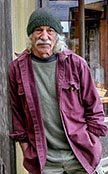
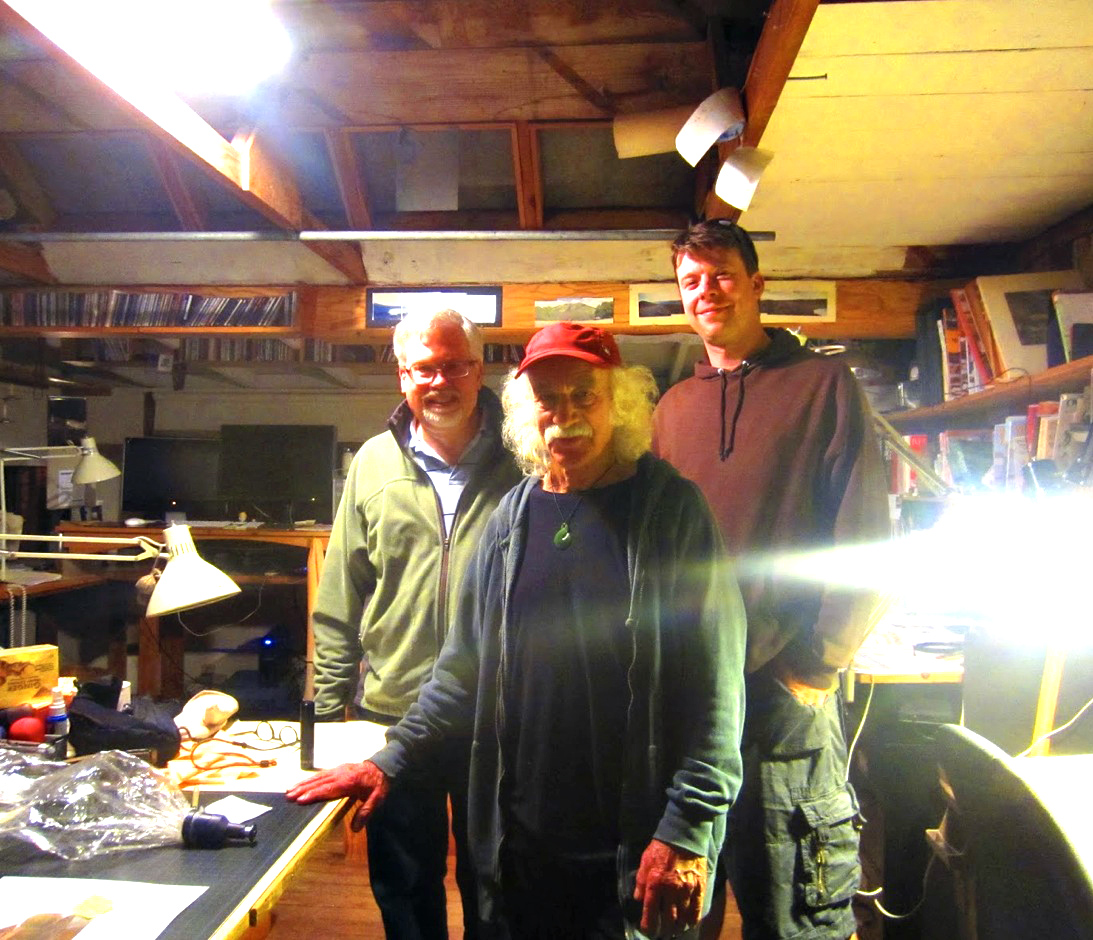
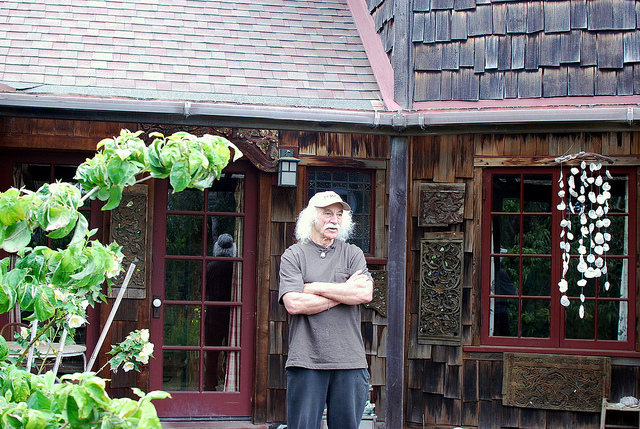
David is a master builder living on an island in British Columbia. His work was featured in Builders of the Pacific Coast, and here is his description of an apple press he just built:
“Lloyd…
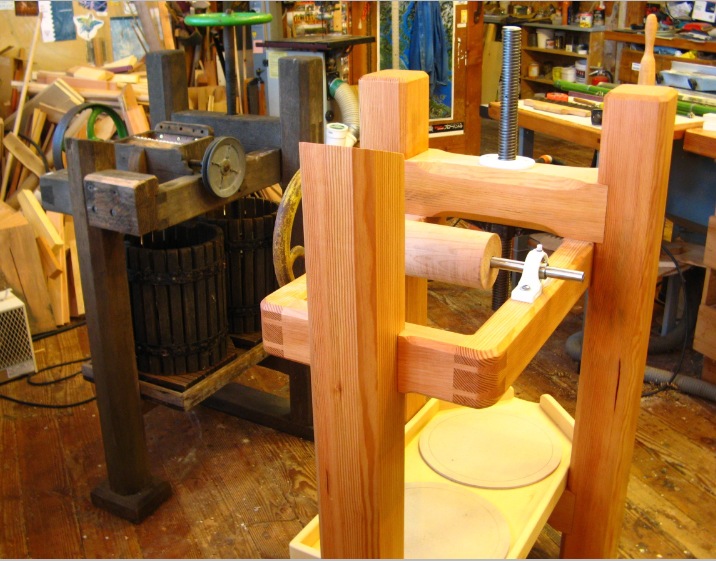
Right now I’m building another apple press since there’s a good crop on more trees around the island this year. The last one I built back in ’76, damn near the first machine I ever made, and it made it through all those years and another zillion gallons of juice. This new one is same old three-legger, but slightly larger and with more foodsafe materials, so it should be at least a 50 year workhorse around somebody’s homestead:
Today I drilled, rolled and riveted four 304 stainless bands for the barrel hoops, which will have rock maple staves thanks to a woodworker buddy from Ontario.
Do you know about “Tipi Village” near Ashland, Oregon? It’s a semi-nomadic collective of tipi-dwelling families and individuals that has been around for almost 6 years. They live simply and lightly on the land, demonstrating that it is possible for modern humanity to return to a more traditional way of life.
The tipis are made with hand-cranked sewing machines, for members to live in, or to sell to support the village. The “Big Lodge” is a 27 ft community tipi where friends and travelers can visit awhile, learn more about the tipi lifestyle, or perhaps consider if they might want to create their own tipi home and stay.
“Turns out, Golden Gate Park isn’t the only desirable place to live if you’re a teeny tiny someone. Bernal Heights has become the latest hot-spot for the new fairy houses that have been springing up in San Francisco this year.
As Bernalwood notes, the neighborhood has spotted a few teeny tiny tree houses of their own in recent days. They’re as small as the tree houses found in Golden Gate Park, although, we noticed the architecture takes on a more quirky bohemian appearance, reflective of the human-sized houses you find in Bernal Heights.…”
Article in SFWeekly by Erin Sherbert, photo: Badass Bernalwood Press
Over the years we’ve had many translations done of our fitness books. For example, Stretching is in 23 languages.
Less so for our building books. In the mid-’70s, Shelter was translated into Spanish, French and German.
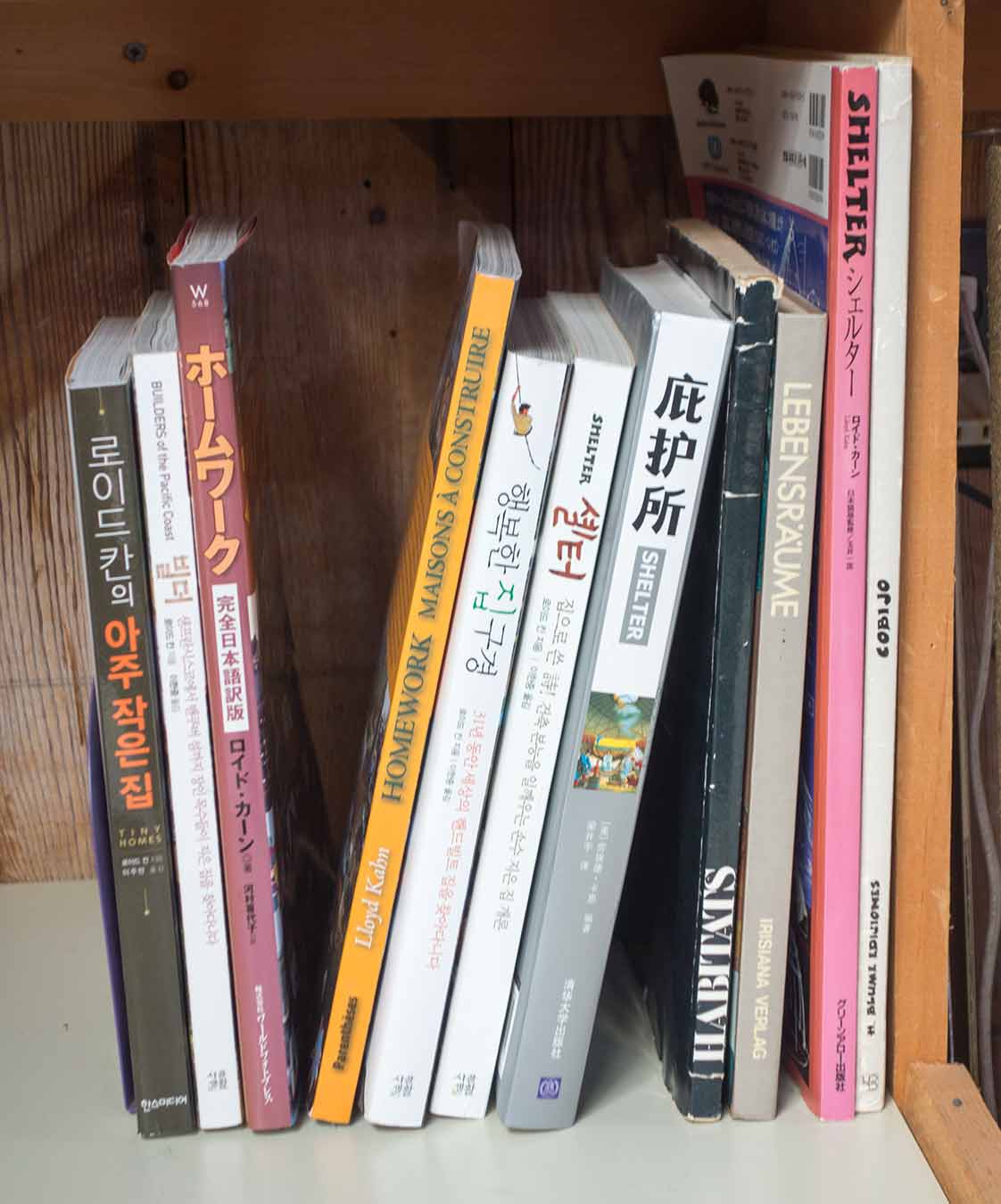
In recent years, we’ve had a bunch of our building books translated. Shown here, left-to-right:
–Tiny Homes in Korean
–Builders of the Pacific Coast in Korean
–Homework in Japanese
–Homework in French
–Homework in Korean
–Shelter in Korean
–Shelter in French
–Shelter in German
–Shelter in Japanese
–Shelter in Spanish
Almost all of our books have been translated into Korean, for some reason.
Each of our contracts with foreign publishers has a clause that says they can make no changes in the general layout or the cover. When we got the Korean version of Builders of the Pacific Coast, they had completely redesigned the book and its cover. It was totally different! And guess what — I loved it! — and emailed them to tell them so. Like the French did with Shelter in the ’70s, they understood the spirit of the book and interpreted it for their readers. Wonderful.
Our good friends at TMEN have just launched a new Facebook page dedicated to natural building here.
“About: News, notes and networking based on natural building and green homes, with info and advice from Mother Earth News and other expert sources.
Description: Our Natural Building & Green Homes Facebook Page invites posts of inspiring photos and expert advice on all kinds of green building options and natural building methods, including straw bale, cob, cordwood, timber frames, logs, earthbags, and more.
We will post links to other resources such as our national events calendar, and at the top of the page you can find our user-generated Google map of green homes and natural building resources
“As some Montanans see it, when it comes to the thousands of animal carcasses that litter the state’s roads and highways each year, there is only one logical thing to do: Eat them.
Under a new state law, people who come across dead deer, elk, moose and antelope — or strike them with their vehicles — may now haul the animals home for dinner.…”
We’ll have a booth at this event for the first time this year. Sunday Sept. 8, 10 AM-6 PM. Solano is on the edge of Berkeley and Albany, perpendicular to San Pablo and Shattuck. They say 200,000 people attend this affair. Music, food, crafts, eco-type booths, etc. We’ll be selling our building books at a DISCOUNT! (Our booth is pretty close to top of block, outside 5 Star Video, 1882 Solano. Across street from Noah’s Bagels.)
BTW, when I was a kid, my brother and I used to take a streetcar from the Laguna Honda Station in San Francisco down to the Key System terminal at the base of the Bay Bridge, then catch the F train that crossed the bridge (on the lower deck) and went all the way through Berkeley on Shattuck, then through the tunnel to Solano Avenue, where we’d get off and walk a block or so to our cousins’ house on Marin Avenue. My aunt Dorothy was married to ex Berkeley All-American Berkeley High School football player Chili Bertoli, and we spent many weekends with the Bertolis. 10-12 years old, traveling all that distance on 1940s rapid transit, no chaperones. (The rail lines were torn out in 1958, and the lower deck converted to pavement for cars.) Ah me, I do digress.
“Will It Ever Change,” by Luther Allison from a great album, “Live in Chicago”:
Two of the mightiest men in the tiny house movement, Kent Griswold (Tiny House Blog) and Deek Diedrickson (Relaxshacks) visited Shelter a few weeks back. We did a homestead tour, then had dinner.
I just did this latest GIMME SHELTER email newsletter.
I started sending these out maybe 10 years ago, originally for sales reps, to about 750 people. Mainly on the state of Shelter’s publishing projects. With blogging, I send these out less frequently, but they still do reach people who don’t read the blog.