Shipping containers (and this is merely my opinion), along with A-Frames, Earthships, underground housing, and narrow tiny homes with sleeping lofts reached by vertical ladder — make for lousy housing. Here’s the case against the former, demonstrable evidence that many (maybe most) architects have their heads up their asses:
“…It’s not hard to see the appeal. Shipping containers look exactly like building blocks, which is the primary medium (other than dirt) that most architects started working with. You can buy used ones for about $1,600 a pop, which seems like a steal for housing. Doing that also feels very environmentally conscious, because you’re taking something that already exists and reusing it for a different purpose. For these reasons, architects in particular are drawn to the idea of using shipping containers as housing for poor people — as is the case with this plan for a skyscraper made of them, which just won a design competition for low-income housing in Mumbai.
There’s just one problem: Shipping containers turn out to be a uniquely poor building block for human shelter. Mark Hogan, a San Francisco architect who has worked with shipping containers in the past, just wrote a succinct manifesto about why you should really, really not use shipping containers for housing.
For one thing: A building made of corrugated steel is going to be a miserable residence, especially in a place as hot as Mumbai. You could add insulation and a ventilation system — but that would make a box that already has awkwardly low ceilings even smaller. You could add windows — but that would require cutting through steel walls, which takes specialized equipment, and a contractor who knows how to use that equipment.…”
https://grist.org/cities/dear-architects-stop-trying-to-make-shipping-container-buildings-happen/
https://markasaurus.com/2015/09/01/whats-wrong-with-shipping-container-housing-everything/
Sent in by John Michael Linck
Shipping containers (and this is merely my opinion), along with A-Frames, Earthships, underground housing, and narrow tiny homes with sleeping lofts reached by vertical ladder — make for lousy housing. Here’s the case against the former, demonstrable evidence that many (maybe most) architects have their heads up their asses:
“…It’s not hard to see the appeal. Shipping containers look exactly like building blocks, which is the primary medium (other than dirt) that most architects started working with. You can buy used ones for about $1,600 a pop, which seems like a steal for housing. Doing that also feels very environmentally conscious, because you’re taking something that already exists and reusing it for a different purpose. For these reasons, architects in particular are drawn to the idea of using shipping containers as housing for poor people — as is the case with this plan for a skyscraper made of them, which just won a design competition for low-income housing in Mumbai.
There’s just one problem: Shipping containers turn out to be a uniquely poor building block for human shelter. Mark Hogan, a San Francisco architect who has worked with shipping containers in the past, just wrote a succinct manifesto about why you should really, really not use shipping containers for housing.
For one thing: A building made of corrugated steel is going to be a miserable residence, especially in a place as hot as Mumbai. You could add insulation and a ventilation system — but that would make a box that already has awkwardly low ceilings even smaller. You could add windows — but that would require cutting through steel walls, which takes specialized equipment, and a contractor who knows how to use that equipment.…”
Snark snark: this place is vastly overpriced ($35 general entrance fee for one day), not very well designed, and compliments the weirdness and architectural absurdity of the De Young Museum across the way from it. Sorry, it just pisses me off. The old academy and museum were just fine and in harmony with the bandstand with its pollarded trees outside.


 To tell the truth, it’s a great relief, not feeling the pressure of getting out a post every day. Almost 5,000 of ’em — time for a change
My main focus these days is on the new book, SMALL HOMES; I’ve got over 50 pages roughly laid out, am in daily contact with a slew of contributors. I figure making books is how I can reach the most people, the best use of my time right now.
We’re plotting a new online strategy. Right now, I’m thinking of doingTwitter and Instagram, with occasional blog posts. Right now there are 5 steps to getting a photo out there:
1. Shoot photo.
2. Load into MacAir.
3. Fiddle a bit with it in Photoshop.
4. Find Wi-Fi (or be in office)
5. Post it
My intention is to shoot photos with an iPhone 6, post on Instagram right then. If this works out, I’ll be able to communicate way quicker. Right now, am waiting to see what Apple’s got coming with the iPhone 7, maybe the 6’s will be cheaper.
Found a nearly deserted beach yesterday, clothes off, warm sand, swimming, the only time I’ve experienced NorCal water so warm was the last El Niño, so unusual to be in this ocean and feel comfortable. Gathered a big bag full of purple/green seaweed for the garden. Like my neighbor, surfer/fisherman Andrew said the other day (down at the beach), “We’re so lucky.”
 Yogan came to California from France and is exploring (and working wherever he stays) along the Pacific west coast this fall. I dropped him off in Pt. Arena (Calif.) 2 weeks ago and as he makes his way northward, he is shooting photos and posting them on his blog:
https://yogan.over-blog.com/
His website: https://www.yogancharpentier.com/
This photo from The Salmon Creek Farm in Mendocino County
He’s now heading up to visit SunRay Kelley in Washington.
Tags: builders, building, carpentry, farming, natural building, natural materials, off-the-grid, roadtrip, tiny homes, tiny houses, treehouses
 Shot this January.
Art by mother nature and age.
 Saw this beautiful painting by Bill Holm* last week at Fort Ross. The Russians brought the hunters, most of them from the Kodiak Islands, to hunt sea otters at Fort Ross in the early 1800s. The kayaks were made of sea lion skins, the parkas (said to be waterproof) of sea lion intestines, the hats resembling birds.
“…The Kashaya Pomo called the Alaskans Underwater People because their boats sat so low in the water it seemed as if they were coming out of the sea. The iqyan (kayak) they developed is still studied today and its design is incorporated into modern shipbuilding. The Russians called these skin boats baidarkas.
The Alaskans were expert sea hunters. They honed their skill over thousands of years while living on isolated islands and waterways. RAC sent Alaska Natives along the coast to hunt for otter and fur seal pelts. They traveled great distances by kayak, including the Farallon Islands 35 miles southwest of Fort Ross across the rough open ocean, where the Alaskans stayed for months at a time. Alaska Natives used a spear with a detachable point tied with sinew to an air bladder made from a sea mammal’s stomach. After the animal is speared, hunters track the floating bladder, waiting for the animal to come up for air.…”
–https://www.fortross.org/native-alaskans.htm
*Represented by the Stonington Gallery; Also see his book, Northwest Coast Indian Art: An Analysis of Form
 Last week Yogan and I spent an hour exploring the Fort Ross State Historic Park, a masterful re-creation of the Russian Fort built on the Northern California coast in 1812. The Russians brought down Native Alaskan hunters who speared sea otters from seal skin kayaks. Most of the hunters came from the Kodiak Islands and their kayaks, spears, and hunting techniques were extraordinary (more on this later).
If you are ever driving up the Northern California coast, I highly recommend going to this site.
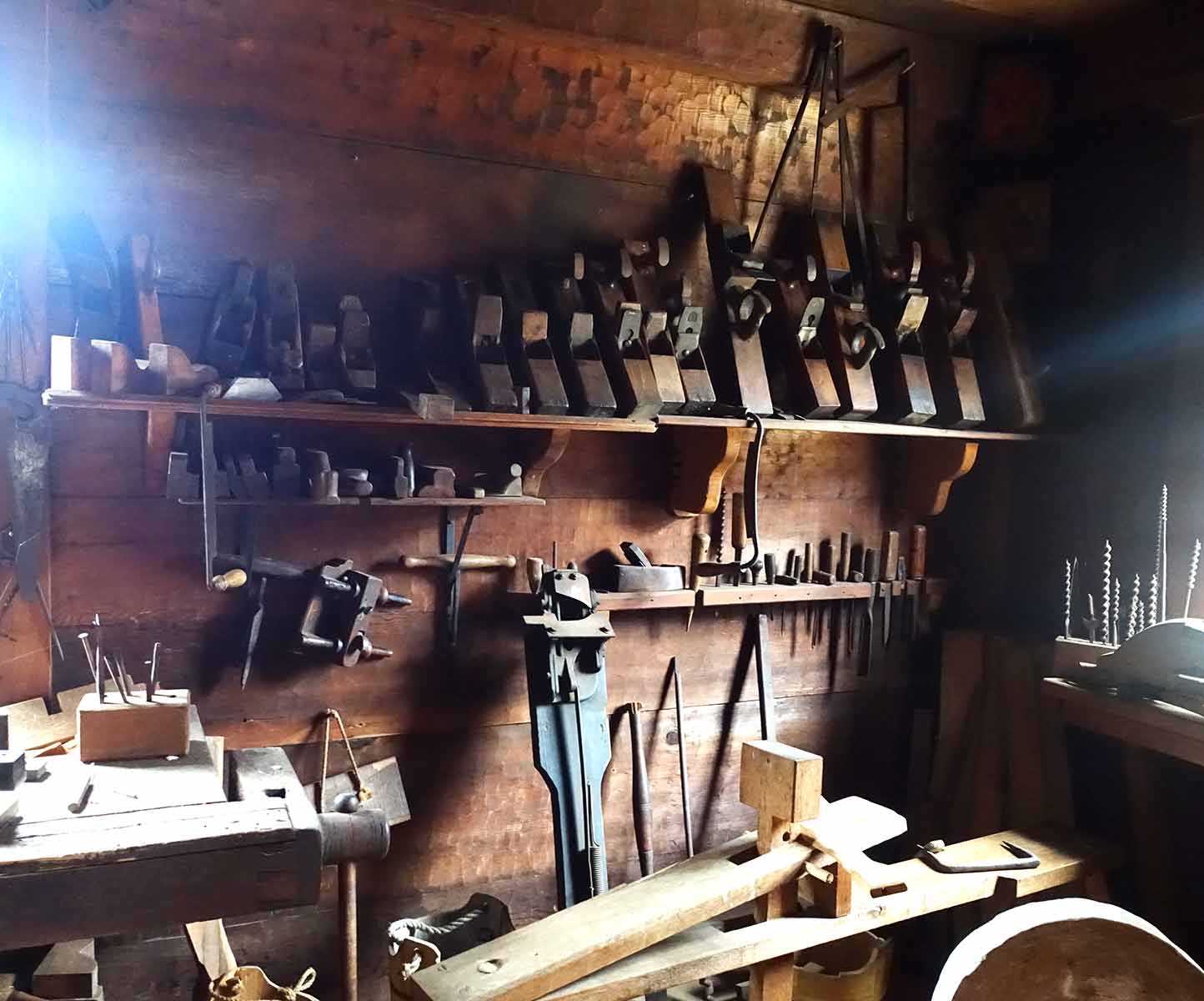
Here is the chapel (star of the show), metal shop, and wood shop. Roofing on these buildings consisted of 2 layers of long planks, laid with the cracks in the top layer over the centers of the under layer.