Atlas, the Robot, Walking Through a Rough Field
Post a comment (2 comments)

I went to the 65th (!) reunion of my class of 1952, Lowell High School, San Francisco, on Friday. About 80 people out of a class of 250 attended. Even though I’ve taken a different direction (wealth, politics) than most of them, I still love seeing these friends of 70+ years.
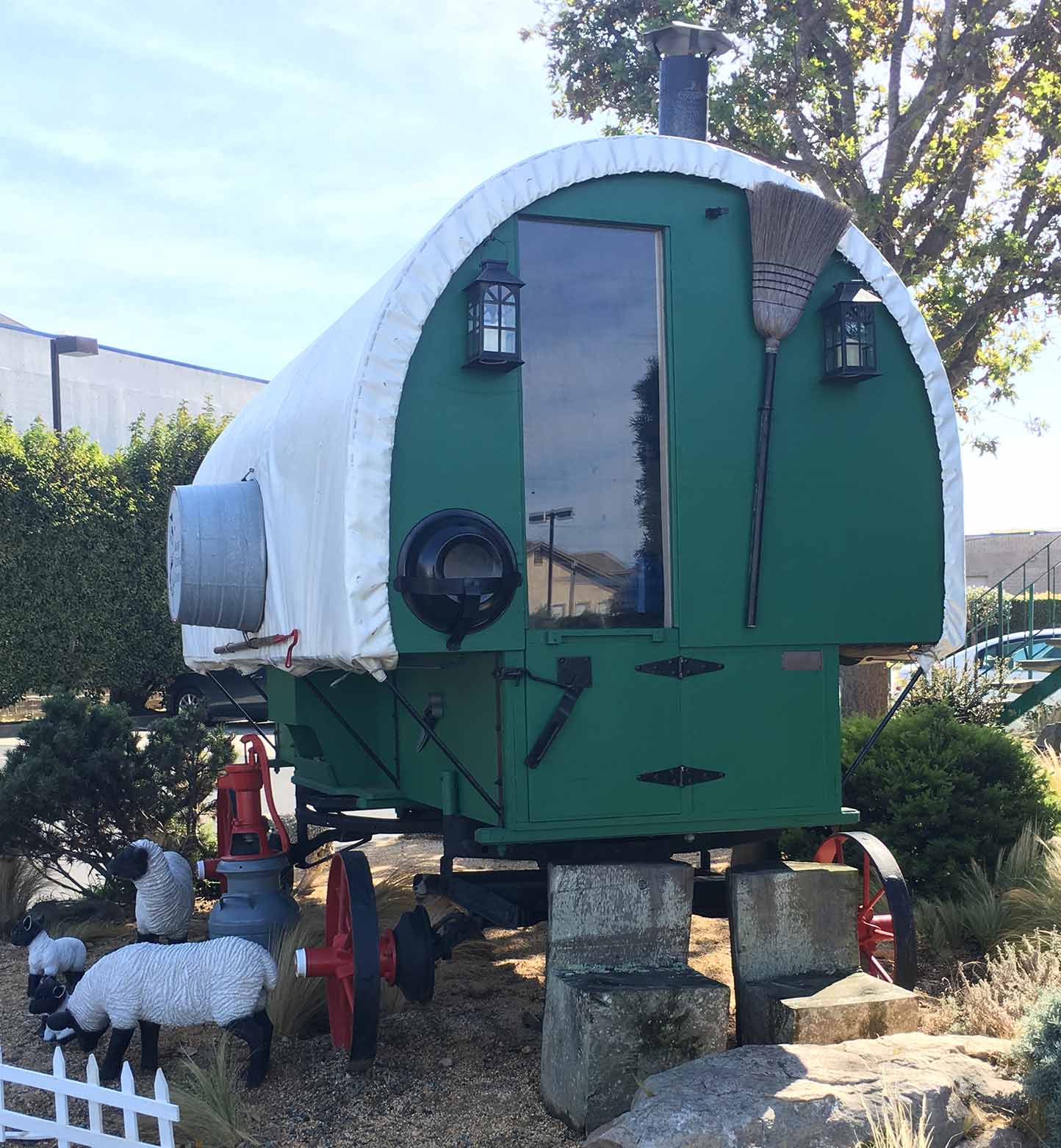
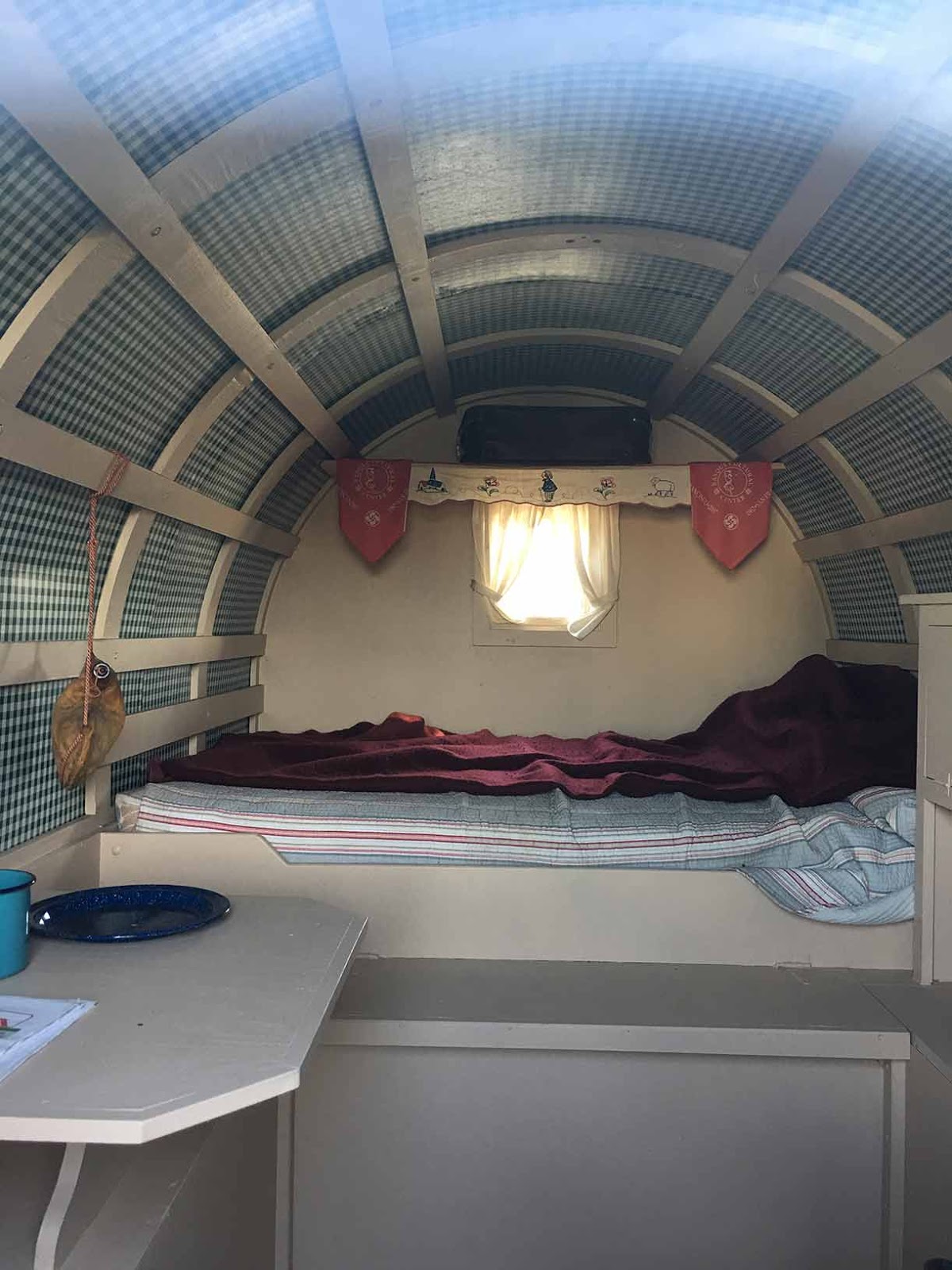
It was held at the Basque Cultural Center in South San Francisco, and this wagon was parked out in front. The curved roof, with bed at one end is, I believe, an excellent configuration for a tiny home, far better than the poster boy for tiny homes, the steep gable roof with ladder to loft for sleeping — a bad design, in my opinion, for many reasons. Here you can have drawers under the bed, and the curved roof gives you a feeling of spaciousness, as opposed to the claustrophobia of many tiny home designs.
This is also the basic design for the vardo of the Roma people in Europe.
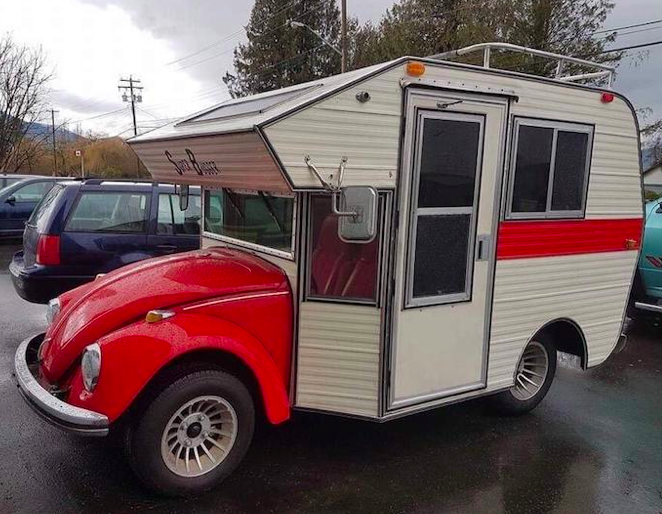
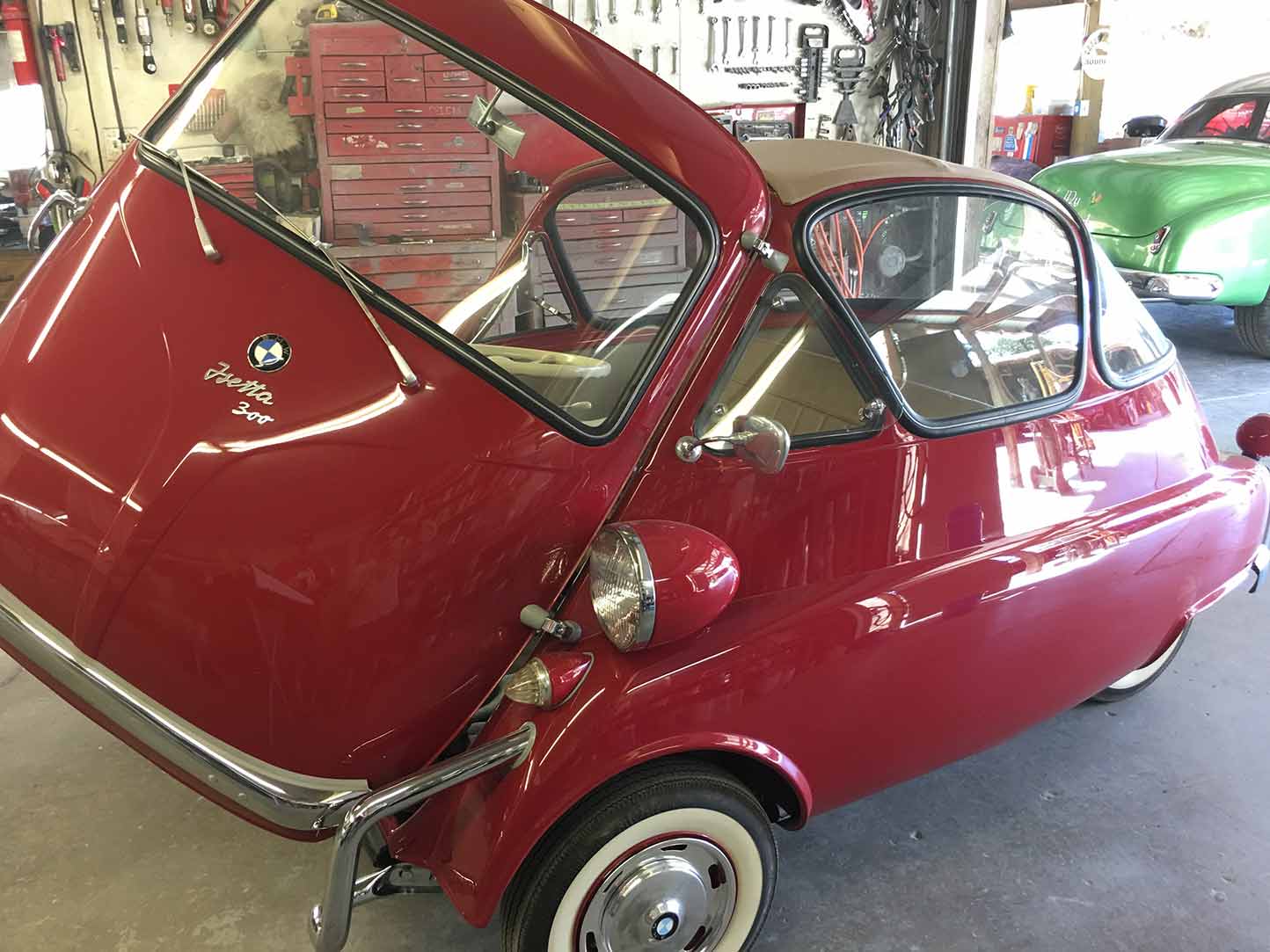 This is a 1-cylinder Italian microcar built by BMW that got 94 miles per gallon in the ’50s. There were a lot of them in Germany when I was stationed there in the USAF in the late ’50s. This one was being refurbished by Ricky J in Prineville, Oregon, when I was there for the eclipse last month. Ricky has a fleet of old cars that he’s restoring, each one a gem by the time he’s through..

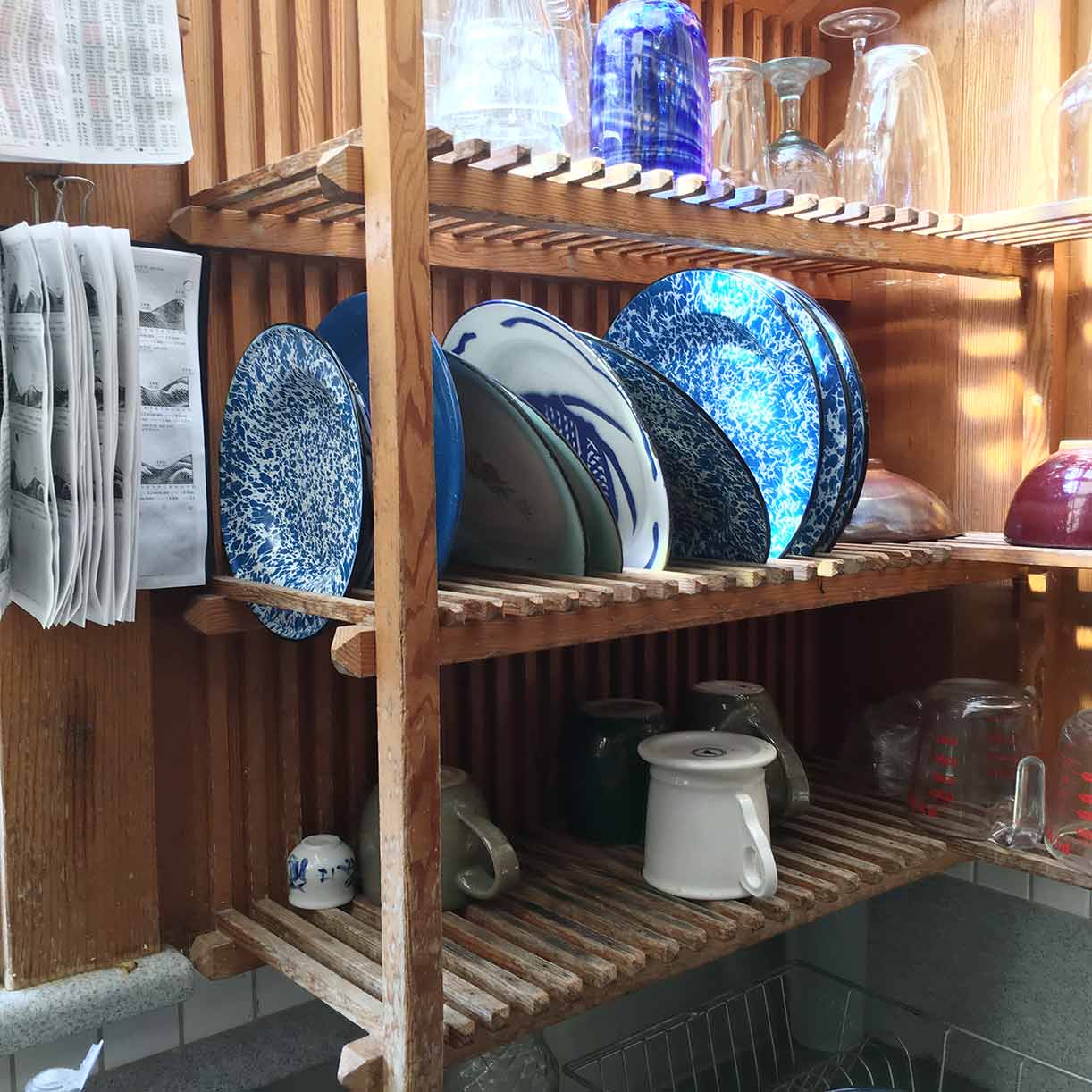 We wash dishes by hand (in a rectangular Rubbermaid dishpan), rinse and place in this drying rack/storage unit, built maybe 20 years ago by Lew Lewandowski.
When we had goats, I had installed a dishwasher, but found that we practically had to wash the dishes first (so as not to have food particles going into the septic system). Plus it used a lot of water and electricity, so I took it out and we’ve used this system ever since.
Another feature in this kitchen is a 5-gallon electric water heater right under the sink. While I’m not fond of electrically-heated water, this unit is so small, it’s energy-efficient, and we get instant hot water.
We use rubber spatulas to get food off plates, pots, and pans; edible scraps go to chickens, non-edibles (coffee grounds, avocado pits, etc.) go in a stainless step-operated trash can for the compost pile.
After I finish the book on the ’60s, I plan to do one titled The Half-Acre Homestead, all that I’ve learned abut building and raising food over 50 years.
Apropos of nothing here, the Amazon series “Sneaky Pete” is wonderful. Great story, fabulous acting all around.
I’m off for Oregon early tomorrow morning.
Jim Morrison said once that when they (The Doors) finished a record, only then were they released to start thinking about the next one. When I finished Small Homes, I couldn’t think what to do next. I’d sort of run the gamut of 9″x12′ building books, each with about color 1000 photos, from Home Work to Small Homes. Retire? No way! I’m just getting warmed up.
About the same time there was an explosion of articles, TV specials, museum exhibits, and conferences rehashing “The Summer of Love.” (Yes, I know I’ve written this before, but I’m further into it all now.)
Since my take on the years was so different from everything being written or presented, I decided to write my own version of the ’60s. (I was there.) The project seemed to gather momentum as I proceeded. I started having fun. I hadn’t looked back at those times in any sort of organized way, and I found myself not only marveling at what happened, but having new insights with the perspective of 5 decades.
Plus, the 60s weren’t an abstraction for me. The concepts, the spirit, the new knowledge profoundly changed my life. (I just realized this now.)
Stop, children, what’s that sound,
Everybody look—what’s going down.
-Buffalo Springfield
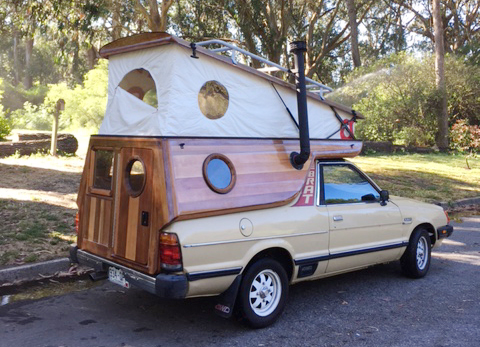 Built on a Subaru Brat. Jay got the idea of the tiny wood-burning stove from Bruno Atkey.
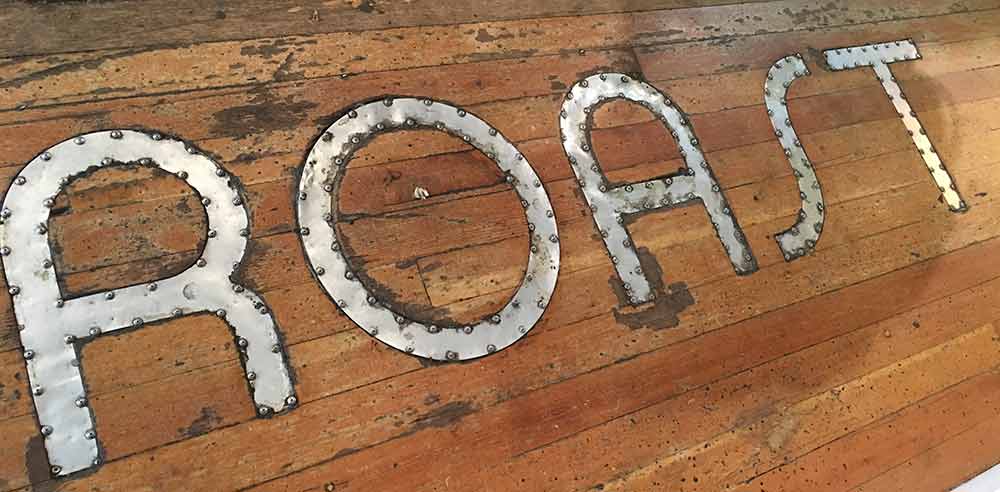
 Stainless lettering, mortised into flooring, attached with stainless steel phillips head screws, Milano Coffee Roasters, Gastown, Vancouver. There are also interesting tables and benches of poured concrete. Innovative architecture/design.
Photo by Godfrey Stephens, in Victoria, BC: