crafts (116)

Wonderful Houses Around the World

Yesterday I read in the paper that sales of children’s books are booming, due to schools being closed. This brought to mind our one and only children’s book, Wonderful Houses Around the World, by photographer Yoshio Komatsu and artist Akira Nishiyama.

There are 10 photographs by Yoshio of homes in different parts of the world. All the homes are built of natural materials — earth, wood, thatch, sod, bamboo, and stone.

Each photo is followed by a watercolor drawing of the inside of that home, showing the children and their parents going about their everyday activities: food gathering and processing, cooking, sleeping, working and playing.

The book is timely in this day and age: it shows what people do in their homes. Timely also because it’s great educational material for kids being home-schooled: look at what what kids your age are doing in other parts of the planet.

Yoshio is my favorite photographer of homes in the world. Not only are the homes invariably soulful, but his composition and lighting are perfect — and he has a knack for making people feel comfortable, so that the homeowners look natural, often laughing.

The book is $12.95 and you can order it through your independent bookstore, or from:

Note: We have a money-back guarantee on all of our books (no matter where you buy them). If for any reason you are dissatisfied, call us and we’ll return the full purchase price plus shipping. No need to return the book.

Post a comment (1 comment)

Handcrafted Homes in Pennsylvania Woods

A terrific article in today’s NYTimes (3/16/20) online by Michael Snyder, with great photos by Chris Mottalini.

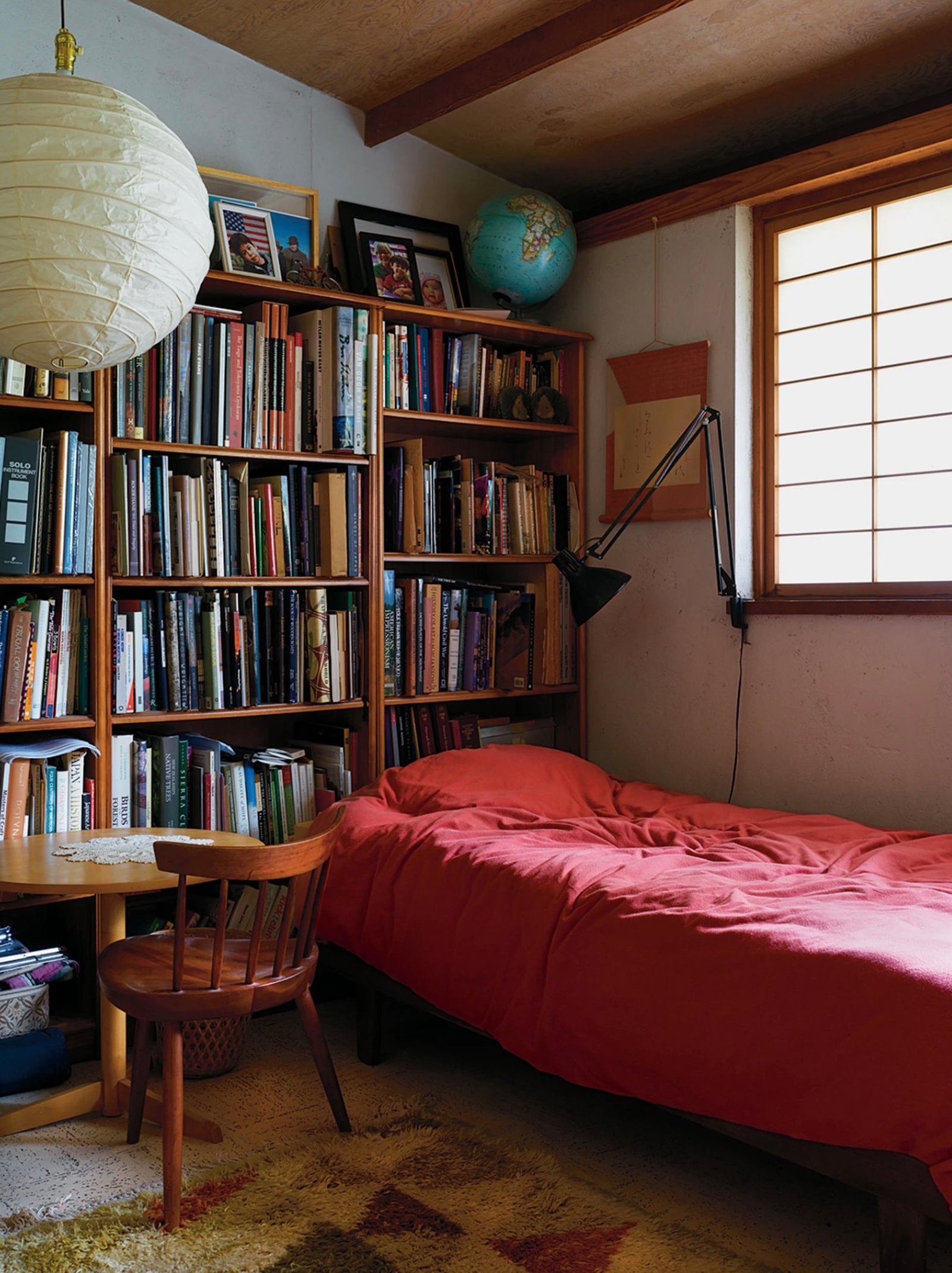
Everything about this story and the photos struck me as right. I felt at home here. I love the rumpled bed in the second photo. I also like the idea of an “alternative to modernism.” 

How Two Children Are Keeping Their Father’s Design Legacy Alive

A pair of Pennsylvania homes constructed by the Japanese-American furniture designer George Nakashima have become an enduring testament to mid-century folk craft.

“From 1946, when he founded his studio on a three-acre plot in New Hope, a historic artist’s colony halfway between New York City and Philadelphia, to his death in 1990 at the age of 85, Nakashima devoted his life to transforming slabs of walnut, cherry, burled maple and redwood into coffee tables shaped like pools of water, Shaker-style chairs with hand-whittled spindles and dining-room tables fashioned from slices of tree trunks, their cracks and seams bridged with joints like butterflies caught in amber. ‘He felt his work was a form of integral yoga: How you work and live is all connected,’ his daughter, Mira, 78, told me on a damp, gray morning last fall while showing me around the grounds of the studio, which she has run since her father’s death. Organic, improvisational and individual, the tens of thousands of objects he made in the course of his lifetime were also functional, meant for daily use; they were, Mira says, “the antithesis of Modernism, a protest against mass production.”

“But the homes where Mira and Kevin live, patinated and imperfect and crowded with debris, more fully capture the spirit of mingei. Less an antithesis to Modernism than an alternative to it, such projects embraced 20th-century idioms while refusing to accept industrial mass production as the fundamental fact of modernity. ‘Dad always said that building furniture was just like architecture but smaller,’ Mira says. In his houses for his children, the opposite holds true: Like Nakashima’s tables and chairs, they can be read as works of folk art, useful objects that, as Yanagi wrote, ‘honestly fulfill the practical purpose for which they were made.’”

www.nytimes.com/2020/03/16/t-magazine/george-nakashima-legacy.html

Article sent us by Elizabeth Kirkland

Post a comment (1 comment)

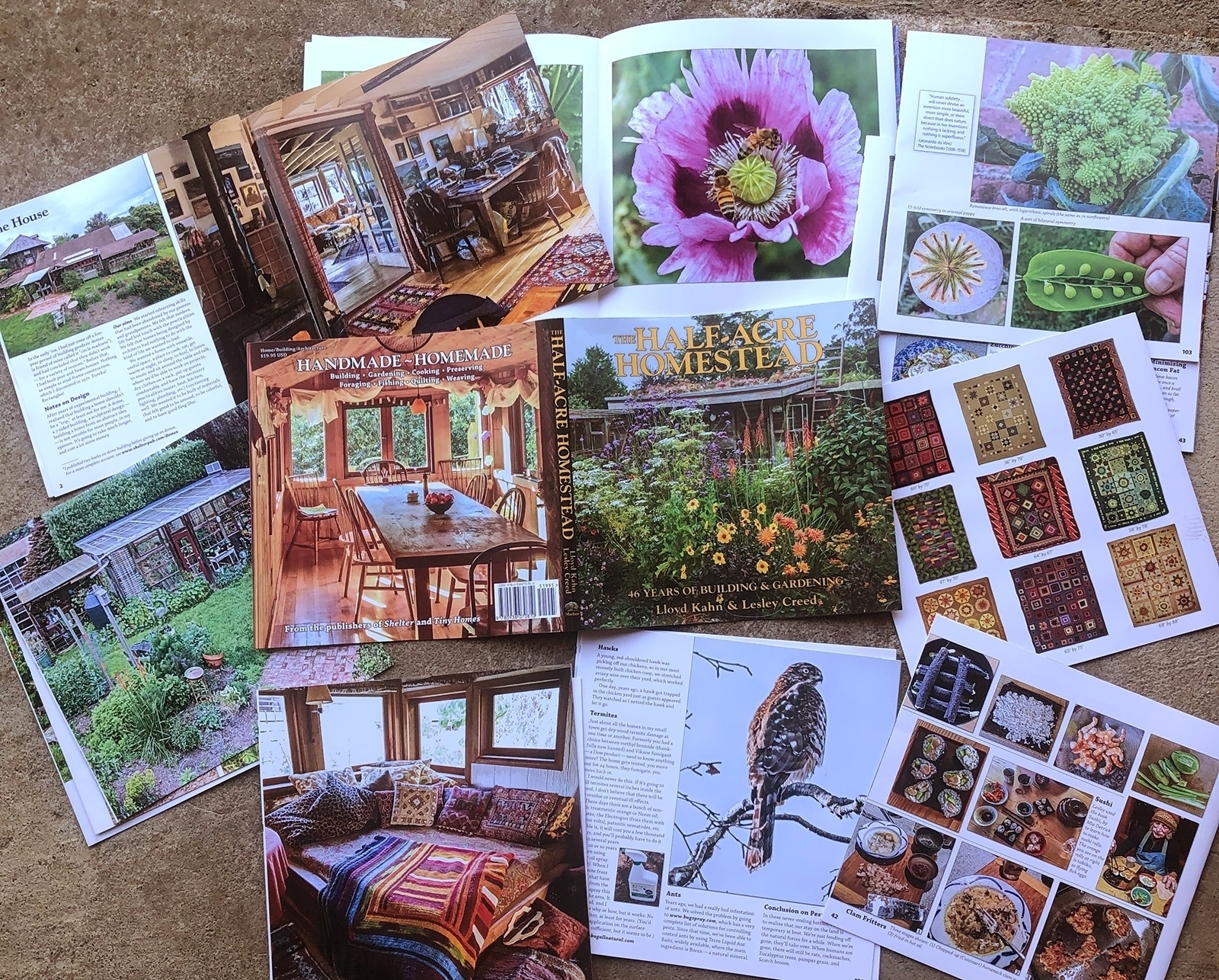
The Half-Acre Homestead Book Is Finished!

(Subtitle: 46 Years of Building & Gardening)

You know, it’s Thanksgiving morning, both boys are off for the holiday with spouses’ families, and Lesley and I are working on our separate crafts. What a difference with no phones, no email, no business necessities, no one else around. Witness the fact that I’ve hardly blogged at all lately. Gonna have to get one day a week here with no distractions. A right-brain day!

The unbound pages came in from the printers a few days ago. What a thrill! The book’s getting bound (in Hong Kong) this week, shipped and will be available in early March, 2020. When we get it together, we’re going to take pre-orders.

I’m still getting used to the book. After covering hundreds of builders over the years, this is the first on my own (and Lesley’s) work.

Stay tuned.

These photos shot with iPhone. We just got these early pages.

Music de éste día: The Gilded Palace of Sin by The Flying Burrito Brothers, 1969
www.youtube.com/watch?v=LUeFJ7QIRbE

Here’s how I make books:

Read More …

Post a comment (24 comments)

Grandpa Built a Car

239103

When my father was 5 years old, he was riding a tricycle on the street in Alameda and a train came along and the wheel cut off 4 of the toes on his left foot. When he was in the hospital, his dad promised him he’d build him a car. Which he did. I just discovered this photo in the family archives. My dad didn’t let the injury slow him down, he played tennis in high school and was an avid duck hunter and fisherman. I’m so proud of him, for his courage, and grandpa for his soulful kid’s car (with bicycle wheels).

(I just discovered this photo in an old family album, with my dad’s explanation written on the back; I’d never heard the story.)

Post a comment (5 comments)

Russian Millwork – Architectural Lace

There are several additional accounts documenting this beautiful indigenous/vernacular style. These folks seem to be particularly organized and have published a book, that I hope can be sold here somehow or maybe even reprinted in an English language edition. Phenomenal tradition.

–Gazine Grenia
instagram.com/nalichniki

Post a comment

Stone Barn

I’m going through my photo archives these days. I realize I have a wealth of building photos accumulated over a 50+ year period. I can’t recall where I shot this; it was somewhere on the several trips I took through Ireland and England in the ’70s. I was on a journey to study real building, after giving up on geodesic domes. Going from mathematically derived buildings, often built with highly processed materials, to studying construction methods based on local materials, site-specific experience, and fine craftsmanship was a revelation.

This stone barn, for example, is almost unreal in its simplicity and master masonry — both in the walls and stone (slate?) roof.

Note: See the wonderful thread of comments below.

BTW, I’m in a new mode these days of trying to put up blog and Instagram posts at least 5 days a week. I’ve sure got a lot of “content.”

Post a comment (11 comments)

Lloyd and Louie Visit 02 Artisans Aggregate in Oakland

Tucker Gorman is an artist/woodworker that I recently met through Foster Huntington. Tucker is one of a group of builders, artists, welders, sculptors, and gardeners that operate out of a number of large buildings in the industrial part of Oakland, Calif. I’d been there last week and took my friend Louie with me to see it all this week. (BTW, Louie is 92 years old and still rides a 500-foot zip line across the Garcia River in Mendocino county to get to his house.)

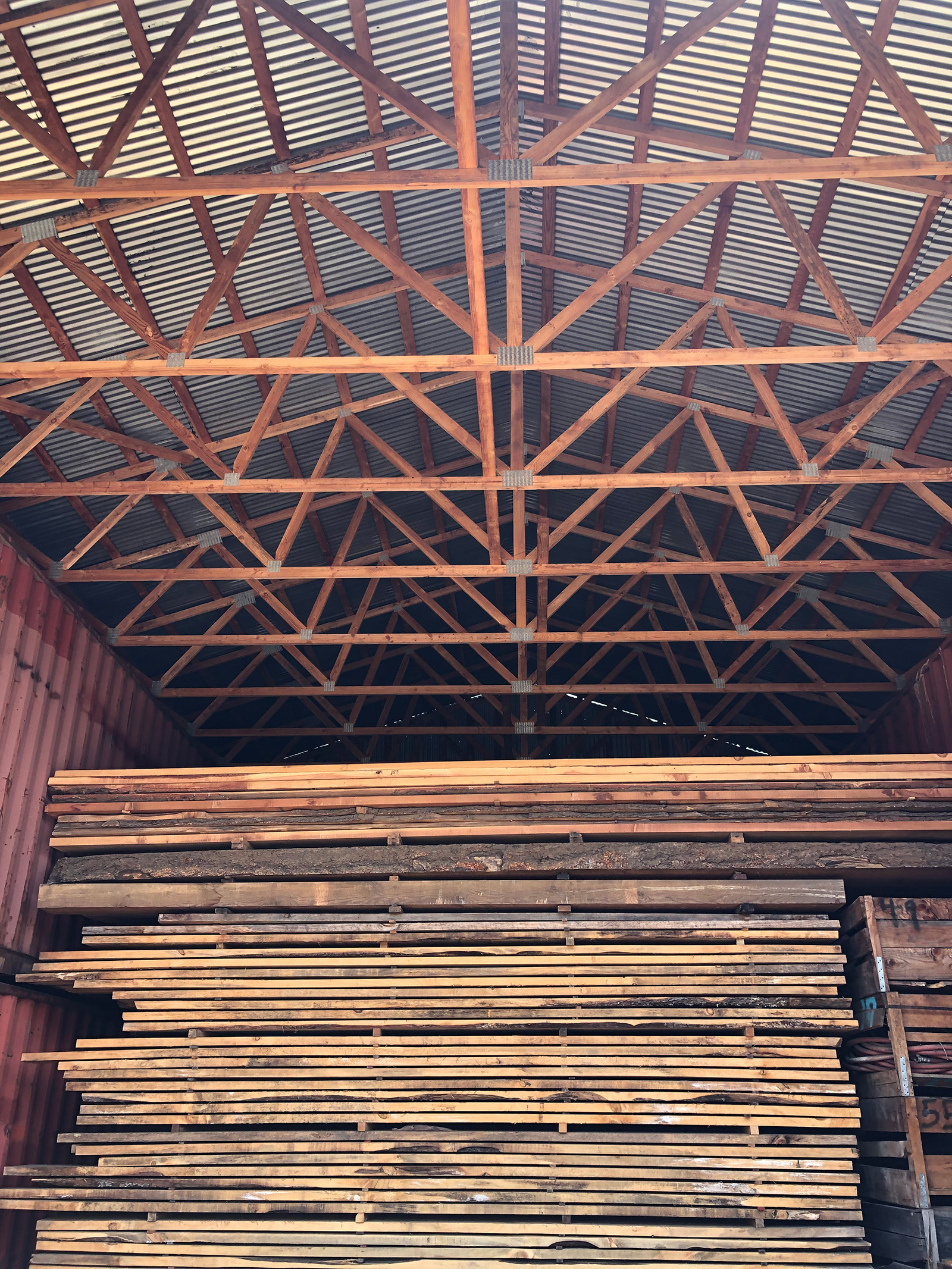
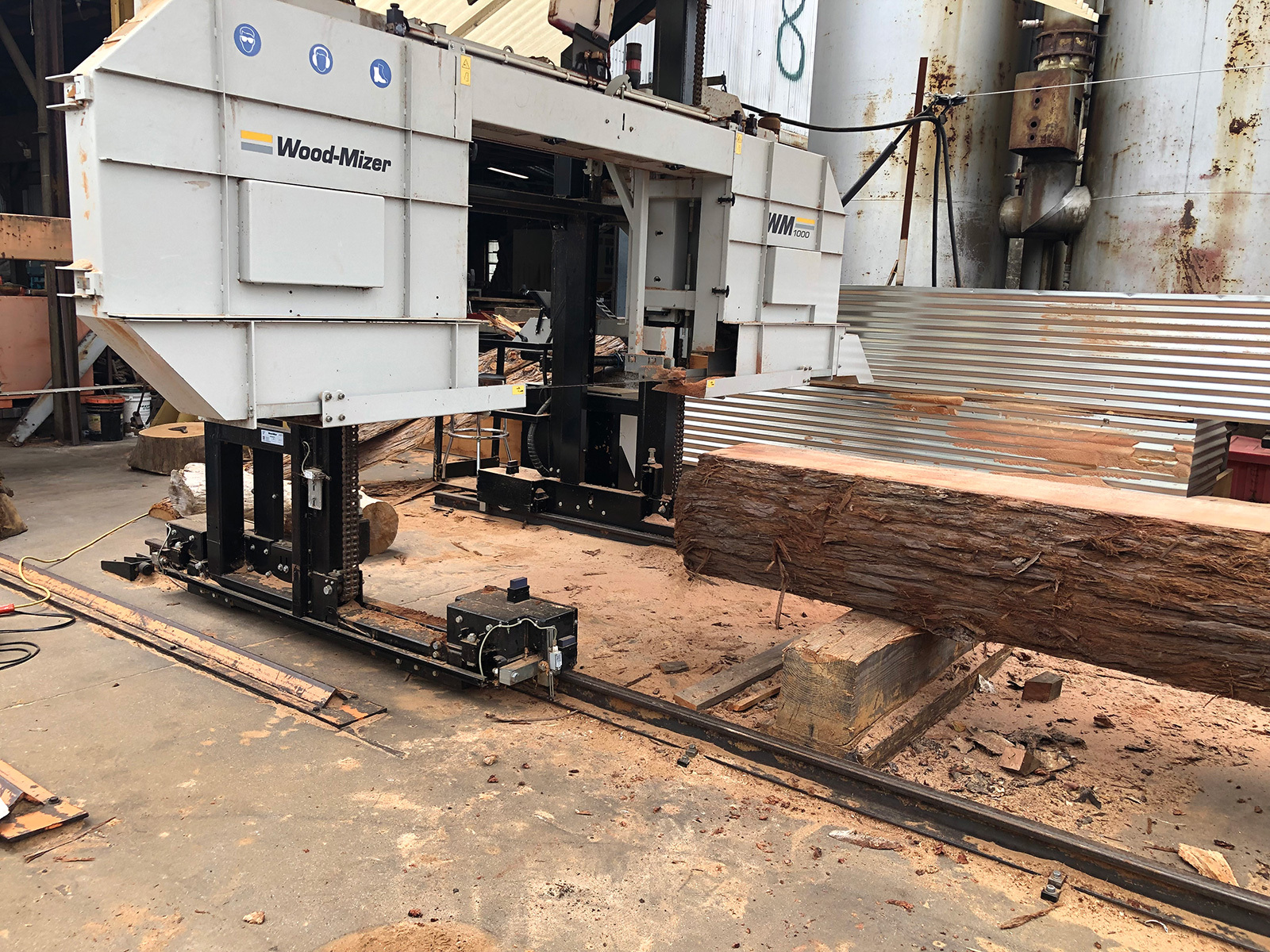
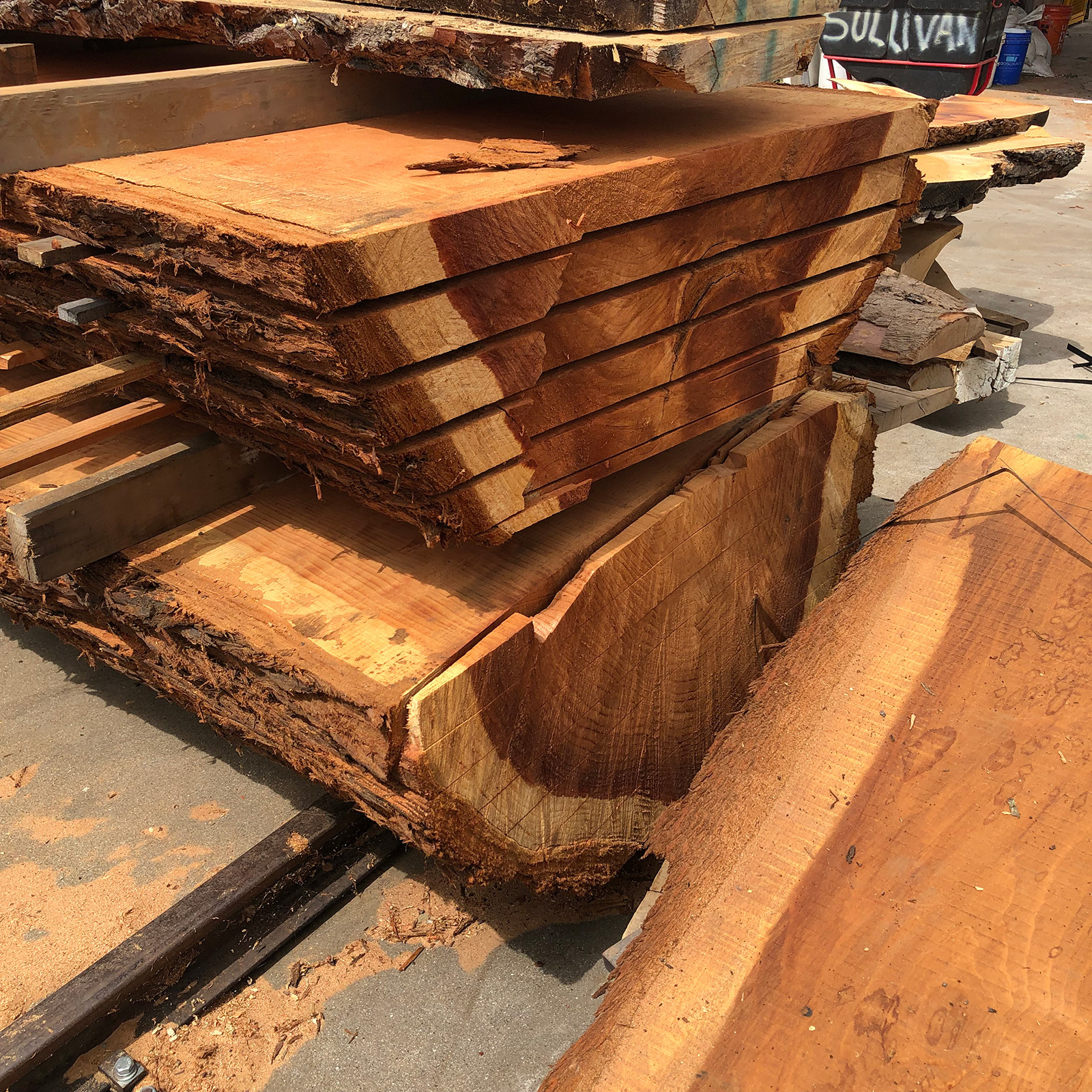
It’s an amazing setup, with a group of ultra-competent people engaged in all kinds of activities. There are a number of dimensional sawmills — the largest can handle a 5-foot log — and the yards are piled high with stacks of sliced‑into‑slabs logs and stickered lumber of all sorts. In one building, there’s Joinery Structures, a custom sawmill with mills, planers, joiners, sanders, and other milling tools I’ve never seen before.

There’s a greenhouse in which seaweed is dried. There are chickens, guys working on making chicken feed out of food byproducts, a nursery, tanks containing sturgeons, and Soba Ichi: a very cool-looking, fresh noodle restaurant. More photos of it here.

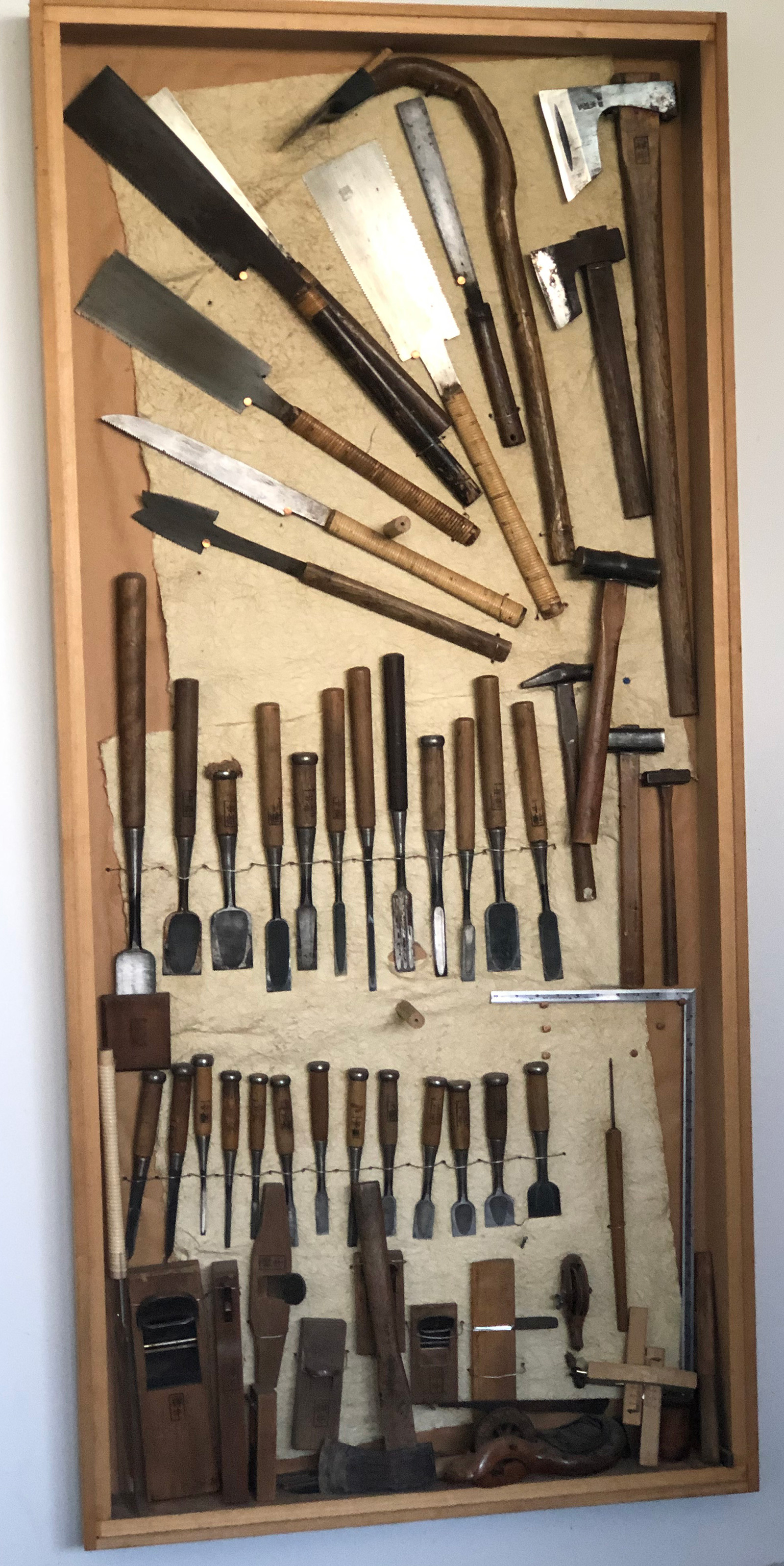
Central to all this is Paul Discoe, a Zen Buddhist priest who studied under Suzuki Roshi at the San Francisco Zen Center and then spent five years studying with a master carpenter in Japan. He’s published a beautiful book, Zen Architecture: The Building Process as Practice.

I don’t have a lot of time (one could spend days writing this place up), but here are a few photos:

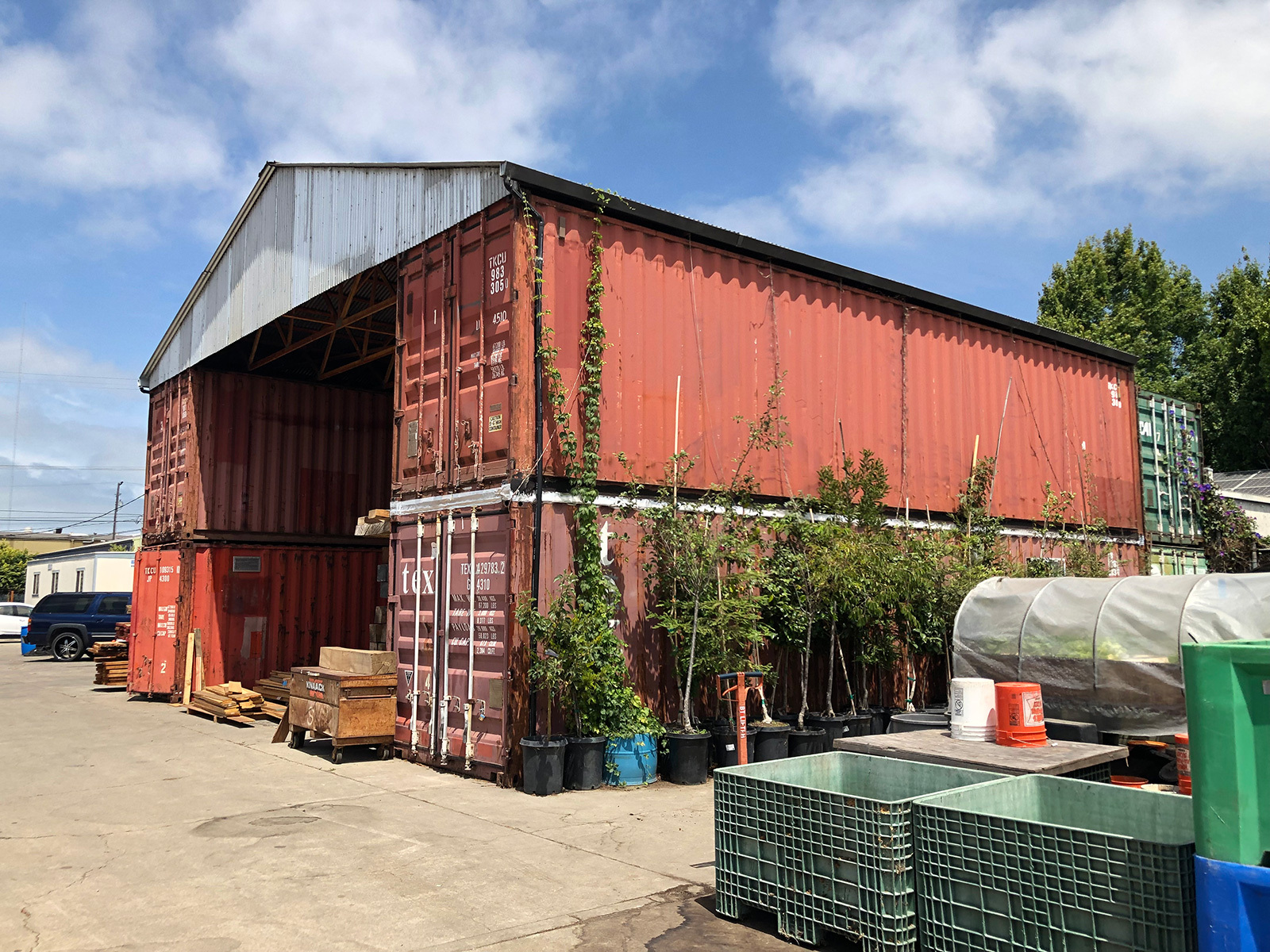
Brilliant use of shipping containers

This mill will handle a 5-foot log. With these mills, the blade housing moves on tracks; the log is stationary.

Paul Discoe’s collection of Japanese carpentry tools

More pics to follow when I get time.

Post a comment (3 comments)

Sculptural Sauna by Travis Skinner

Hey Lloyd, We just finished this sauna, we wanted to share it with ya.

–Travis Skinner

“The Anglerfish Sauna is a wood-fired sauna on wheels! It was built by the Hundred Handed Ones architectural collective that I started in collaboration with Travis Conn.

We use sculptural forms in architectural works. The Anglerfish Sauna showcases these principles in an experience. We ask the audience to step into the work and experience natural forms inspired by life.”

Check out the details here: the fins over the tires, the spine, the light, the teeth…

Travis built a unique tiny home on wheels that was featured in our book Small Homes.

Check out his very creative and highly-crafted designs at pairoducks.blogspot.com.

Post a comment (1 comment)