Rick and I are in the final stages of preparing Small Homes for the printers. We changed the cover from an earlier version, which showed a small turn-of-the-century home in Santa Cruz (in this revised cover, it’s the middle image in the left hand column), because a single image didn’t seem to represent the diversity of images (120 or so small homes) in the book. Hence the collage.
Below are two alternatives, the same except for the background color. In the one with the red, it’s similar-looking to Home Work,Builders of the Pacific Coast, and Tiny Homes on the Move. Some of our savvy book friends think it’s too similar, and that another color would distinguish it from the other books. Hence the other with the dark green background.
Comments, please. Which do you like? Do you see any problem in this cover being similar to our other books?
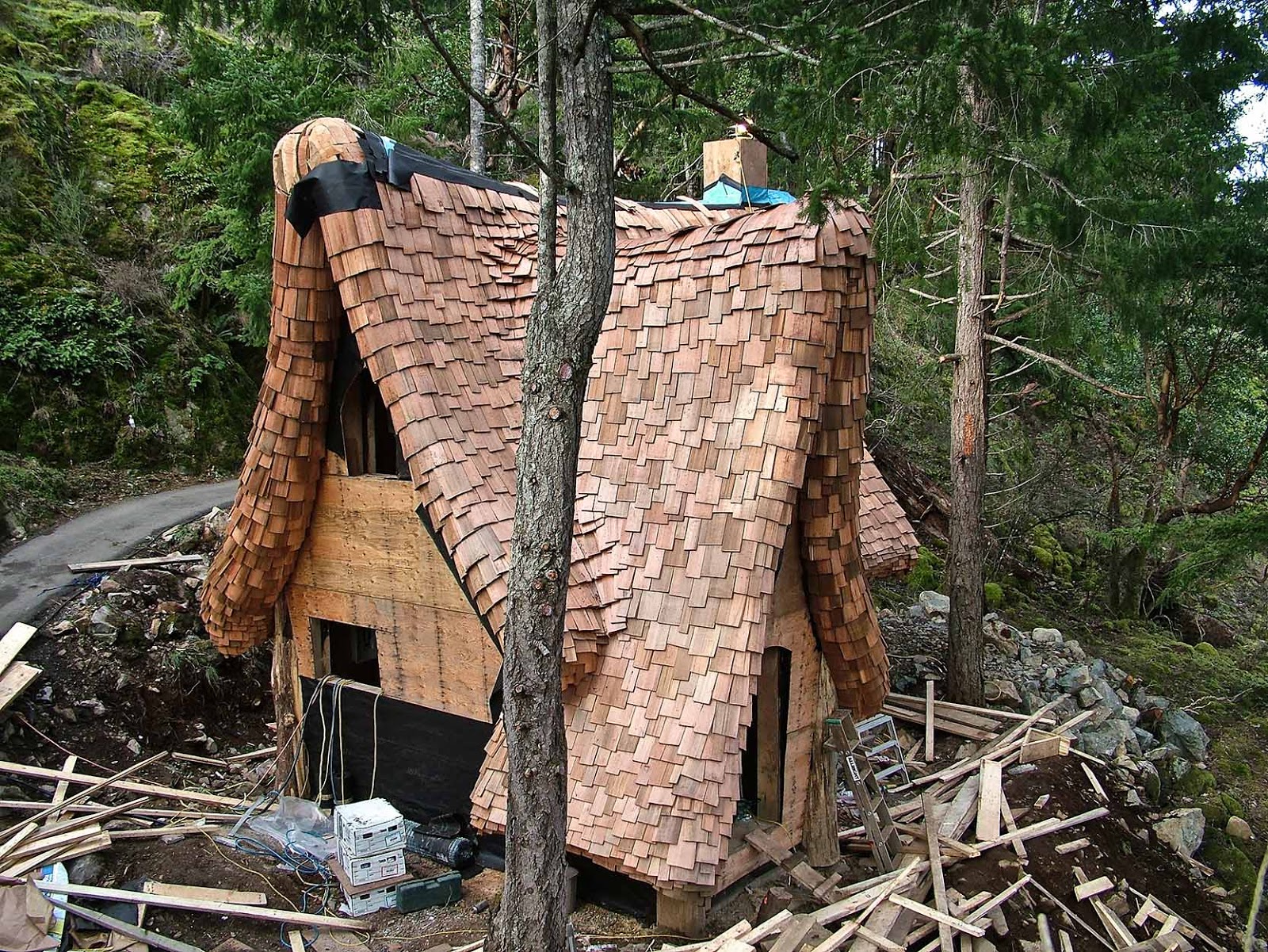
I’ve got pretty much all the pages laid out. Rick will be back from Hawaii next week and build the rest of the pages in InDesign. The book is looking better each week. Here’s a little hidden waterfront cottage (under construction) on Vancouver Island, BC (the shakes for the eaves were steamed and bent).
Material continues to come in for the book (400-1200 sq. ft. homes), and we’ll continue the book after its publication on theshelterblog, with a section titled “Small Homes.” Ongoing small homes.
My Next Book (?)
Adventures in Building – a 70-Year Odyssey
No kidding. I started at 12 years old, helping my dad build a house on his rice farm near Colusa, California. At 18 I got into the carpenters’ union in San Francisco and worked for a shipwright on the docks (SF was a port in those days!). At age 25 I started building and remodeling on a piece of land with 3 cottages in Mill Valley, California.
I never got the chance to work with a master carpenter or formally learn architecture, so I had a layman’s approach. Everything was new.
Right off, I liked the smell of lumber, and was fascinated with how things went together (still am). In about 12 buildings over the course of years, I personally went through post and beam, then polyhedral (domes), and finally stud frame construction techniques.
And all along, I shot pictures of buildings, collected books, and interviewed builders about all types of buildings and materials, and so far, have produced 6 highly graphic books on building.
Having this layman’s view means I can talk to inexperienced builders in understandable terms. Plus, all the travel and studying and interviews have given me a wealth of material of interest to experienced builders. We’re all interested in how things are put together. That’s what building is all about.
Bruno Atkey, one of the major builders in Builders of the Pacific Coast, has been splitting cedar shakes for most of his life. He split the shakes for my 6-sided tower roof from driftwood logs (and his girlfriend Mecea drove them down here in a van). He’s split cedar shakes, and even siding, in British Columbia for numerous homes over the years.
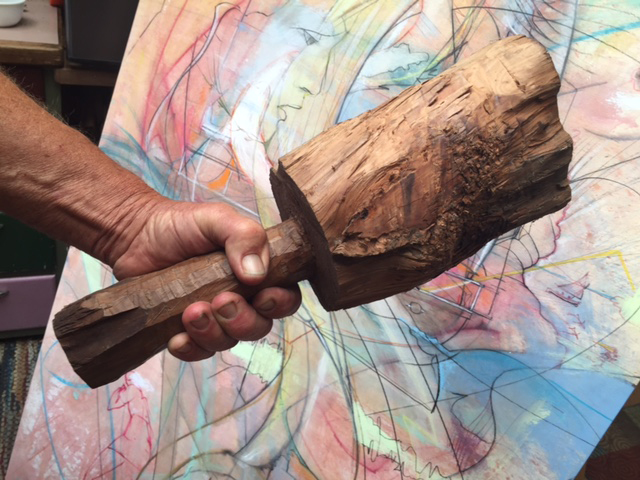
Godfrey Stephens sent us this photo of Bruno’s latest mallet. (I use an old bowling pin.) In the background is one of Godfrey’s paintings.
Jim Bahoosh is a builder in Maine who specializes in small (500-900 sq. ft.) homes. His homes look really nice, and of the right size.
This of course coincides with our next book, now almost completed: Small Homes, which highlights some 70 builders and their small homes (400-1200 sq. ft.). It’s due out in February, 2017.
We just finished what will probably be the middle section of the book, “Small Homes in Cities and Towns,” 67 photos on some 20 pages. When Rick showed me the finished pages, I was thrilled. Some times I’ll muddle my way through a project, starting with no concept of how it will come out, and the whole, as they say, is greater than the sum of its parts, i.e., synergy.
We’ve got 200 out of 224 pages done now. I have this great feeling, having worked for so many months, because:
1. we’re close to the end (to printers in November, out February 2017)
I shot maybe 1000 photographs, with three different cameras. I posted (mostly photos) on Instagram and this blog almost every day.
I could do a book on this trip, but the reality, the priority right now, is to get our new book, Small Homes, finished.
So I will be posting less for a while, and certainly not posting daily.
I had an epiphany, as they say, yesterday: I can reach a lot more people by turning out books than I can by posting things on my blog or via Instagram—at least with my present internet followers (about 500 people a day).
Plus the feedback from our books is phenomenal. Just about daily: people inspired, lives changed, abilities discovered.
I want to get this book finished and then try to get one new book published each year (instead of one book every 2-3 years, as now).
I’m thinking of three possibilities for the book after this one:
• Trips I’ve taken over the past 40 years, with photos and text. Readers can ride shotgun with me.
• My favorite builders: about six or seven of them, describing not only their work, but their personalities. I just love all these guys.
• Barns: a scrapbook of my photos over the years and reference to the many (not well-known) books I’ve accumulated on barns; we have over 3 feet of barn books in our shelves.
So it’s back to book making for me. I’m really excited by this new one. I’m gonna get oan wi it.
Check out https://www.theshelterblog.com/ for daily postings on building, homesteading, gardening, carpentry. tiny homes, small homes, and the like.
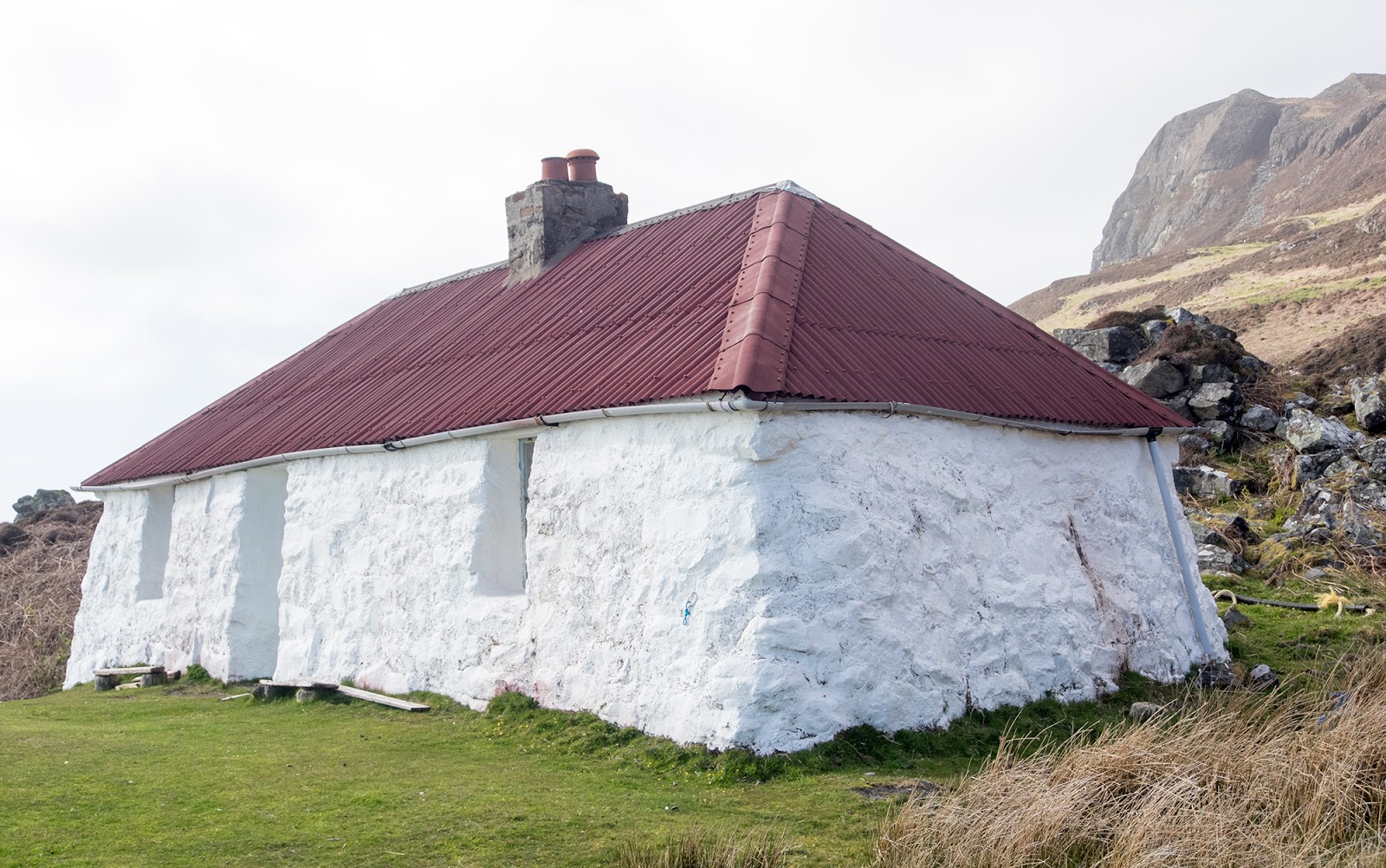
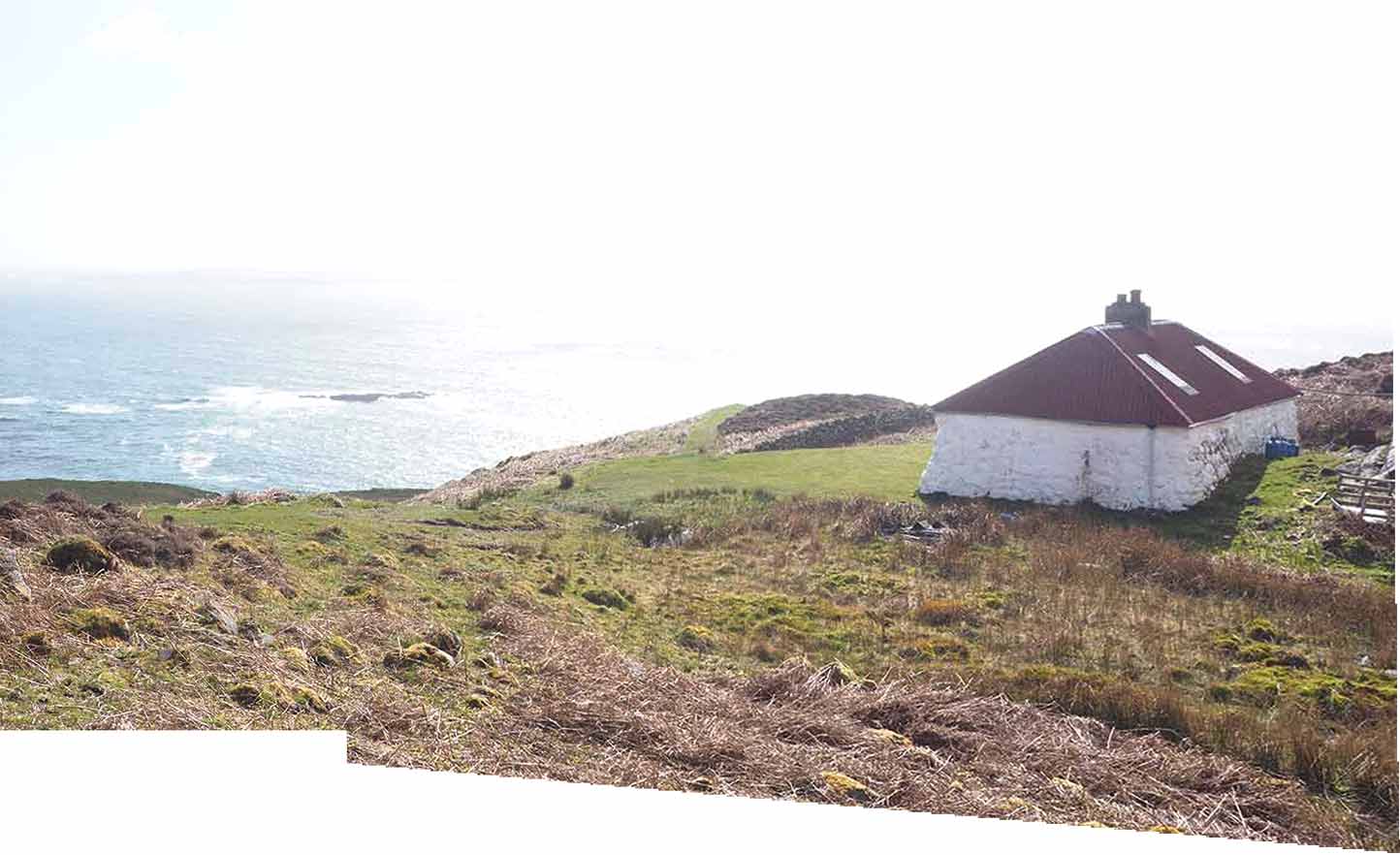
Everything here is perfect. It’s one of the buildings where I just say to myself, oh yeah!
The rounded, angled-out corners, the proportions, the deep wall openings, the red roof.
According to an historical account which I read, some 14 farm families were forced to leave their land by landlords in the mid-1800s, and resettled on a more remote and less fertile part of the island. This is one of the dwellings; in its day, it would have had a thatched roof.
And with this I conclude posts from Scotland. I’m back in the saddle at home and back at work on Small Homes.
My Dad was featured in one of Lloyds books, Tiny Homes, for building the wooden yurt Big Sky Retreat.
Recently he has been building another cabin called Big Sky Lookout, which is smaller than the yurt, but still made up of reused and recycled stuff. I made a short film following his progress along the way.
Three to four years ago, I did a lot more writing of posts than I do now. These days I’m working on other digital forms of communication (takes time) as well as our old school hold-in-your-hands treasures called books, and in the midst of writing, photographing, editing, and laying out our next major book, Small Homes.
Once in a while I like to slip in a post as of the old days. Can we talk?
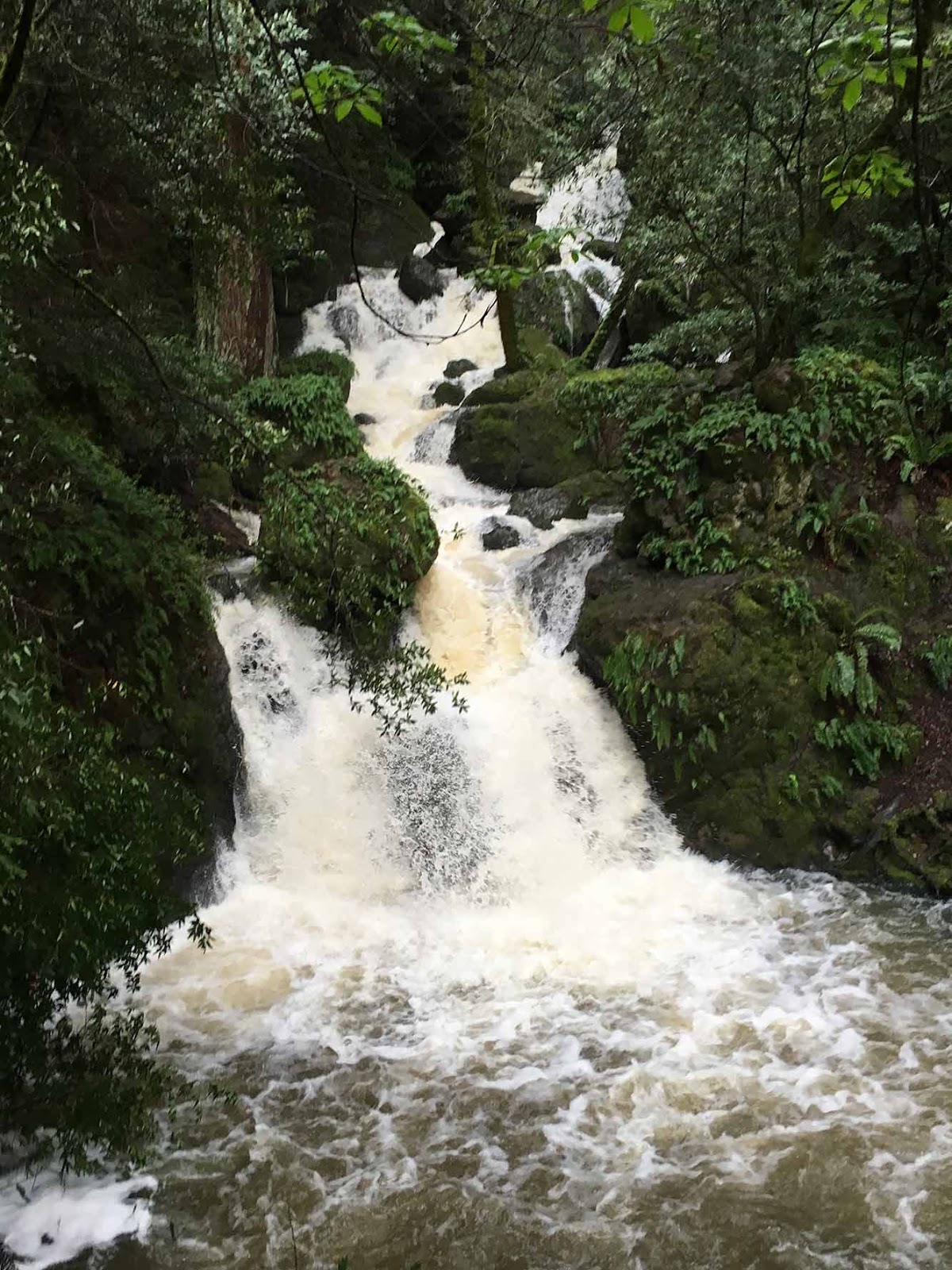
It’s been raining like mad. Marin county reservoirs are spilling over. Shasta Lake, NorCal’s big one, is at 81% now—a welcome relief after all the sad years of bare banks. Went out a few days ago with friends to see cascading waterfalls; power of our magic mountain. Toots: “Love the Rain”:
Small Homes, Our Next Book
The book is growing daily. It’s a lot like gardening. I am having a lot of back-and-forth emails with builder/contributors, often in search of large enough photo files. (What works on a monitor won’t work in high-quality printing.) I’m over half-way through, doing layout with a 5-year-old Brother color copy machine, scissors and scotch tape before they go to Rick for InDesign/Photoshop precision, enhancement, and preparation for our printers in Hong Kong. You can see 17 sneak previews here: https://www.theshelterblog.com/?s=preview
Scotland Shelter Exhibition
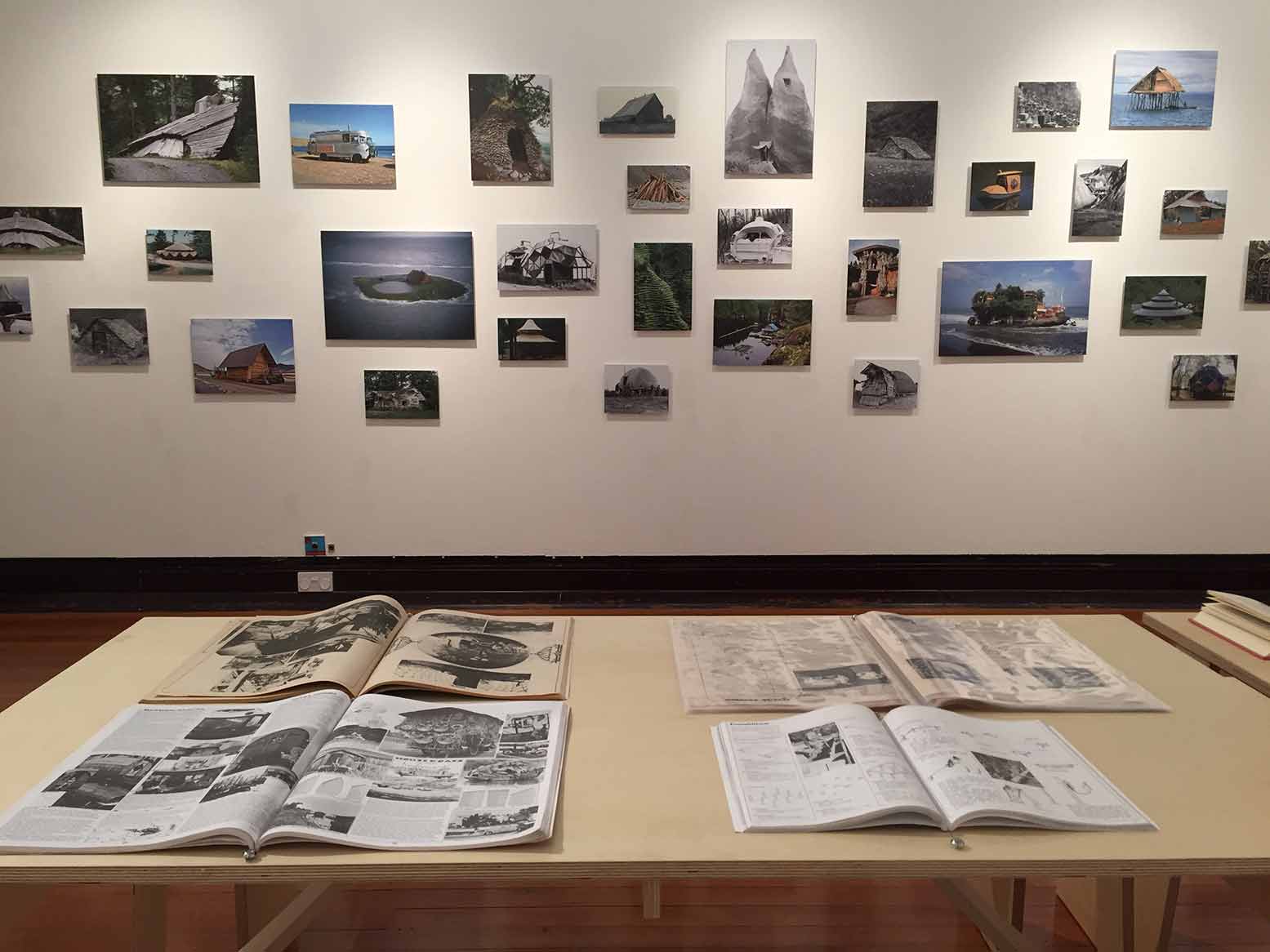
There is a festival of architecture in Scotland now, sponsored by the Fife Contemporary Arts Center. It’s called “Shelters,” and features an entire room exhibiting our work, with photo and page blowups, and our building books on tables (below). It’s open now at the Kircaldy Galleries (Kircaldy is about 12 miles north of Edinburgh, on the east coast of Scotland) and runs through June 5, 2016.
I’ll be doing a slide show presentation on May 10th, at Kircaldy Galleries, titled “50 Years of Natural Building,” chronicling our building books from Shelter in 1973 up to the present.
The Shelter Blog
We have finally increased the amount of original material on our blog (as opposed to mostly references to material already posted elsewhere). Check it out: https://www.theshelterblog.com/. Note: when you go looking for it, you need to type in the “the” to get the correct URL. If you type in “shelterblog,” it will go to the wrong place.
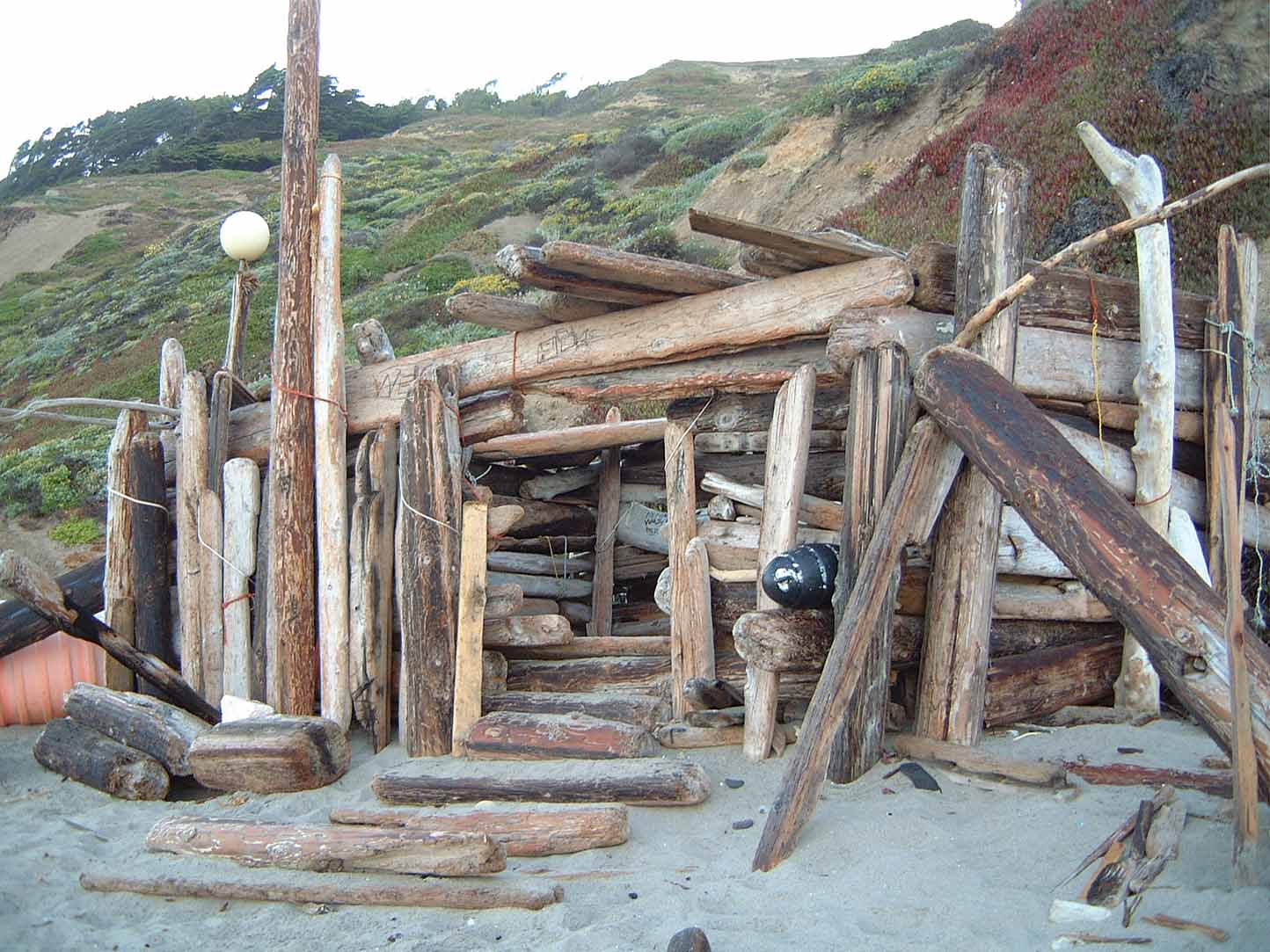
Driftwood Shacks: Anonymous Architecture Along the California Coast
My first ever art exhibit; I’m pretty excited to be doing this. On display will be about 24 of my photos, shot on various northern California beaches over the last 15 years. At the Bolinas Museum, opening reception April 2, 2016, 3-5 PM, 38 Wharf Road, Bolinas, Calif
(Of interest only to people with injuries.) My broken wrist (skateboarding) is maybe 80% healed (hmm, Shasta 81%, wrist 80%—all to the good!). I explored a lot of modalities, including comfrey (also called “knitbone”), calcium citrate, bone broth, prunes and bananas (yes!), marijuana patches and salves, stretching, and wrist braces. Info on my previous posts (including over 30 comments here: https://www.lloydkahn.com/2015/12/20/did-i-say-i-was-going-to-give-up/ and I’ll soon be doing a special post updating the methods for hastening healing. (I did a lot of research.)
45 Years of Publishing
I can’t believe it. I’m 80, and have never been busier or more productive in my life—and in an extraordinary profession full of wonderful, intelligent people. I don’t even mind all the email and business stuff, but I love shooting photos, doing layout, and especially having the chance to do an exhibit of my photos.
Built by Bruno Atkey in Tofino, Vancouver Island, BC, Canada, in the ’70s, and towed 26 miles to Hot Springs Cove, where Norma Bailey ran a “…great floating store selling emergency supplies, esoteric items, and Wild Coast history books,” according to Godfrey Stephens, who just sent this photo.





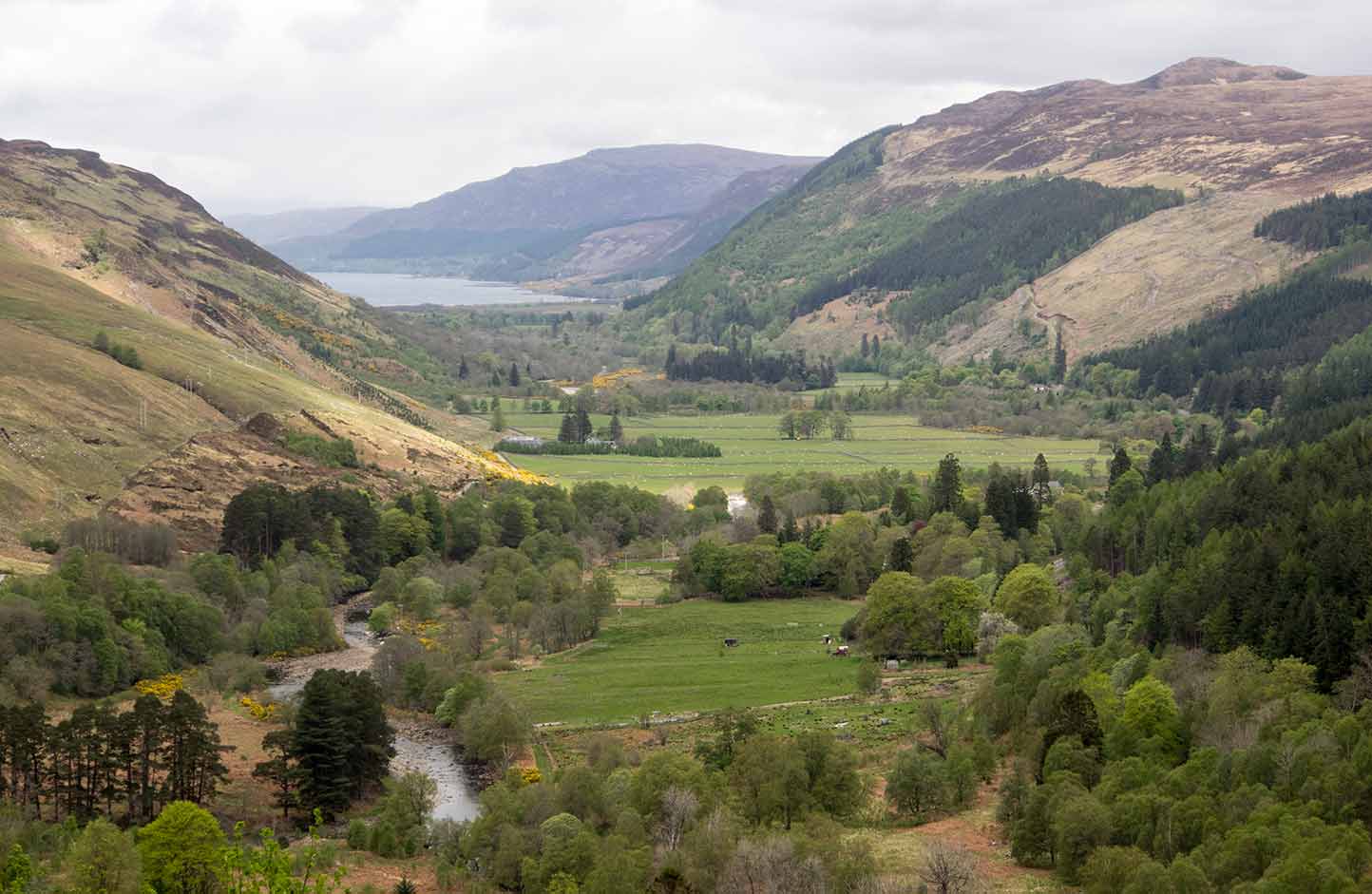 On the road from Ullapool to Gairloch on the northwest coast of Scotland