 |
| Sent me by Godfrey Stephens. Neither of us know where it’s from. |
Apple Core Skull
Post a comment (2 comments)

|
| Sent me by Godfrey Stephens. Neither of us know where it’s from. |
I send out an e-mail newsletter called Gimme Shelter whenever I get time. The mailing list includes people in the publishing business and friends. It used to be about monthly, but since I’ve been blogging, it’s been less frequent. You can see the latest one at: https://www.shelterpub.com/_gimme/_2010-07-29/gimme_shelter-2010-07-29.html
 “Every year since 1993, the villagers of Inakadate, Japan, have created pictures in the local rice paddies as a way of attracting tourists to the area.…The original paddy art was formed by using two varieties of rice plants, one with dark purplish stalks and the other bright green. In recent years, genetically engineered plants have been added to produce three more colors: dark red, yellow and white.…”
Photo: Shiho Fukada for The New York Times
 I felt tired Tuesday night. Couldn’t run with the boys due to knee injury, so went off alone at a slow pace up to this hidden pond in the hills and by the time I’d done two around-the-pond circuits, I felt great. A beautiful spot, a little valley damned up at one end. Swallows swoop around, just skimming the surface, grabbing insects, a peaceful place. Once in a while, humans actually improve a bit of the natural world.
“Beatrice was a starting point for the Homestead Act of 1862, the federal law that handed land to pioneering farmers. Back then, the goal was to settle the West. The goal of Beatrice’s “Homestead Act of 2010,” is, in part, to replenish city coffers. The calculus is simple, if counterintuitive: hand out city land now to ensure property tax revenues in the future.…”
Left: A cabin at the Homestead National Monument of America near Beatrice, Neb., Photo by Kevin Moloney for The New York Times. Article published: July 25, 2010 by Monica Davey: “Cities View Homesteads as a Source of Income”
“Around the nation, cities and towns facing grim budget circumstances are grasping at unlikely — some would say desperate — means to bolster their shrunken tax bases. Like Beatrice, places like Dayton, Ohio, and Grafton, Ill., are giving away land for nominal fees or for nothing in the hope that it will boost the tax rolls and cut the lawn-mowing bills.…”
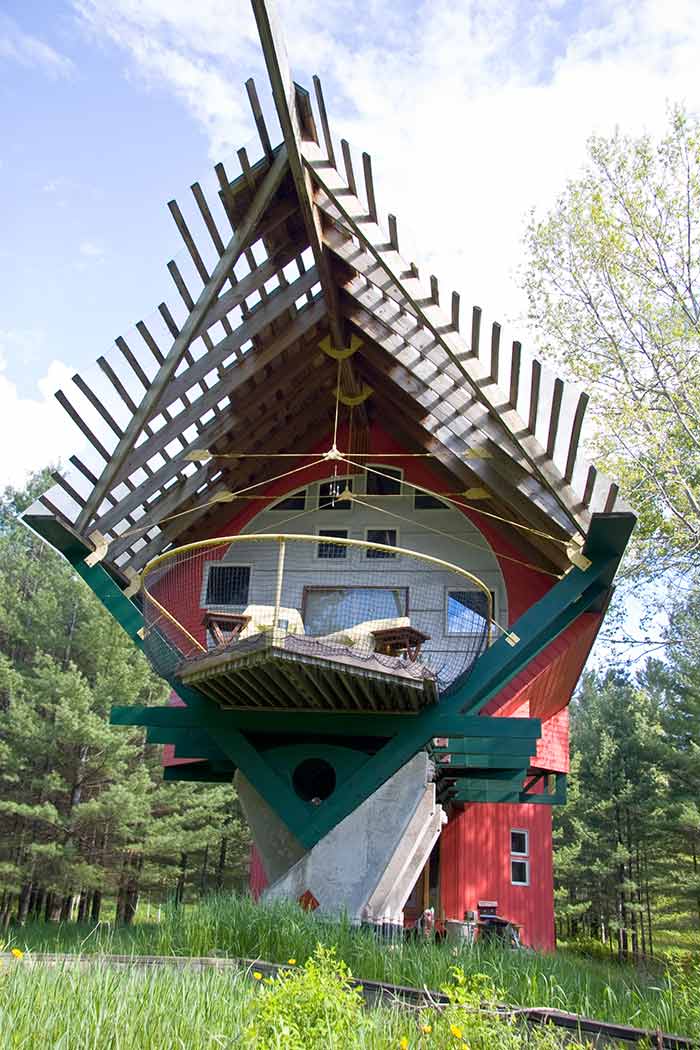 Artist/architect John Connell designed and built this house in a played-out gravel pit near Warren, Vermont. It was built over 16 years with input from about 65 students from John’s six-week Deign/Build sessions at Yestermorrow School in Warren, Vermont.
John: “The idea was to show that intelligent land development could actually help repair land as opposed to its usual role in degrading it. I purchased this played-out gravel pit which was then subdivided into four lots with a common area. In the common area we built Vermont’s first licensed engineered wetland specifically designed to treat waste. It was sized to accommodate four 3-bedroom homes. This house was the first to be built (proof of concept). Sadly, the people who purchased the house also purchased the remaining lots and closed down the project. So we successfully refurbished the gravel pit (maybe a bit too well) but failed to create the neighborhood we had hoped for. Had we sold the lots separately, it would have become this fabulous little neighborhood of four hi-performance homes and a green house on ten acres along the Mad River. That was the vision.
As it was designed and built (over those 16 years), that house was meant to reflect the very latest in sustainable thinking. It is super insulated, is heated by less than 500 gallons of propane each winter with a super hi-eff boiler (93%+), the wood was mostly local, the materials were recycled whenever possible, non-toxic glues and sealers were used (after 1991), etc. etc.”
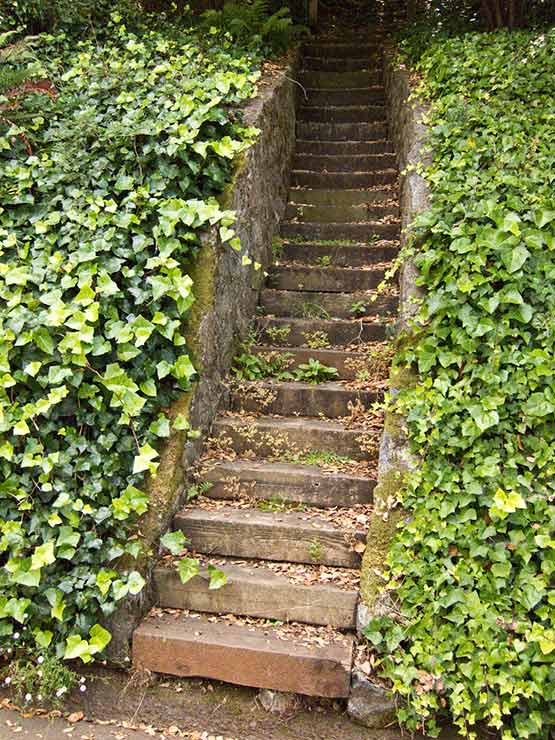 I noticed these stairs across from my brother’s house a few days ago. Concrete stringers on sides, railroad tie steps
Hard to believe. Loaded decks are made of bamboo.
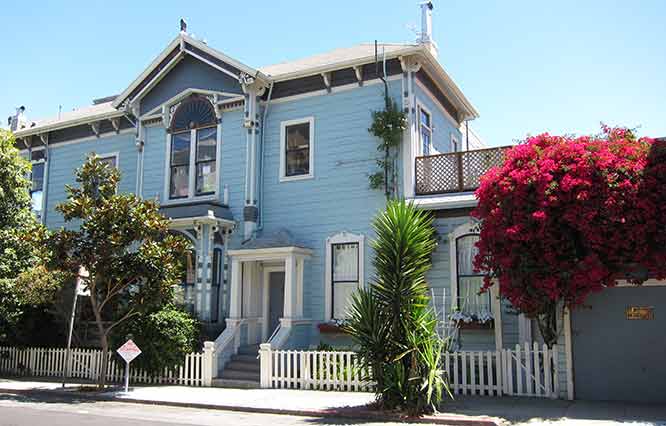 In the Mission district in San Francisco yesterday. As often, it was sunny in the Mission and foggy at the beach.
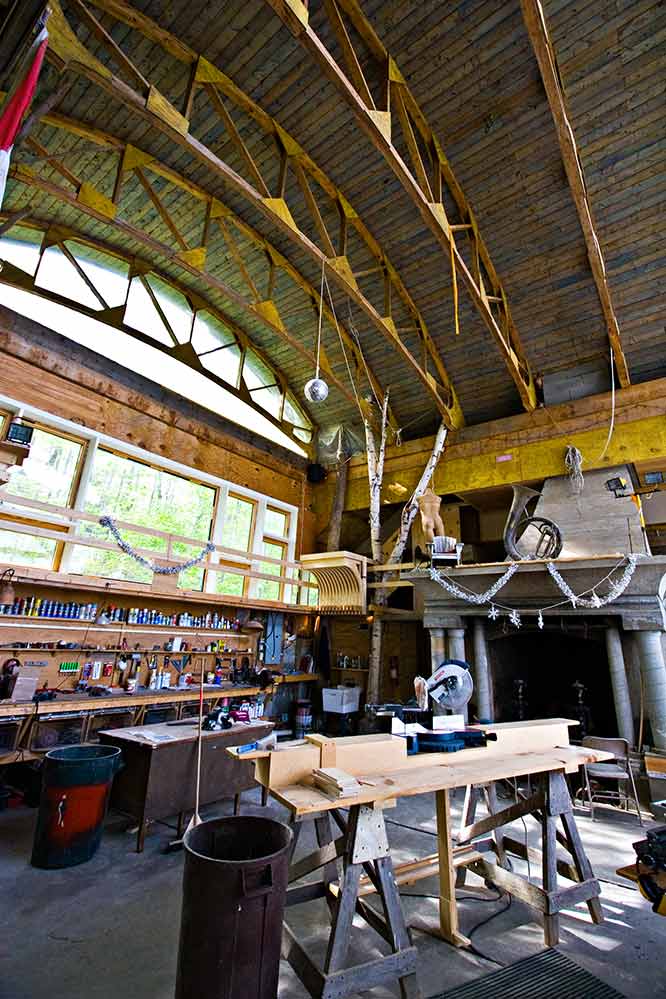 Dave Sellers’ shop