“At Cap-Egmont in Prince Edward Island, where he was a lighthouse-keeper, Edouard Arsenault started collecting bottles in 1979.…In the spring of 1980, at the age of 66, he began his construction, a mere hobby yet. As his six-gabled structure was taking form, visitors started coming in. Impressed by his work, they encouraged him to continue and to advertise it as a tourist attraction. And so, in 1981, the first Bottle House was open to the public. From 1980 to the spring of 1984, he cleverly cemented over 25,000 bottles of various shapes, sizes and colours, into three fantasy-like buildings.”
https://www.treehugger.com/files/2011/08/extreme-recycling-bottle-houses-prince-edward-island.php
More bottle houses: https://www.agilitynut.com/h/bh.html
 Last night driving along the coast (I love this drive, every Tuesday night after light running (+ pond swimming this time of year) and a Guinness in the pub with the boys), this great song came on. I’m not a Dead fan. Too much endless guitar noodling and weak voices for me, but this was a good ‘un. Plus, a week or so back I heard a couple of Dead songs I really liked. Who’d a thunk…
Also last night, the group Dave’s True Story with a great version of It’s All Over Now Baby Blue. I love well-done covers. Last week I heard Jesse Fuller doing San Francisco Bay Blues (which he wrote). It was covered by Eric Clapton on his masterpiece album Unplugged. Great to play one after the other.
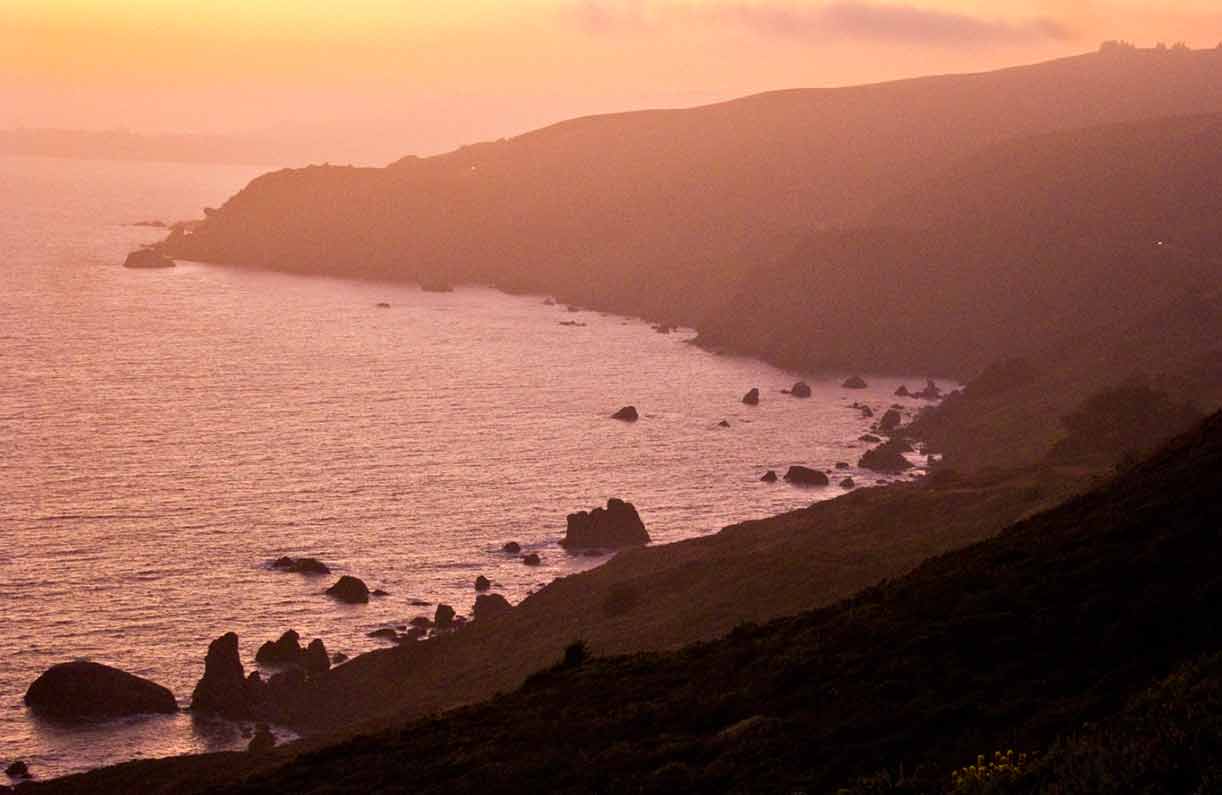
And last night Muddy Waters doing Rosalie, such a perfect song, as I looked out at this view.

At Zen farm at Green Gulch last night at dusk

 Verve coffee on 41st Ave. in Santa Cruz. Barista artista.
 My friend painter/sculptor Godfrey Stephens just emailed me this photo from a few years ago, showing a frog he was carving. I was staying with Godfrey and his wife Megan in Victoria, BC, while shooting pictures for Builders of the Pacific Coast.
See other carvings of Godfrey’s at: https://www.godfreystephens.com/Site/Carvings_%26_Sculptures.html
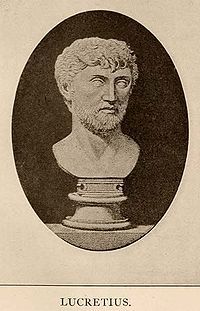 Great article in August 8 2011 New Yorker by Stephen Greenblatt on “On the Nature of Things,” an epic poem by Roman poet/philosopher Titus Lucretius Carus (99BC – 55BC) with special relevance in this era of religious bigotry:
THE ANSWER MAN
An ancient poem was rediscovered—and the world swerved.
“…at its heart, ‘On the Nature of Things’ persuasively laid out what seemed to be a strikingly modern understanding of the world. Every page reflected a core scientific vision—a vision of atoms randomly moving in an infinite universe—imbued with a poet’s sense of wonder. Wonder did not depend on the dream of an afterlife; in Lucretius, it welled up out of a recognition that we are made of the same matter as the stars and the oceans and all things else. And this recognition was the basis for the way he thought we should live—not in fear of the gods but in pursuit of pleasure, in avoidance of pain.…”
“To people haunted by images of the bleeding Christ, gripped by a terror of Hell, and obsessed with escaping the purgatorial fires of the afterlife, Lucretius offered a vision of divine indifference. There was no afterlife, no system of rewards and punishments meted out from on high.…”
https://www.newyorker.com/reporting/2011/08/08/110808fa_fact_greenblatt Note: this is only an excerpt from the full article.
I just ordered the version of the poem translated by Martin Ferguson Smith, as recommended by Greenblatt (Hackett Classics Series). Lucretius nailed it over 2000 years ago.
 Boat streaking out from Bolinas channel last week. Better salmon fishing than in years. Also halibut, rock fish and stripers around right now. Fisherman Josh says “The ocean is healthy”
 “Light glows from inside the tiny cottage built by New Avenue Homes in the West Berkeley backyard of Karen Chapple, a UC Berkeley associate professor of city and regional planning who is studying how many such homes could be built around area BART stations and their potential economic impacts. (Photos courtesy of UC Berkeley.)”
https://is.gd/tinyberkeley
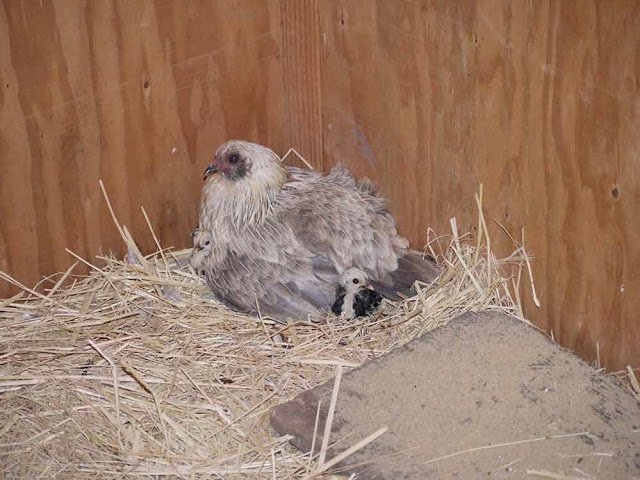 The (4) chicks are about 3 weeks old, and feathered out enough so they peek out from the mother at night. Usually all 4 of them are peeking out, but 2 were hiding from the intruder with camera here.