Our book TINY HOMES has sold over 60,000 copies and with a recent surge of interest in the subject, is selling over 1,000 copies per month. We are getting a lot of inquiries from reporters and film makers about the subject; they want to contact people living in (or building) tiny homes.
I’ve taken to telling people I’m not the tiny homes guy, I’m the build-it-yourself guy, and that the important thing about the tiny home “movement” is not that all people should be living in tiny homes, but that the size of new homes should be getting smaller, rather than continuing to grow in size.
At long last a book documenting the art of Godfrey Stephens has been published, and it’s stunning. Godfrey has been painting, drawing, carving, and assembling all his life (he’s now 70), and his niece Gurdeep Stephens has performed a Herculean task of sifting through a blizzard of Godfrey’s art to assemble this collection. Oh yes, he’s also built over a dozen sailboats.
I’m hardly an objective observer: I’ve known Godfrey and his art since meeting him on a Mexican beach in 1964, and he’s a dear friend. I’ve never been able to figure out why he isn’t world-famous. The quantity and quality of his output is staggering. And his energy: there are almost 800 emails in my “Stephens” mailbox, over 600 photos in my “Stephens” photo folder. How Gurdeep ever prevailed to assemble this excellent collection is beyond me. High five!
It’s best to let his art speak for itself, but I’ll just point out something about his carving: when he was 12, he hung out around Mungo Martin, a famed Kwakwaka’wakw chief who was creating totems and building a “big house”, at Thunderbird Park in Victoria. Godfrey’s best friend, Tony Hunt was Mungo’s grandson, and Godfrey and Tony started out carving little bears to sell. Godfrey has always been close to the native “First Nations” culture, with many Indian friends, and it shows in his carving. It seems to me a blend of the powerful north coast indigenous art and wide-ranging abstract and representational artistry. Godfrey doesn’t drive and he’s never had a “job.” Just art.
Wood Storms, Wild Canvas: The Art of Godfrey Stephens will have a first book-signing at Munro’s Books in Victoria, BC, on November 1st at 1 pm. Both Godfrey Stephens and the author Gurdeep Stephens will be signing copies at Munro’s between 1-2 pm on Saturday November 1st. The book will be available for sale at local independent book sellers in addition to online. For each copy sold, the publisher will plant one Native tree species locally in BC.
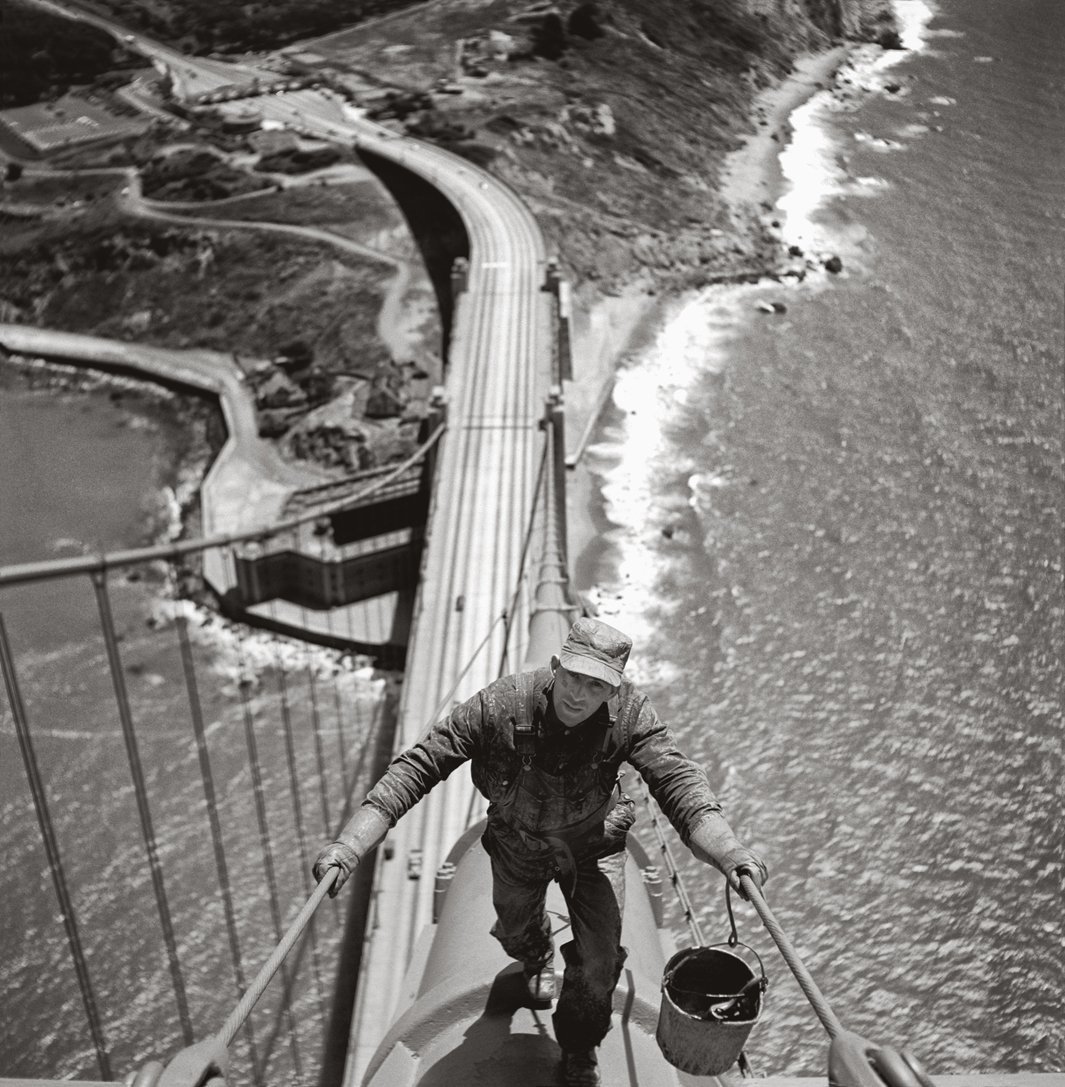
“At 90, Fred Lyon is a legendary San Franciscan photographer. He is now known for capturing the ethereal feel of the city and its people, but in the 1940s and ’50s, Lyon was scrabbling to gain a footing in the magazine industry. Luckily, it was a good time to do so: San Francisco was entering a new golden age, consumed by a post–World War II hunger for creative expression. His new book, San Francisco: Portrait of a City 1940-1960, out last month from Princeton Architectural Press, is a portrait of the city bursting with life, from its streets to its stores to its grandest palaces of art and culture.
Based 3,000 miles from New York—the center of the publishing industry—Lyon was left mostly to his own devices because editors knew he could be relied upon to organize, shoot, and deliver a story on deadline. What he strove for was “seduction, creating images that demanded more space than had been planned for them,” he said via email.…”
As I mentioned, I’m shifting over to putting more time into The Shelter Blog, and less into the personal posts on this blog. I’m trying to do 2-3 posts per week now on building, gardening, and the home arts. I have a lot of photos and info to share, accumulated over the years. As an example, here’s the latest: https://www.theshelterblog.com/oregon-timber-frame-barn-2014/
“In Japan, it’s an end-of-year tradition to sing “Ode to Joy,” the final movement of Beethoven’s Ninth Symphony. The song is so well-known in Japan that it’s known simply as daiku, literally “number nine.” In Osaka, a 10,000-person-strong “Number Nine Chorus” of amateur singers performs daiku every December, to thundering effect. While there are some professionals involved (the soloists and orchestra), the Number Nine Chorus is largely a community effort. And the sound of 10,000 singers, trained or untrained, is unbelievable.…The Beethoven craze began, strangely enough, during World War I, when German soldiers being held as prisoners in Japan staged the very first performance of number nine here.
The Japanese liked what they heard, and by the mid-20th century, number nine had become a holiday hit.…”


 Our book TINY HOMES has sold over 60,000 copies and with a recent surge of interest in the subject, is selling over 1,000 copies per month. We are getting a lot of inquiries from reporters and film makers about the subject; they want to contact people living in (or building) tiny homes.